
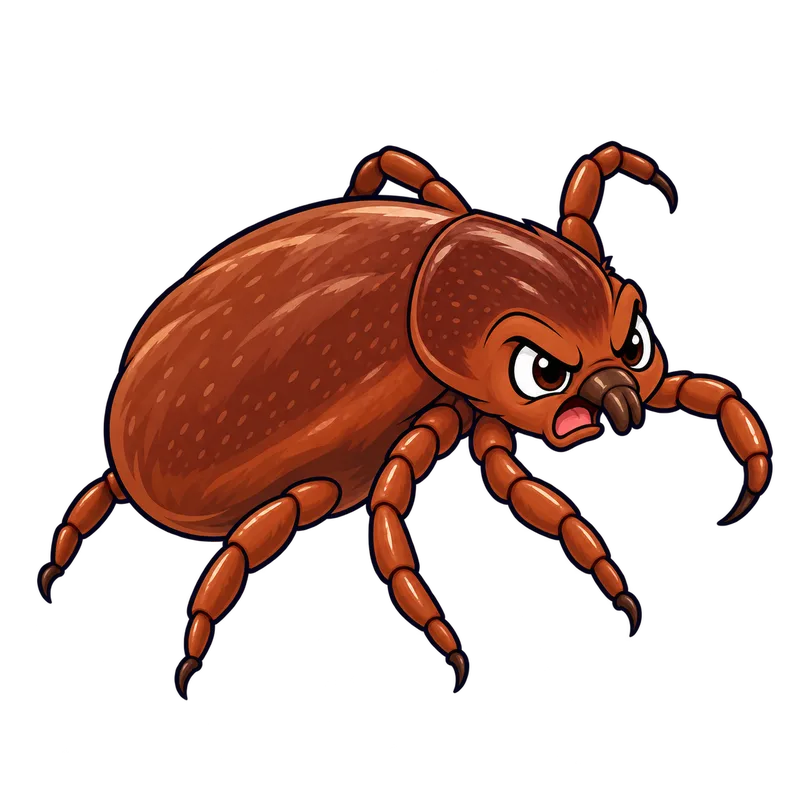
Brown dog ticks
Rhipicephalus sanguineus
- Size
- Not established
- Color
- Brown to reddish-brown
- Habitat
- Indoors, built environments, kennels, and warm regions
- Diet
- Obligate blood-feeding ectoparasite
- Life cycle
- Multi-host development through egg, larva, nymph, and adult
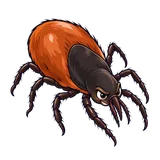
This creature is the brown dog tick, an arachnid rather than an insect, which means adults and nymphs sport eight legs while the tiny larvae settle for six. It is entirely wingless across every stage of its life. If you are trying to figure out what is crawling across your baseboard or tucked into the fold of a dog bed, you will notice its uniform brown or reddish-brown body and very short mouthparts that project from the front without sticking out as far as those on a lone star or blacklegged tick. Telling it apart from other ticks requires looking closer than a casual glance allows. An adult female features a hard plate called a scutum that covers only the front part of her back, leaving the rest of her body ready to stretch. A male wears a similar hard plate across almost his entire back, keeping him flat and streamlined. Confirming the exact species usually calls for a stereo microscope and ten times magnification to examine those microscopic mouthparts and plates, because skin reactions from a bite will never tell you which tick did the work.
Habitat & behaviour
Unlike ticks that demand damp woods and leaf litter to survive, this species moved indoors and made itself at home in human buildings and dog kennels. It can complete its entire life cycle inside heated structures, hiding in cracks in the plaster, behind baseboards, and inside furniture. It feeds primarily on domestic dogs, though it will readily turn to cattle, sheep, and humans if pet hosts are scarce or if the infestation grows crowded. When looking for a host, the tick climbs low-level structures and waits with its front legs extended, sensing body heat and carbon dioxide. Once it finds a host, it takes fifteen to twenty minutes to anchor itself by secreting a proteinaceous cement plug that glues its mouthparts securely into the skin.
Visual variations
The brown dog tick moves through four distinct life stages, and each one looks remarkably different from the last. Larvae emerge from eggs as tiny six-legged creatures that must feed on blood before they can molt. Nymphs grow eight legs but lack a functional genital opening, and they too require a blood meal to advance. Adult females start out flat and oval, but once mated, they enter a rapid feeding phase where they balloon up to one or two hundred times their unfed weight. While the soft part of the female's abdomen expands into a massive, distended sac, her front dorsal plate stays the exact same size it was when she started. Males, on the other hand, do not swell up into heavy bags of blood because their rigid dorsal armor covers almost their entire back, leaving no room for dramatic expansion.
Why it matters
Finding this tick indoors usually means there is a dog nearby dealing with an infestation, or a previous pet population left behind resilient eggs in hidden cracks. Beyond the nuisance of blood loss and skin irritation for pets, this species serves as a vector for serious pathogens, most notably Rocky Mountain spotted fever in certain regions. Because these ticks can establish breeding populations in living areas and dog resting spots, finding them requires more than just brushing off a stray visitor. If you or a companion animal show signs of illness, fever, or rash following a tick encounter, consult a healthcare professional or a veterinarian promptly, and leave structural chemical treatments to a licensed pest control operator.
Similar species
 Gulf Coast tickAmblyomma maculatum
 Rocky Mountain wood tickDermacentor andersoni
 Asian longhorned tickHaemaphysalis longicornis
 Castor bean tickIxodes ricinus
 Blacklegged tickIxodes scapularis
 Western blacklegged tickIxodes pacificus