
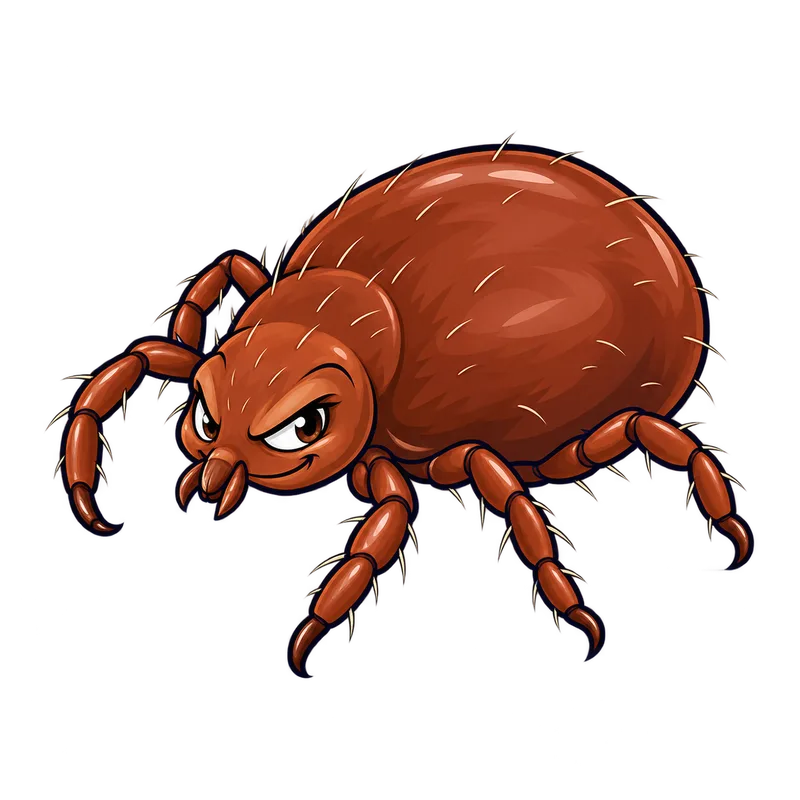
Asian longhorned tick
Haemaphysalis longicornis
- Size
- 2 to 7 mm unfed, expands up to 15 mm
- Color
- Reddish-brown, dark brown, or tan
- Habitat
- Tall grasslands, rough pasture, and woodland margins
- Diet
- Obligate blood-feeding ectoparasite
- Life cycle
- Egg, 6-legged larva, 8-legged nymph, 8-legged adult
You are not going to name this tick by squinting at it with the naked eye. The Asian longhorned tick belongs to the hard tick family, which means it carries a rigid chitinous shield on its back. To confirm the genus, you need at least a tenfold magnification lens or a stereomicroscope to look at the mouthparts. Unlike deer ticks that sport long, needle-like mouthparts, members of the genus Haemaphysalis have short mouthparts. When you look at them under a lens, the second segment of the palps flares outward sideways beyond the base of the head, giving the mouthparts a distinctive broad, triangular look. The body itself is flat and oval before feeding, ranging from 2 to 7 mm long depending on the species and stage. They are completely wingless, just like all other arachnids, and they lack the bright white enamel markings found on American dog ticks or Gulf Coast ticks. Their shield is plain brown, tan, or reddish-brown. If you try to identify them from a blurry smartphone photo or a red mark on your skin, you are guessing. Engorgement changes their shape so drastically that even experts need a microscope to count coxal spurs and examine spiracular plates.
Habitat & behaviour
These ticks do not nest in your living room or hide under your baseboards. Soft ticks might set up shop in rodent burrows or rustic cabins, but hard ticks need high ambient humidity to keep from drying out. They live outdoors in moisture-retaining microhabitats like tall grass, rough pasture, woodland borders, brush, and thick leaf litter. When they are ready for a meal, they climb up onto blades of grass or low vegetation, usually staying within 50 cm of the ground, and settle into a waiting posture called questing. They do not jump, fly, or drop out of oak trees onto passing walkers. Instead, they stretch their front legs out into the air, waiting to brush against a host. Those front legs carry specialized sensory structures that pick up carbon dioxide plumes, body heat, moisture, and the vibrations of a deer, livestock animal, or human walking by. Once you brush past their perch, they grab on with their claws and start looking for a place to attach. In tropical regions, their activity peaks during cooler winter months when humidity suits them, while in temperate climates, they stay put once temperatures drop below 45 degrees or snow covers the ground.
Visual variations
Like all hard ticks, this species goes through 4 distinct life stages, namely egg, larva, nymph, and adult. Each stage requires a single blood meal before the creature can move forward or reproduce, following a classic 3-host lifecycle where it drops off the animal after feeding to molt in the soil. Larvae hatch out as minute seed ticks with only 6 legs. Once they feed and molt, they become nymphs with 8 legs, though they still lack genital apertures. Adult females also have 8 legs, but their dorsal shield covers only the front part of their back. The rest of their body is a flexible, folded skin called an alloscutum, which lets them stretch out enormously when they feed. Adult males also have 8 legs, but their shield covers almost the entire top of their body. Because that male shield is rigid, they cannot expand and they feed very little on blood, spending most of their time on the host looking for females to mate with. Blood feeding turns a female from a flat, oval disk into a swollen, greyish or dark-olive sphere that stretches the skin so tightly that her mouthparts and shield markers become difficult to recognize.
Why it matters
Finding one of these ticks on yourself or a pet means you picked it up outdoors during work or recreation, and it bears watching because hard ticks serve as vectors for various pathogens. When a hard tick attaches, it secretes an adhesive protein cement plug from its salivary glands within the first half-hour to anchor its mouthparts firmly into your skin while it feeds over several days. If you find an attached tick, skip the old tricks involving petroleum jelly, hot matches, or alcohol, because irritating the creature makes it regurgitate midgut fluids into the bite wound and raises the risk of disease transmission. Grab fine-tipped tweezers, grasp the mouthparts right against your skin, and pull straight up with steady pressure without twisting. If you develop a fever, an expanding rash, muscle aches, or joint pain in the weeks following a bite, consult a healthcare professional immediately. Livestock and companion animals also suffer from heavy infestations, which can lead to significant blood loss, irritation, and veterinary concerns, though any chemical treatments for pets must be guided strictly by a licensed veterinarian.
Similar species
 Castor bean tickIxodes ricinus
 Blacklegged tickIxodes scapularis
 Western blacklegged tickIxodes pacificus
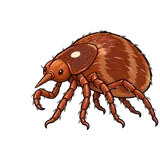 Lone star tickAmblyomma americanum
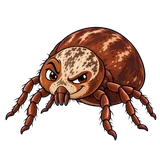 American dog tickDermacentor variabilis
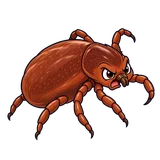 Brown dog ticksRhipicephalus sanguineus