
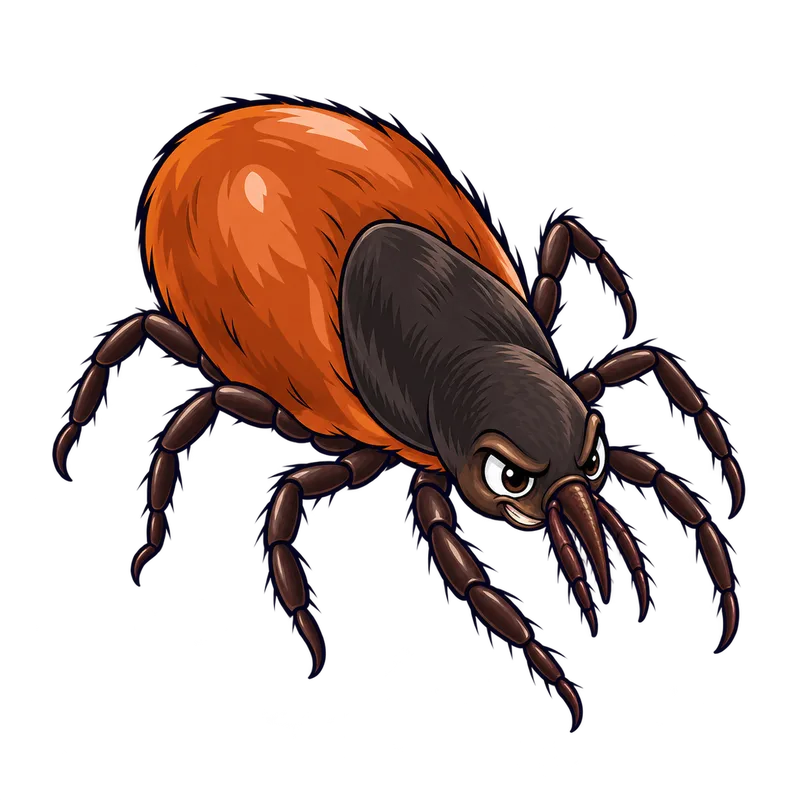
Western blacklegged tick
Ixodes pacificus
- Size
- 1 mm to 9 mm depending on life stage
- Color
- Solid black scutum with orange-brown abdomen
- Habitat
- Humid vegetated environments and oak woodlands
- Diet
- Vertebrate blood across active stages
- Life cycle
- Three-host cycle spanning two to three years
The Western blacklegged tick, scientifically known as Ixodes pacificus Cooley and Kohls, is a blood-feeding arachnid found along the Pacific coastal region of North America. Spotting one of these creatures with the naked eye takes some practice because they lack wings and cannot fly, jump, or drop from trees. Unfed adult females measure 5 to 7 mm, about the size of an apple seed, with a solid black shield on the front part of their back. Their main body is orange-brown to mahogany, and they have uniformly dark legs alongside long mouthparts built for feeding. Adult males are slightly smaller, uniformly dark brown to black, and have a hard shield covering almost their entire back.
Identity
Immature forms are much harder to spot. Larvae measure about 1 mm and have six legs, while nymphs measure 1.5 to 2 mm and feature eight legs. Spotting fine anatomical details, such as the exact length of the mouthparts or the curve of the anal groove, requires a 10x hand lens or microscope. You might confuse this pest with other western species like the American dog tick, which features a patterned shield and short mouthparts. Physical identification cannot be established from bite marks, skin reactions, or standard consumer photographs.
Habitat & behaviour
You will find these ticks in humid, vegetated areas like oak woodlands, brushland, forest edges, and tall grass pastures. They need high relative humidity to keep from drying out, which means they are not going to be baking in a dry, open lawn. When they are ready for a meal, they climb onto low vegetation and wait with their front legs extended, sensing carbon dioxide, body heat, and vibrations from passing animals and humans.
Seasonality depends entirely on the life stage of the tick. Nymphs are active during the spring and early summer months, while larvae show up later in the year. Adult males and females are active from autumn through early spring, keeping right on moving during mild winter days whenever the temperature climbs above 45 degrees Fahrenheit and there is no snow on the ground. When it gets too hot or dry, they simply drop down into the damp soil litter.
Visual variations
While these critters skip social rankings entirely, they still cycle through four clear chapters: egg, larva, nymph, and adult. Every active phase demands a fresh host, a single deep draught of blood, and a return to the leaf litter to shed skin or breed. The contrast between an adult male and female is striking. The female wears her protective plate only on the front half, leaving her lower body free to stretch out when she dines. An unfed female looks small enough to ignore, but a fully gorged mother can balloon up to 9 mm or longer, multiplying her dry weight many times over.
The adult male goes about things differently with a hard plate covering his whole back, which stops him from swelling up or taking a heavy meal. He packs much shorter mouthparts, skips engorging entirely, and passes away soon after mating. Young ones grow in steady steps from the six-legged larva into the eight-legged nymph. Since none of them can fly or hop, they depend entirely on whatever passing creature brushes past their brush to carry them somewhere new.
Why it matters
Finding this tick around your property means anyone walking outside runs the risk of picking up a dangerous hitchhiker, making thorough checks after yard work or a hike a smart routine. Nymphs cause the majority of human Lyme disease cases because their tiny poppy-seed size lets them hide in plain sight long enough to pass along an infection. If you spot one latched onto the skin, pull it straight out with fine-tipped tweezers without twisting or squeezing the soft body.
Old tricks like smothering the bug in petroleum jelly, painting it with nail polish, or touching a hot match to it only agitate the creature and cause it to empty its gut contents into the host, driving up infection risks. How long a pathogen takes to jump across varies, but several harmful agents need hours of uninterrupted feeding before they make the leap. Because everyone's skin reacts differently to a bite, anyone who notices a spreading rash, fever, or aching joints after a walk in tick country should check in with a doctor or urgent care clinic. Yard-wide pest control projects and protective treatments for cats and dogs belong strictly in the hands of licensed applicators and veterinarians.
Similar species
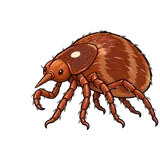 Lone star tickAmblyomma americanum
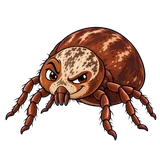 American dog tickDermacentor variabilis
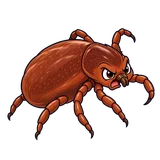 Brown dog ticksRhipicephalus sanguineus
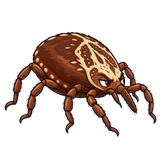 Gulf Coast tickAmblyomma maculatum
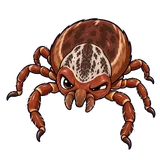 Rocky Mountain wood tickDermacentor andersoni
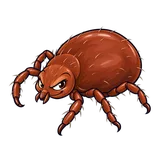 Asian longhorned tickHaemaphysalis longicornis