
Blacklegged tick vs western blacklegged tick: why does region matter?
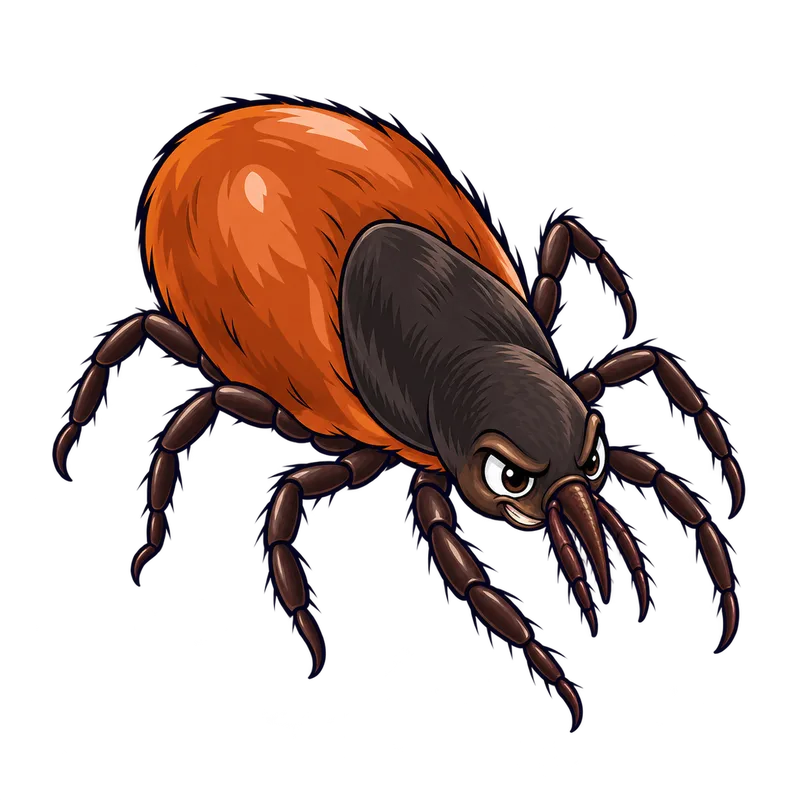
Region matters because the eastern blacklegged tick and the western blacklegged tick live on opposite sides of the country, and the animals they feed on change your risk of getting sick. Western ticks feed on lizards that purge Lyme bacteria, dropping regional infection rates down to just 1 or 2 percent.
What is actually going on
Picture walking back to your car after a crisp morning hike, dropping your pack in the trunk, and running a hand through your hair only to feel a tiny, unfamiliar grain near your collar. You pull down the visor mirror, squint at a speck no larger than a single poppy seed, and wonder whether it is the kind of tick that sends you to the urgent care clinic or just a harmless passenger from the brush. It is a common moment of low-level panic for anyone spending time outdoors, and it usually leads straight to a map and a pile of conflicting advice about regional pests.
The short answer to why region matters when comparing the blacklegged tick and the western blacklegged tick comes down to geography, diet, and a peculiar quirk of local wildlife. These two ticks look almost identical to the naked eye. They are both small, dark-legged, and capable of transmitting nasty pathogens, but they operate in entirely separate worlds. Think of them as identical twins who live on opposite sides of the country, eat completely different diets, and hang out with entirely different crowds.
The eastern blacklegged tick lives across the Eastern, Midwestern, and Southern United States, while its western cousin is strictly confined to the Pacific Coast states. More importantly, the animals that young ticks feed on in these different regions change everything about your actual risk of getting sick. In the Northeast and Midwest, immature ticks feed heavily on mice and small rodents that carry Lyme disease bacteria, meaning roughly 20 percent of questing nymphs out there are infected.
Out West, those same young ticks have a strange local preference for feeding on western fence lizards instead of mice. Lizard blood actually contains natural proteins that actively destroy the Lyme bacteria, acting as a biological cleanser that purges the tick. Because of this natural filter in the landscape, a nymph plucked off your hiking pants in Northern California carries a much lower chance of transmitting Lyme disease than one found in a Maine woodlot, typically dropping the regional infection rate down to just 1 or 2 percent.
How to tell for sure
At home, you usually cannot tell these two ticks apart just by looking at them without a microscope and a specialist key. Unfed adult females are about the size of an apple seed with a reddish-brown body and a solid black shield behind the head, while nymphs are the size of a poppy seed. A 10x magnification hand lens can help you confirm the tick belongs to the right general family by revealing an anal groove curving around the front of the anus and a lack of bright ornamentation on the back, but separating the eastern species from the western species requires examining microscopic mouthparts and spurs.
Because those physical differences are hidden under high magnification, your geographic location of exposure is usually the most reliable practical identifier you have. If you picked up the tick in Oregon or Washington, you are dealing with the western blacklegged tick. If you found it in New York or Minnesota, it is the eastern blacklegged tick.
Do not trust smartphone photos or internet snapshots to settle the question either, because a digital camera simply cannot resolve the microscopic dental structures that taxonomists use. People often assume they can spot the difference by color or size, but feeding status and engorgement change those visual cues rapidly. Relying on where you were walking outdoors is normally safer than guessing based on a blurry close-up.
What usually comes next
Finding a tick clamped onto your skin tends to trigger a scramble, but your absolute first job is simply getting the thing off your body. Grab a pair of fine-tipped tweezers, pinch the tick right against your skin to catch its mouthparts, and pull straight up with an even, steady motion. Skip the twisting, the sudden jerks, and those old kitchen tricks involving petroleum jelly, nail polish, or a lit match.
Torturing the tick with heat or chemicals causes it to empty its stomach right back into the bite, which only ups your chances of catching whatever it carries. Once the bug is free, wash the bite and your hands thoroughly with soap and water or rubbing alcohol. You can drop the tick into a sealed plastic bag or a small container with some alcohol if you want to show a doctor later, but keep in mind that testing the bug itself does not tell you whether it passed anything on to you.
Your next move depends on the calendar and the clock. Lyme bacteria usually need a solid feeding window of 36 to 48 hours to crawl from the tick gut into the salivary glands, meaning a bug you catch within the first day has barely had time to do damage. Viral threats like Powassan virus move much faster, sometimes taking only 15 to 30 minutes, so keeping track of how long the tick was riding on you matters a lot.
When to get help
You need to call a doctor or head to an urgent care clinic right away if you notice an expanding red rash, particularly one with a clear center that resembles a target, or if you run a fever, catch the chills, feel severe fatigue, or suffer from aching joints within a month of a bite. In areas where infection rates are high and ticks have stayed attached for 36 hours or longer before being pulled off within the last 72 hours, a clinician might talk to you about taking a single dose of an antibiotic to head off an infection.
If you are reading this from outside the United States, the specific local vectors change completely, but the underlying caution does not. Over in the United Kingdom and Ireland, the sheep tick takes the main role as the primary vector for Lyme borreliosis and other viral illnesses. Down in Australia, the paralysis tick creates a very different public health worry because its potent neurotoxin can trigger actual tick paralysis and even cause severe mammalian meat allergies. Travelers in India look out for forest ticks that carry Kyasanur Forest disease, while visitors in South Africa watch for African tick bite fever from entirely different species.
Always reach out to poison control or a healthcare provider immediately if someone gets a dangerous dose of bug spray on their skin or swallows a repellent, and go straight to emergency care if you notice rapidly worsening muscle weakness or paralysis creeping up your limbs. A tick bite rarely demands a midnight trip to the emergency room, but paying attention to how you feel and knowing what lives in your local woods is the best defense you have.