
What does an engorged American dog tick look like?
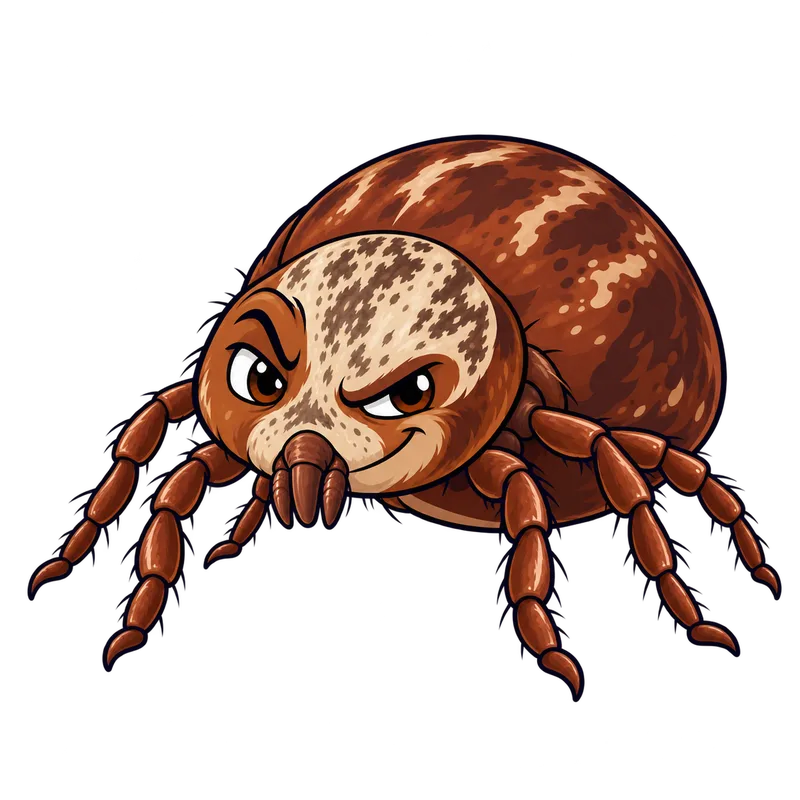
An engorged American dog tick looks like a smooth, swollen, greyish-blue bump that resembles a stray grape or a cooked pinto bean. Its color shifts from mahogany brown to dull slate grey as it expands up to two hundred times its original weight, stretching its body taut while a patterned white shield stays small near the front.
What is actually going on
Picture walking back inside after a long afternoon clearing brush in the yard, sitting down on the couch to pull off your muddy boots, and running a hand across your dog's neck. Instead of smooth fur, your fingers catch on something weird. You part the hair and find a smooth, swollen, greyish-blue bump that looks suspiciously like a stray grape or a cooked pinto bean stuck to the skin. It is definitely alive, and it is firmly attached.
What you are looking at is an adult female American dog tick that has been feeding on blood for days. When these ticks first latch onto a host, they are small, flat, reddish-brown, and about the size of a watermelon seed. They spend several days in a slow feeding phase, taking in just enough blood to reach a milestone called critical weight. Once they mate on the host, they trigger a rapid feeding phase lasting twelve to twenty-four hours. During this final stretch, they ingest enough blood to increase their body weight by up to two hundred times, transforming from a flat insect-like shape into a tense, bloated bag.
It is easy to see why people often assume an engorged tick must be a completely different pest from the flat ones you usually spot crawling up a pant leg. The color shifts dramatically from mahogany brown to a dull slate grey, olive, or lead-blue hue as the blood fills the body cavity and stretches the skin taut. The tiny, ribbed ridges along the back, known as festoons, stretch flat and completely disappear as the creature expands.
How to tell for sure
Despite the radical transformation, telling for sure that you are dealing with an American dog tick usually comes down to checking two features near the front of the body. While the flexible part of the abdomen swells massively, a hard, shield-like plate called the scutum stays the exact same size it was when the tick first climbed onto the host.
On an adult female American dog tick, that small shield sits right behind the head and features a distinct, ornate pattern of creamy white or silver-grey markings over a dark background. Even when the rest of the body is a massive, swollen grey sack, that patterned little shield stays behind like a permanent ID badge. You will usually need a magnifying glass to see the details clearly, but that white-marked shield tells you you are looking at a tick in this genus rather than a plain brown dog tick or a blacklegged deer tick.
You can also look closely at the mouthparts extending into the skin. American dog ticks have short, broad mouthparts. This separates them immediately from lone star ticks and blacklegged ticks, both of which sport noticeably longer palps. If you pull out a magnifying glass and spot short mouthparts paired with that ornate little white shield near the front of a bloated grey bean-shaped body, you have your identification.
What usually comes next
Once you confirm what is attached, the immediate priority is safe removal, and that means breaking out a fine pair of tweezers rather than relying on old school folklore. Forget about putting nail polish, petroleum jelly, or a hot match head on the tick to make it back out on its own. Those old tricks usually just stress the creature out, causing it to empty its gut contents directly into the bite site and increasing the risk of disease transmission.
Instead, grab your fine tweezers and grasp the tick as close to the skin surface as possible, right where those short mouthparts enter. Pull straight upward with steady, even pressure, making sure not to twist or jerk, which can snap the mouthparts off in the skin. If a tiny fragment of the mouthpart happens to stay behind, you can try to clean it out gently with tweezers, but if it is buried deep, it is usually best to leave it alone to heal naturally, much like an ordinary splinter.
Wash the bite site and your hands thoroughly with soap and water, or rubbing alcohol, once the tick is out. Drop the tick into a sealed container with a bit of rubbing alcohol if you want to preserve it for identification later, or flush it down the toilet. Never try to crush an engorged tick with your bare fingers, because the massive volume of fluid inside can spill out across your skin.
When to get help
While most tick bites leave nothing more than a mild, temporary itch, there are times when you need to hand the situation over to a professional or a clinician. Because American dog ticks are known vectors for Rocky Mountain spotted fever and tularemia, monitoring the bite site and your general health over the following weeks matters quite a bit.
If you or a family member develop a high fever, severe headache, muscle aches, or a non-itchy red rash starting on the wrists and ankles anywhere from two to fourteen days after a bite, you should seek immediate medical evaluation. Another major red flag is progressive leg weakness or an unsteady gait appearing days after exposure, which can point toward tick paralysis caused by neurotoxins in the saliva.
On the animal side of things, if you find ticks covering a family pet, keep in mind that treating dogs and cats requires completely different strategies. Products containing permethrin, which are common in dog spot on treatments and yard sprays, are extremely toxic and frequently fatal to cats. Never use a dog product on a cat, and consult a licensed veterinarian for safe, species appropriate tick preventatives. If you are dealing with a heavy outdoor infestation around your home, a licensed pest control professional can help implement safe perimeter treatments and yard management strategies to keep the local population down.