
What should Maine residents know about ticks before yard work?
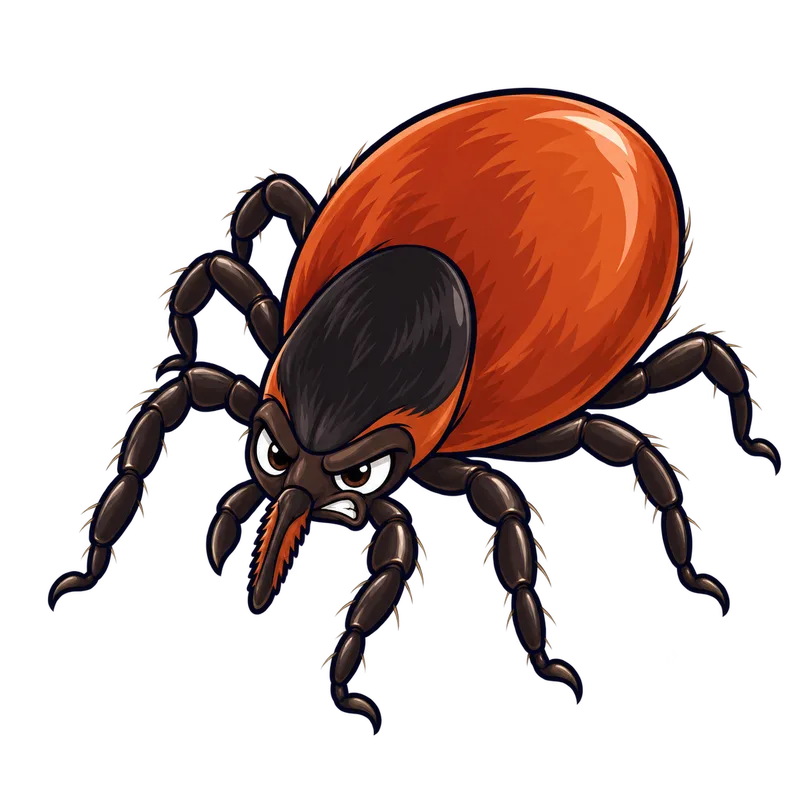
Maine residents doing yard work share their property with blacklegged ticks and American dog ticks that wait in shady, humid spots like leaf litter. Because adult ticks are the size of an apple seed and tiny nymphs measure roughly 1.5 mm, you should treat your clothes with 0.5 percent permethrin spray and check yourself indoors.
What is actually going on
You are standing by the garage on a crisp Saturday morning, staring at a mountain of fallen oak leaves and wondering if grabbing the rake is worth the inevitable battle with the local wildlife. If you live in Maine, heading out for weekend yard work means sharing your property with the blacklegged tick, more commonly known as the deer tick, alongside occasional American dog ticks. These tiny arachnids spend their days waiting in shady, humid microclimates like leaf litter, tall grass, and stone walls. When you rake, clear brush, or mow the lawn edges, they transfer onto your boots and pants, usually starting a slow upward crawl in search of thin, warm skin.
Why do these small pests cause so much anxiety? It comes down to what they carry. The blacklegged tick is the primary vector in Maine for several serious illnesses, including Lyme disease, anaplasmosis, babesiosis, and Powassan virus. While adult ticks are about the size of an apple seed and relatively easy to spot before they do damage, the real trouble comes from nymphs active from May through July. Measuring roughly 1.5 mm, a nymph looks like a single poppy seed sprinkled on your skin. Because they are so small and their saliva acts as a local anesthetic, they feed undetected for days.
People often assume ticks jump from trees or drop down onto your shoulders as you walk past, but that is a persistent myth. Ticks lack wings and jumping legs. Instead, they practice what scientists call questing. They climb up low vegetation, stretch out their front legs, and wait for a passing host to brush against them. Once on your clothes, they spend up to two hours wandering upward before they finally settle down to feed. That travel window gives you plenty of time to stop them, provided you dress with defense in mind and check yourself regularly.
How to tell for sure
Identifying the pests in your yard usually depends on their physical traits and life stage, though you do not need a laboratory to tell the main local culprits apart. The blacklegged tick, or deer tick, typically features an orange-red abdomen and a solid black shield behind its head if you are looking at an adult female, while males are entirely dark brown. Nymphs appear as tiny, translucent brown specks. By contrast, the American dog tick is larger, measuring 5 to 7 mm unfed, and sports distinct silver or white wavy lines on its back with short, broad mouthparts.
People frequently wonder if sending a removed tick to a private testing lab is a smart move to figure out what to do next. Public health agencies usually advise against relying on commercial tick testing for clinical decisions. Those tests take days to return results, and finding a pathogen inside a tick does not automatically mean it was successfully transmitted to you. Clinical decisions usually depend on how long the tick was attached and what symptoms appear, rather than what a lab finds out about the bug later.
Another common trap is believing that a missing bullseye rash means you are entirely safe from tick-borne infections. While the classic circular rash shows up in a majority of Lyme cases, it can also present as a solid red patch, and other illnesses like anaplasmosis or Powassan virus rarely cause any rash at all. If you find something attached, focus on its appearance and how long it likely fed rather than waiting for classic symptoms that may never show up on your skin.
What usually comes next
Safeguarding yourself before stepping into the yard means sticking to a reliable routine rather than giving your clothes a casual squirt of bug spray. Treat your outer layers, boots, and socks with a 0.5 percent permethrin spray, and let the fabric dry completely before you put it on. Permethrin binds directly to clothing fibers, kills ticks on contact, and even survives multiple trips through the washing machine. For your exposed skin, use an EPA-registered repellent containing DEET or Picaridin. Dress defensively by wearing light-colored clothes so dark crawling ticks stand out, and tuck your pants into your socks to build a physical barrier that forces ticks to walk on the outside of your garments.
When you finish working outside, your habits indoors matter just as much as your gear. Strip off your work clothes and toss them straight into the dryer on high heat for 10 to 20 minutes. A regular washing machine cycle with warm water will not kill hidden ticks, but the dry heat of a dryer dehydrates and destroys them rapidly. Follow that with a thorough shower within two hours of coming inside, which washes away unattached crawlers and gives you a great chance to check your entire body in front of a mirror. Pay close attention to warm, hidden spots like behind your knees, your waistline, your armpits, and along your hairline.
If you find a tick already attached to your skin, proper removal is straightforward but unforgiving of mistakes. Grab a clean pair of fine-tipped tweezers, press the skin taut, and grip the tick's mouthparts as close to your skin surface as possible. Pull straight upward with steady, even pressure. Never twist, jerk, or squeeze the swollen body, and do not fall for old-school advice about burning the tick with a match or smothering it with petroleum jelly or rubbing alcohol. Irritating the tick causes it to regurgitate infectious fluids straight into your bloodstream. Once the bug is out, clean the bite site thoroughly with soap and water or rubbing alcohol.
One major household warning deserves strict attention here. While permethrin clothing treatments are completely safe for human fabric and dogs once dried, permethrin is extremely toxic and fatal to cats. Never apply dog or clothing permethrin products onto feline pets.
When to get help
Knowing when to escalate a tick bite from a backyard nuisance to a medical concern can prevent serious complications. For Lyme disease, the bacteria typically require 24 to 36 hours of attachment inside the midgut before they migrate to the salivary glands and transmit to a human host. Removing a deer tick within that window nearly eliminates your risk of Lyme disease. However, certain pathogens do not follow that slow schedule. Powassan virus resides pre-formed in the tick's salivary glands and can transmit to your body within 15 to 30 minutes of attachment.
If you remove an attached blacklegged tick that was feeding for 24 hours or longer in a high-risk Lyme endemic area, consult a physician or urgent care clinic within 72 hours of removal. You may be evaluated for a single-dose oral doxycycline prescription as post-exposure prophylaxis. Watch closely over the next few weeks for early warning signs like an expanding red rash, low-grade fevers, chills, persistent fatigue, severe headaches, or aching joints.
Immediate emergency medical evaluation is required if you or a family member develops red-flag symptoms such as a high fever, stiff neck, confusion, severe light sensitivity, facial drooping, difficulty breathing, or sudden allergic reactions like throat tightness. For large-scale landscape treatments, property owners should remember that broadcast pesticide applications or barrier sprays carry environmental risks, and treating a large yard is best left to a licensed commercial pesticide applicator who follows federal label laws.