
Brown dog tick vs other ticks on a dog: what can you identify?
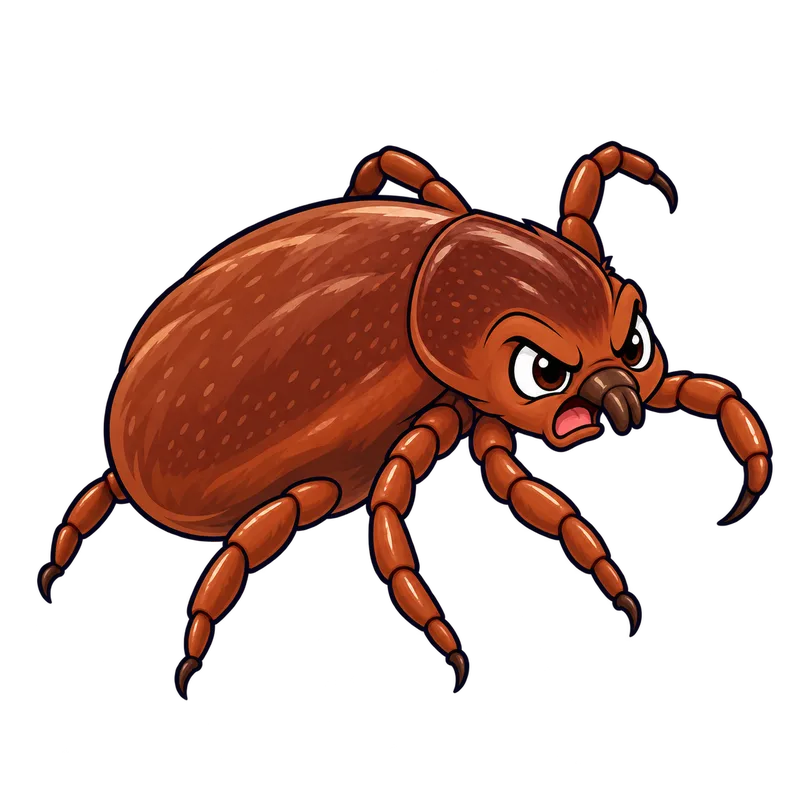
You can identify a brown dog tick by examining its mouthparts, scutum, and festoons using a magnifying glass, provided the tick is still relatively flat and unfed. An unfed brown dog tick looks like a flat apple seed with short, blunt mouthparts and a solid reddish-brown scutum. Identification becomes difficult once a female feeds and swells into a dark red or slate-grey grape.
What is actually going on
Imagine walking across the living room carpet and spotting a tiny, reddish-brown speck crawling toward the dog bed. You pick it up, or pull it off your dog, and wonder what kind of invader you are dealing with. If it is a brown dog tick, you are facing a pest that acts more like a household insect than a woodland hitchhiker. While most ticks prefer the great outdoors, waiting on tall grass for a deer or a hiker to walk past, the brown dog tick feels right at home indoors. It can complete its entire life cycle inside human houses, apartment buildings, and heated kennels, hiding in baseboards, curtain folds, and behind furniture.
So, what can you actually identify when you look at a tick on your dog? You can usually tell a brown dog tick apart from other common dog ticks by looking at a few distinct body parts, provided the tick is still relatively flat and unfed. An unfed brown dog tick looks a bit like a flat, dry sesame seed or an apple seed. If you compare it to an American dog tick, a deer tick, or a lone star tick, you will notice differences in color patterns on its back, the length of its mouthparts, and the small grooved folds along its lower rear edge.
The trouble starts when the tick begins to feed. A female tick takes in a massive blood meal, swelling up until she resembles a tight, dark red or slate-grey grape or boba pearl. This dramatic expansion changes everything. When a tick grows to one or two hundred times its original weight, its natural patterns stretch out, its colors shift, and its body margins blur. At that point, checking online identification pictures becomes an exercise in frustration because the real-life specimen looks nothing like the flat drawings in a field guide.
How to tell for sure
If you want to identify a tick at home without a laboratory, you usually need a magnifying glass or a hand lens that offers 10x to 20x magnification. Start by looking at the mouthparts extending from the front of the head. Brown dog ticks have short, blunt mouthparts, just like American dog ticks. Deer ticks and lone star ticks, by contrast, possess noticeably longer, needle-like mouthparts.
Next, check the shield right behind the head, known as the scutum. On a male tick, this plate covers almost the entire back. On a female tick, it covers just the front portion. An American dog tick features a distinctive white or silver pattern on its scutum, and a female lone star tick displays a bright white spot right in the center. The brown dog tick keeps things plain with a solid, unornamented reddish-brown scutum, much like the solid dark scutum of a deer tick.
To separate a brown dog tick from a deer tick, look closely at the outer rear edge of the abdomen. Brown dog ticks carry small, rectangular, grooved folds called festoons along that lower edge, and American dog ticks have them too. Deer ticks lack festoons entirely, featuring a smooth, rounded rear margin. If you have strong magnification and a steady hand, you can also examine the hexagonal shape of the base of the head, which is another signature trait of the brown dog tick.
What if the tick is fully engorged or looks like none of these descriptions? You usually reach a hard limit for home identification. Photographs taken with a phone camera often lack the necessary lighting, angle, and clarity to separate closely related species. If you need a definitive answer, place the physical specimen into a small, sealed container with rubbing alcohol and send it to a local university extension service or public health agency for stereomicroscopic evaluation. Never try to guess the species by looking at the bite mark or skin lesion on your dog, because individual reactions vary too much to tell you anything useful.
What usually comes next
Once you spot a tick on your dog, your top priority is getting it off safely. Forget about old folklore tricks involving petroleum jelly, nail polish, or a hot match. Irritating the pest with chemicals or heat simply causes it to regurgitate stomach contents straight into your dog, which increases the chance of disease transmission.
Instead, reach for a pair of fine-tipped tweezers or a dedicated tick removal tool. Stay away from thick grooming tweezers or bare fingers because squeezing the body like a water balloon pushes infectious fluids right into the wound. Grab the tick by its mouthparts as close to the dog skin as possible. Pull straight up with a steady, firm pull. Avoid twisting or jerking, since that motion can snap the mouthparts off inside the skin.
If a small fragment of mouthpart stays embedded in the skin, there is no need to panic. The dangerous salivary glands and pathogens live in the main body of the tick, not in those tiny tips. If the remnant does not come out with a gentle brush, leave it alone to let the skin push it out naturally like a splinter. Clean the bite area and your hands well with soap and water or rubbing alcohol afterward.
When you look at stopping future invasions, keep in mind that any spot-on treatment, chewable medication, or tick killer used on your pet needs proper veterinary advice. Should you find a brown dog tick infestation established inside your house or kennel, standard store-bought aerosol sprays rarely fix the issue by themselves. You will generally want to bring in a licensed pest control professional to treat cracks and crevices where these pests hide.
When to get help
Certain signs mean you need to skip the DIY approach and call a professional right away. If your dog gets sluggish, runs a fever, stops eating, limps, or shows a wobbly weakness in the back legs, get to the vet immediately. That hind leg weakness can point directly to tick paralysis, which is a true emergency.
Safety measures count for a lot when using pest control chemicals around the house. Permethrin, a synthetic chemical often used against ticks on dogs and clothes, is deeply poisonous to cats. A cat liver cannot process this substance, and contact can trigger violent tremors, seizures, and worse. Never put a dog product on a feline, and keep cats well away from treated pets until everything dries fully according to the package directions.
Protecting the environment takes care, too. These chemical treatments can harm fish, water bugs, and bees. Never clean your tools near storm drains, and keep sprays away from indoor fish tanks or garden pollinator spots.
People need to watch out for their own health as well. If anyone in the household develops a spreading target shaped rash, a bad headache, stiff neck, fever, or sudden flu-like feelings after dealing with an infested pet or removing a tick, get checked by a doctor without delay.