
What should you ask before bald-faced hornet nest removal?
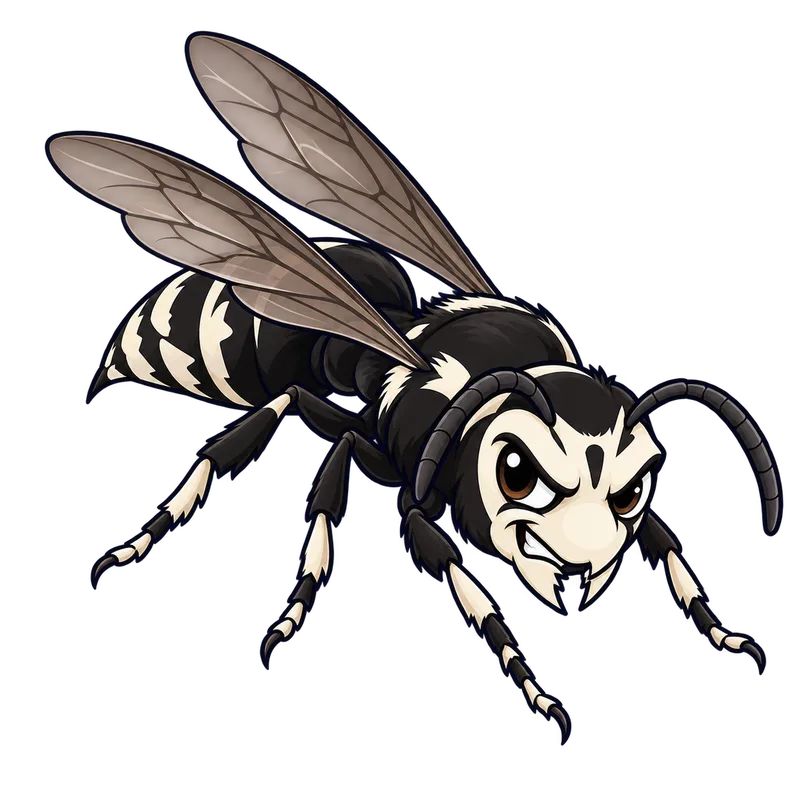
Before removing a bald-faced hornet nest, you should ask whether you have correctly identified the insect and whether the nest actually needs to go right away. You must also check local rules, confirm you are waiting until full nightfall, and ensure no household member has a documented insect sting allergy.
What is actually going on
Picture stepping out onto your back porch on a warm August afternoon to water the ferns, only to notice a gray, football-shaped paper lantern dangling from the low branch of your Japanese maple. A second later, a stout black insect with a striking white face darts past your ear to inspect you. That is a bald-faced hornet nest, and before you reach for a ladder or a can of spray, you need to ask yourself a few serious questions. It is easy to assume that any large stinging insect nest attached to your property demands an immediate, aggressive counterattack, but acting without a plan usually leads to painful stings, legal headaches, or unintended harm to local wildlife.
The most critical question to ask before doing anything is whether you have correctly identified what is living in that paper envelope. Bald-faced hornets are not true hornets at all, but rather oversized aerial-nesting yellowjackets. They measure about half an inch to three-quarters of an inch long, featuring a mostly black body with distinct ivory or white markings plastered across their faces and the tips of their abdomens. They build these enclosed gray nests from chewed wood fiber mixed with saliva, usually high up in trees, dense shrubs, or beneath structural eaves. If the nest instead has an open, umbrella-like comb exposed to the air, you are looking at standard paper wasps rather than bald-faced hornets, which changes how much defensive chaos you can expect when you get close.
Another question worth pondering is whether the nest actually needs to go right now. Bald-faced hornets are ruthless predators of garden pests, spending their days hunting flies, caterpillars, and aphids to feed their growing brood. If the nest is tucked away in the back corner of your property where nobody walks, leaving it alone until winter is often the safest and easiest path. Once freezing temperatures arrive, the colony dies off naturally, the old queens scatter to find shelter, and the paper shell is permanently abandoned. They never reuse an old nest the following year, so time is sometimes your best ally.
How to tell for sure
When you stand at a safe distance to inspect the inhabitants, look closely at their faces and legs. A bald-faced hornet looks a bit like it is wearing a white sports mask, given the vivid ivory pattern on its head. But your primary identification checkpoint is to rule out dangerous exotic impostors. If the insect you are looking at exceeds an inch in length, displays a reddish-brown thorax, or features bright yellow feet that look like little yellow socks, you are dealing with a regulated invasive species such as the yellow-legged hornet or the northern giant hornet.
You usually cannot rely on a quick glance if you are unsure, and you should never poke at the structure to get a better look. If those leg tips are bright yellow or the body is massive, stop right there. Invasive species detections trigger mandatory reporting protocols to state departments of agriculture or federal plant health authorities, and private DIY removal is strongly discouraged because it lets fertile queens escape and spread. If the size matches the standard three-quarters of an inch, the face is ivory white, and the nest is a closed gray tear-drop with a single bottom hole, you are dealing with native bald-faced hornets and can move on to deciding how to handle them.
What usually comes next
Once you have pinned down the exact insect and decided that the nest sits too close to your morning foot traffic to simply leave it be, you need to check the rules before taking any action. Federal pesticide laws treat the product label as absolute law, meaning using an off-the-shelf aerosol spray at a homemade strength, using it in a spot the label forbids, or skipping the required safety gear crosses legal lines. You cannot just mix up a stronger brew in a bucket and hope for a faster knockout, since applying chemicals outside their approved directions only raises your own exposure risk without actually helping the spray do its job.
Timing and basic safety determine how you handle the practical steps. You have to wait until dusk or full nightfall before trying anything. Moving against a nest in broad daylight is like stirring up a hornet's nest during rush hour, since plenty of foraging workers are out and about and will attack you the moment they fly back to a ruined home. Nighttime keeps the colony bottled up and protects daytime visitors like honeybees from drifting mist. You also have to think about household pets, because common synthetic pyrethroid sprays are dangerously toxic to cats and aquatic life. Keep your animals locked inside, cover up nearby fish ponds, and wear heavy clothes, eye protection, and gloves before you touch any gear.
When to get help
There are plenty of moments when trying to handle this yourself is a genuinely terrible idea. If anyone living in your house has a documented allergy to insect stings, stay far away from an active bald-faced hornet nest. These insects carry smooth stingers, meaning one angry worker can sting you multiple times in a row, pumping in a serious amount of venom. If a sting leads to trouble breathing, dizziness, swelling around the face, or a spreading rash, call emergency services or Poison Control immediately, and keep in mind that anyone who gets stung needs to make sure their tetanus shot is current within the past five years.
You should also pass the job off to a licensed pest control professional if the nest is tucked inside a wall cavity, dangling near overhead power lines, or perched in a spot that forces you to balance on a high extension ladder while dodging angry flyers. Balancing on a ladder while fighting off stinging insects is a fast track to a hospital visit. Lastly, if the nest sits on a public property like a school, a daycare, or a commercial kitchen, local regulations usually mean only a licensed commercial applicator can legally handle the removal using strict safety guidelines.