
What does a cicada killer burrow look like?
A cicada killer burrow looks like a tiny, lopsided volcanic crater made of loose dirt with an unlined, vertical opening the width of a nickel or a quarter. The hole is usually half-hidden by a horseshoe-shaped mound of soil that the female wasp kicked out behind her while digging.
What is actually going on
Picture walking out to check the mail on a warm afternoon in July, glancing down at the patch of thin, dry grass near the driveway, and noticing what looks like a tiny, lopsided volcanic crater made of loose dirt. A massive wasp, easily the size of a large adult thumb or a standard AA battery, buzzes low across the lawn and drops straight into the hole. If you have been wondering what a cicada killer burrow looks like, you are likely looking at that exact scene. It is an unlined, vertical opening in the earth about the width of a nickel or a quarter, usually half-hidden by the horseshoe-shaped mound of soil the female kicked out behind her while excavating her private nursery.
A cicada killer burrow is simply an underground tunnel system dug by a single female wasp to raise her young. Unlike social yellowjackets that pool their energy into a massive, multi-tiered paper nest inside a hollow wall or an old rodent hole, these large wasps work entirely alone. The Eastern cicada killer in the East and Midwest and the Western cicada killer across the Western United States spend their mid-to-summer adult lives turning lawns, sunny garden beds, and bare earthen embankments into single-family homes. The female digs deep down into the dirt, creates individual side chambers off the main shaft, hunts down adult cicadas to paralyze and stash inside as food for her larvae, and then plugs the entrance or leaves it gaping open depending on the day's work.
People often panic when they spot these holes, assuming they are sitting on top of an aggressive colony that is about to launch a defensive swarm. But that fear comes from confusing solitary ground wasps with social hornets. Each hole in the lawn represents one independent female minding her own business, focused entirely on moving dirt and catching cicadas. She is not guarding a fortress, and she does not have an army of workers ready to back her up if you walk past her yard.
How to tell for sure
Identification comes before control, and figuring out whether a ground hole belongs to a cicada killer usually comes down to three straightforward physical cues. Start by looking closely at the rim of the opening. If you see fine silk webbing, a papery collar, or radiating silken trip-lines, the hole belongs to a ground-dwelling spider like a trapdoor or funnel-web species rather than an insect. Cicada killer burrows consist purely of bare, loose soil with zero silk whatsoever.
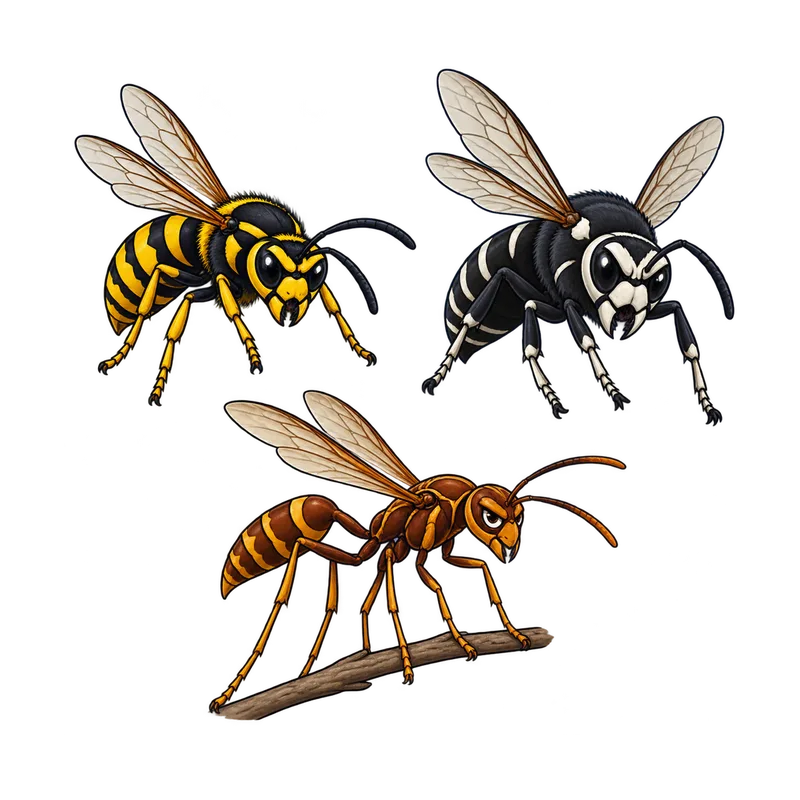
Next, watch the insect using the hole. Adult cicada killers reach up to two inches in length, featuring a reddish thorax, clear or slightly dark wings, round eyes, and bold yellow and black bands across their abdomen. People frequently mistake them for invasive giants like the northern giant hornet, but cicada killers have that distinct reddish chest and a head that looks noticeably smaller in proportion to their massive body. Northern giant hornets, by contrast, sport a solid black thorax and a massive, bright yellow-orange head.
Finally, consider the behavior. Cicada killers generally ignore humans completely unless you physically step on them barefoot or try to grab one out of the air. If you see a wasp hovering near the ground, dropping into a bare dirt hole, or dragging a paralyzed cicada across the lawn, you are almost certainly looking at a cicada killer burrow. Multiple females will sometimes choose the same sunny patch of turf to dig their individual tunnels, creating a cluster of separate mini-volcano mounds that homeowners often misinterpret as a single massive nest.
What usually comes next
When you realize you share your yard with a few solitary ground wasps, your best bet is usually to sit back and do nothing. These insects die off by the time autumn rolls around and rarely sting unless you mishandle them, meaning letting them finish their life cycle requires the least amount of effort. If the holes pop up right next to the back patio or along a pathway where kids run around barefoot, you might feel the urge to grab a heavy insecticide or a lawn drench and pour it down every single opening.
Before you start dumping chemicals, remember that plenty of harmless native bees and other beneficial bugs also make their homes in the dirt. Drenching your lawn to eliminate a handful of solitary wasps often kills off innocent pollinators and helpful predators without fixing the actual problem, which is usually thin, patchy grass growing in dry and sunny soil. If you want to stop them from picking that same spot next year, your real focus should be on growing a thicker lawn with regular watering and adding a thick layer of mulch to bare garden beds so the females cannot easily get to the dirt to dig.
If you decide that treating the area is the only safe option, keep in mind that the product label is the final authority on how to use any pesticide. Putting down a chemical in a way that goes against the instructions on the package breaks the law, and serious pest problems or heavy-duty treatments should always be left to a licensed professional.
When to get help
There are times when a hole in the ground or the flying insect nearby signals something far more serious that calls for an expert or a call to local agricultural authorities. If you see an insect that looks like an invasive pest, perhaps a hornet with a solid black chest and a huge yellow head, or one hanging around a beehive to pick off returning honeybees, leave it alone.
Snap a clear picture from far enough away to stay safe and send it straight to your local agricultural extension office or state department of agriculture. Officials rely heavily on public reports to track down new invasive populations before they spread.
On the health side, keep in mind that female cicada killers do have stingers for subduing their prey, whereas males cannot sting at all. While stings are uncommon and generally happen only when a wasp gets trapped against bare skin, any insect sting can spark an unexpected reaction. If someone gets stung and shows signs of a severe allergic reaction, trouble breathing, or dizziness, get emergency medical help or call poison control right away.