
Is a large ground-nesting wasp a cicada killer or a yellow jacket?
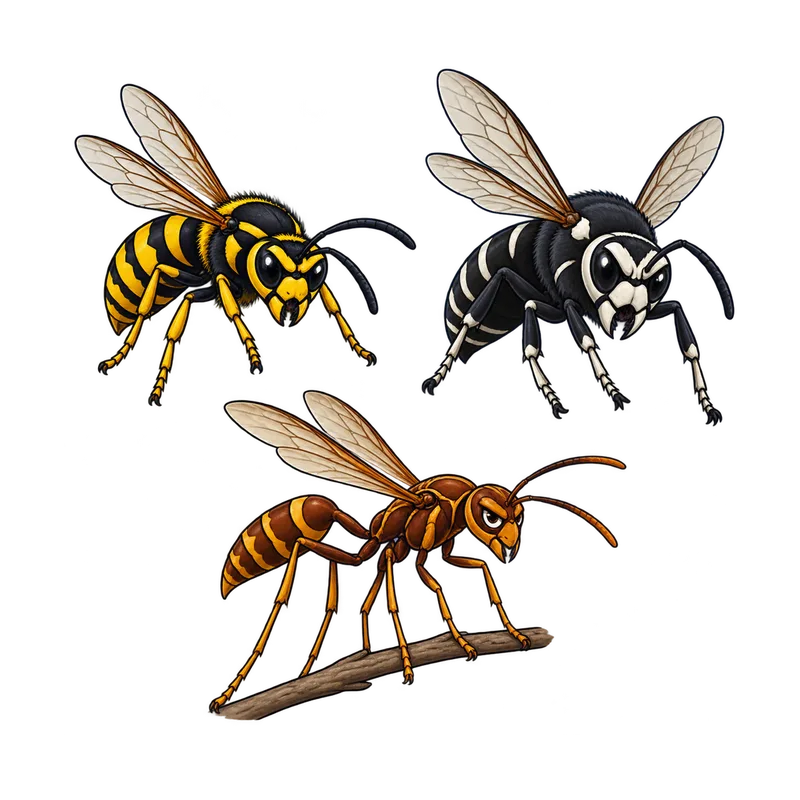
A large ground-nesting wasp in North America is either a cicada killer or a yellow jacket, and you can tell them apart primarily by their size and nesting habits. A cicada killer is massive at up to two inches long and leaves a distinct pile of dirt beside its burrow, while a yellow jacket is about half an inch long with a clean, unexcavated nest entrance.
What is actually going on
You are out in the yard pushing the mower across a dry patch of lawn, or perhaps weeding a sunny flowerbed, when you notice a large, intimidating wasp hovering near the dirt. Panic sets in immediately. Is this the insect that is going to clear the yard, or is it just minding its own business?
When you spot a large ground-nesting wasp in North America, you are almost certainly looking at one of two completely different insects. It is either a solitary cicada killer or a social yellowjacket. People mix them up constantly because both insects nest in the ground, but their behavior, social structure, and threat level to humans are worlds apart.
If the wasp you are staring at is massive, stretching up to two inches long, and digging a solitary tunnel with a noticeable pile of dirt beside it, you have a cicada killer on your hands. If the insect is smaller, closer to half an inch in length, and workers are zipping rapidly in and out of a clean hole without any excavated dirt piled around it, you are dealing with a yellowjacket. Understanding which one you have changes everything about how you should react.
How to tell for sure
Size is usually the quickest way to tell them apart, provided you can look at the insect without running away. A cicada killer is as long as an adult human thumb, easily measuring one and a half to two inches, with a dark reddish-brown thorax and yellow and black stripes across the abdomen. A yellowjacket is much smaller, roughly the size of a paperclip head or about half an inch long, sporting bright yellow and black bands on a smooth, compact body.
Next, look at the ground around the hole. Cicada killers are solitary digger wasps, and every single female carves out her own underground burrow in dry, loose, or sandy soil. As she digs, she pushes the dirt out, creating a distinct horseshoe-shaped mound surrounding a hole about an inch wide. Yellowjackets do not dig their own dirt piles. Instead, a queen moves into a pre-existing subterranean cavity, such as an abandoned rodent burrow or a root void. Their nest entrance is a clean, unexcavated hole flush with the turf.
Behavioral clues clear up any remaining confusion. Female cicada killers spend their time hunting annual cicadas to provision their nests, and they are remarkably docile. They almost never sting humans unless you physically crush, step on, or grab them. Male cicada killers often patrol the airspace and will loudly buzz or dive-bomb people and pets who wander into their territory, but males lack a stinger entirely and are completely harmless. Yellowjackets are the exact opposite. They live in social colonies with hundreds or thousands of workers, and if their underground nest is disturbed by lawnmowers or foot traffic, they deploy aggressive swarming defense tactics and sting repeatedly.
What usually comes next
Deciding what to do next depends entirely on which insect is sharing your yard. If you have cicada killers, the most practical choice is usually to do nothing at all. These large wasps are beneficial native pollinators and predators of tree-damaging cicadas. They rarely sting, and their presence is temporary, usually peaking in mid-summer when annual cicadas emerge. You can discourage them from nesting in a high-traffic area next season by keeping your lawn thick, well-watered, and heavily mulched, since they strongly prefer dry, bare, sandy soil.
If you confirm you have ground-nesting yellowjackets, the situation demands much more caution. Mark the location of the nest entrance from a safe distance during daylight hours, and keep children, pets, lawnmowers, and string trimmers far away from that spot. Because yellowjackets defend their colonies aggressively, attempting to deal with a large underground nest without proper protection often leads to multiple painful stings. If the nest sits right next to a walkway, a doorway, or a children's play area, contact a licensed pest control operator to handle the removal safely.
When to get help
Severe reactions to wasp stings require immediate medical attention. If someone is stung and experiences red flag emergency symptoms such as difficulty breathing, swelling of the throat or mouth, chest pain, severe dizziness, lightheadedness, or a widespread rash and hives, call 911 right away. For expert non-emergency guidance on sting exposure, you can contact the Poison Help Line at 1-800-222-1222. Anyone who receives multiple stings or lacks a tetanus booster within the past five years should also seek a medical evaluation.
Beyond personal health concerns, certain pest situations require professional or state intervention. If you spot a suspected nest of an invasive yellow-legged hornet, which features distinctive bright yellow lower leg segments and preys aggressively on honeybees, never attempt to remove it yourself. Report sightings directly to your state agriculture department for professional agency removal. Under federal law, any pesticide applied to manage these pests must strictly follow the directions written on the product label, and applicators must never apply insecticides to blooming crops or flowering weeds where beneficial pollinators forage.