
What does an Asian hornet nest look like?
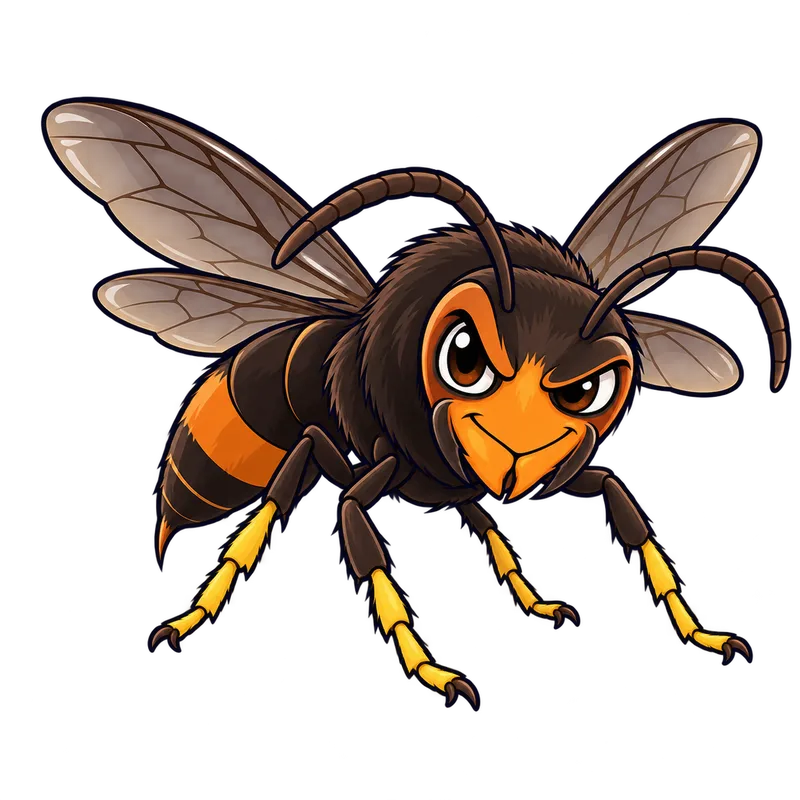
An Asian hornet nest is a fully enclosed gray paper structure built from chewed wood fibers mixed with saliva, featuring a swirling marbled texture. Its appearance depends entirely on the season, ranging from a tennis ball size embryo nest in spring to a basketball size structure high in a tree by late summer.
What is actually going on
Imagine walking out to pull some weeds near your garden shed on a warm afternoon, and you notice what looks like a gray, papery ball stuck under the roof overhang. It might be the size of a tennis ball or a bit larger, with a swirling, marbled texture that looks almost like papier-mache. If you have been keeping an eye on the news regarding invasive insects, your stomach might drop as you wonder if you are looking at an Asian hornet nest.
An Asian hornet nest is an annual, fully enclosed paper structure built by yellow-legged hornets from chewed wood fibers mixed with saliva. These nests go through three distinct seasonal phases that change their size, appearance, and location dramatically over the course of the year. In the spring, a single overwintered queen starts out with a tiny embryo nest that resembles a tennis ball, usually tucked away in a sheltered, low-lying spot like a porch ceiling, birdhouse, or shed eave.
As the weather warms up and the first worker hornets hatch out to help, the colony expands that shelter into a primary nest. This mid-season phase results in a softball- to watermelon-sized structure that still stays relatively close to the ground, often sheltered near human structures or low tree branches. If you are spotting one in early summer, it will usually feature a single entry and exit hole right at the bottom tip of the paper envelope.
By late summer and into autumn, things scale up significantly. Most colonies abandon those low-altitude spots and relocate high up into tree canopies or tall building overhangs to build massive secondary nests. These mature structures can easily reach the size of a basketball or beach ball, housing up to 6,000 hornets. Unlike the earlier nests, these late-season giants feature their main entrance hole on the side rather than the bottom, and they are frequently hidden by thick foliage until the autumn leaves finally drop.
How to tell for sure
Pinpointing what you are looking at requires checking a few specific structural and physical markers, because plenty of native insects build papery homes that cause unnecessary panic. First, look at the overall envelope. Asian hornet nests are fully enclosed paper shells with scalloped, marbled layers that completely hide the internal comb cells. This sets them right apart from paper wasp nests, which usually feature open, umbrella-shaped combs with zero outer paper cover and visible hexagonal cells pointing straight down.
Next, check the location and the entrance hole. Spring and early summer nests usually sit low, with a small hole at the bottom. Mature autumn nests sit high in the trees, often thirty feet or more above ground, with a side entrance. If you can safely spot the hornets themselves without getting too close, look for their legs. The yellow-legged hornet gets its name for a reason, displaying dark bodies with yellow-banded abdomens and bright yellow lower legs that usually look almost like they are wearing yellow socks.
You should also watch for behavior instead of just staring up at the trees. If you keep bees or have wildflowers nearby, watch for a hornet hovering statically in mid-air outside a beehive entrance like a tiny helicopter. This hunting tactic, known as hawking, involves snatching returning forager bees out of the air. Spotting this behavior usually means a nest is hidden somewhere within about half a mile of your yard.
One common belief is that any massive stinging insect nest high in a tree belongs to these invasive hornets, but that is not always the case. People frequently confuse them with bald-faced hornets, which also build large, suspended gray paper nests. However, bald-faced hornets are starkly marked in black and white rather than brown and yellow, and they lack those bright yellow legs.
What usually comes next
Discovering what looks like a fresh hornet nest in your yard leaves you with one immediate, non-negotiable decision to make regarding safety and reporting. You need to stay well away from the area immediately and resist any urge to knock it down, spray it with a garden hose, or treat it with a household aerosol can. Disturbing an active colony of thousands of defensive hornets invites a mass stinging event, and incomplete removal simply scatters the surviving queens to start new colonies nearby.
Your practical task at this stage involves gathering evidence safely, not taking action. If you can capture a clear photograph from a safe distance using your camera zoom, do so, making sure to include a nearby reference point like a building beam or branch to help authorities gauge the scale.
Once you have your photo, your next step is to submit that record directly to the proper agricultural authorities or extension offices rather than trying to handle the eradication yourself. State departments of agriculture and federal plant health agencies maintain active reporting portals specifically for tracking these invasive populations, and they rely on public sightings to map and address infestations quickly.
When to get help
Any suspected Asian hornet nest or sighting of an adult yellow-legged hornet requires immediate professional and regulatory intervention. You should contact your state department of agriculture, university extension service, or a licensed pest management professional right away. State and federal response teams are specifically equipped with the protective gear and specialized removal tools required to handle these aggressive aerial nests safely.
Keep in mind that stings from a large number of hornets carry serious medical risks, including severe allergic reactions and systemic envenomation. If anyone is stung multiple times, exhibits signs of an allergic reaction, or experiences trouble breathing, seek emergency medical care immediately. Never attempt to treat or remove a mature nest on your own property, as professional verification and eradication protocols exist precisely to manage the biological risk safely.