
How do you deal with cicada killer wasps in a yard?
You deal with native cicada killer wasps in a yard by leaving them alone or changing their environment, depending on where they dig. Because these solitary insects ignore humans and finish their seasonal cycle quickly, you can deter them from high traffic areas by thickening your grass with fertilizer and regular watering or adding thick mulch.
What is actually going on
You walk out onto the back patio with your morning coffee, step onto the lawn, and suddenly a flying insect the size of your thumb comes screaming past your ear. It hovers, darts left, and dives headfirst into a little pile of fresh dirt sitting right in the middle of your favorite patch of grass. Your mind instantly races to nightmares of swarm attacks, ruined yards, and emergency room visits.
Take a breath, because what you are looking at is almost certainly a cicada killer wasp. These native solitary digger wasps reach lengths of up to 2 inches. They are absolute giants of the insect world, but they are not out to get you. Unlike yellowjackets or paper wasps that build shared paper nests and guard them like an army barracks, cicada killers are strictly solo operators.
The females spend their summer days digging individual burrows in dry, unshaded soil or sparse lawn turf. They hunt cicadas, paralyze them, and drag them down into subterranean cells to feed their developing larvae. The males spend their time zooming around lawn edges and garden beds looking for mates. They make a lot of noise and fly right at you with plenty of attitude, but they are all engine noise and no weaponry. Male cicada killers do not have a stinger at all.
How to tell for sure
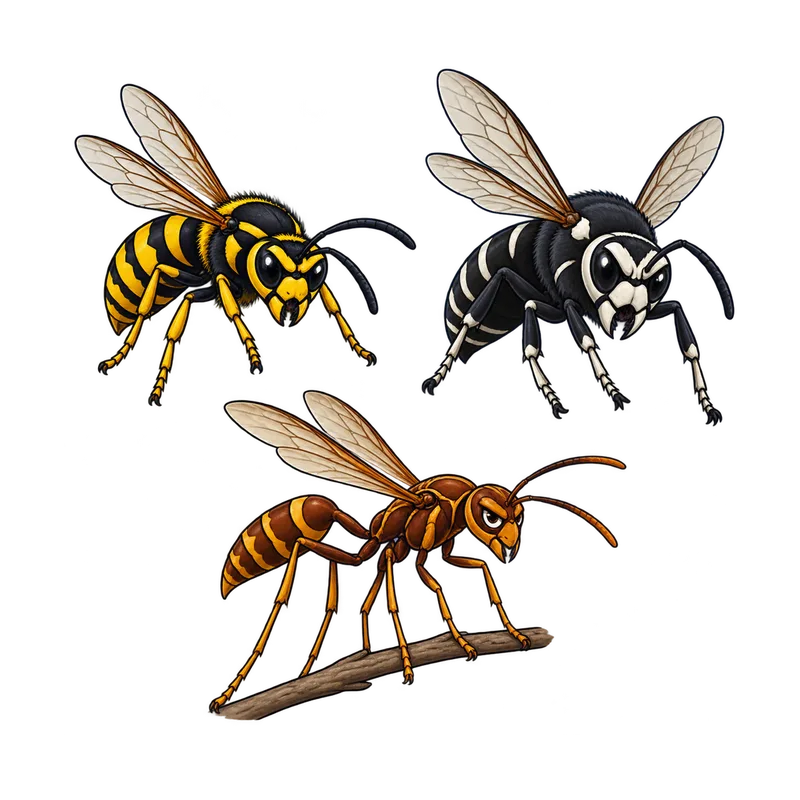
Before you do anything, you need to make sure you are actually looking at a native cicada killer and not an unwanted guest. Stand at a safe distance and look at the physical traits and behavior. Cicada killers usually measure up to 2 inches long, featuring a dark reddish brown thorax, clear wings, and an abdomen banded with distinctive yellow and black markings.
Take a close look at the head if you can get a good look with a clear photo. Cicada killers usually have simple, smooth, round eyes and a relatively small head compared to the rest of the body. They build solitary dirt mounds with a thumb-sized entry hole, and you will usually never find them hanging a paper nest from a tree branch or a structural eave.
This visual check matters because you want to rule out dangerous look-alikes. Invasive pests feature massive, solid yellow or orange heads paired with deeply notched eyes and stark black thoraxes, or they build massive aerial paper nests. If your wasp has round eyes, a reddish brown middle section, and lives in a hole in the dirt, you are usually dealing with a native cicada killer.
What usually comes next
Most homeowners make the mistake of running to the hardware store for a heavy chemical spray the second they spot a 2-inch wasp digging in the yard. That reaction usually creates more problems than it solves. Because cicada killers are solitary insects that largely ignore humans, the most practical decision is usually to do nothing and let them finish their brief seasonal cycle.
If their chosen digging spot happens to sit right in the middle of a high-traffic pathway or a children's play area, you can manage the situation by changing the environment rather than poisoning the soil. Cicada killers love dry, sparse, neglected turf because the thin soil makes digging effortless. You can deter them by thickening up your grass with fertilizer and regular watering, or by putting down a thick layer of bark mulch in garden beds. These wasps usually hate damp, heavy soil and thick turf, so they will simply pack up and move somewhere else next season.
If you still feel tempted to pour gasoline, bleach, or household solvents down the holes, stop right there. Pouring hazardous chemicals into soil burrows is illegal under federal and state environmental laws, ruins your groundwater, and creates a severe fire hazard. If you decide to use a registered retail pesticide, remember that the product label is the law. Never broadcast broad-spectrum insecticides across your entire lawn, as doing so destroys beneficial ground-nesting bees and other harmless native insects.
When to get help
There are a few clear boundaries where DIY management stops and you need to call in outside assistance. If you spot an insect that matches the description of an invasive species, do not try to handle it yourself. Take a clear photograph from a safe distance and report the finding immediately to your state department of agriculture or local extension service so experts can verify the sighting.
You should also bring in a licensed professional pest control operator if these native wasps set up camp in spaces where vulnerable people are at risk, such as a daycare facility, a school playground, or a healthcare setting. Commercial properties and sensitive areas require targeted management that complies with strict local pesticide regulations.
Finally, remember that insect stings can trigger medical emergencies. Female cicada killers possess a stinger to subdue prey and will only sting if they are squeezed, grabbed, or stepped on with bare feet. If someone gets stung and shows signs of a severe allergic reaction, such as trouble breathing, swelling of the throat or face, dizziness, or widespread hives, call nine-one-one immediately for emergency medical care. For any non-emergency questions regarding a sting or venom exposure, reach out to Poison Control at 1-800-222-1222.