
What should you do after a bald-faced hornet sting?
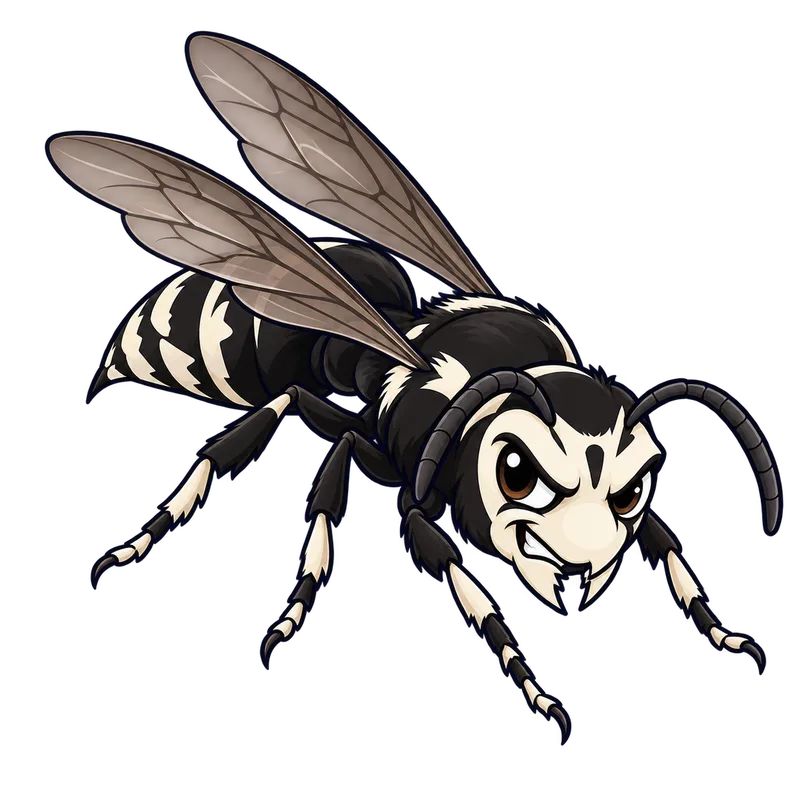
After a bald-faced hornet sting, immediately wash the site with mild soap and water, then apply a cold compress to reduce pain and swelling. You can also elevate the limb and use over-the-counter pain relievers or antihistamines. Most stings settle down within a few days, but you should watch closely for severe allergic reactions.
What is actually going on
You are out trimming the backyard hedge on a humid Saturday afternoon, your mind drifting to weekend plans, when a sharp, searing pain stings your forearm. You drop the clippers, slap at your skin, and spot a heavy-bodied black insect with stark white facial markings vanishing back up into a large, papery gray sphere hanging from the branch overhead.
After a bald-faced hornet sting, immediately wash the sting site with mild soap and clean water to clear away bacteria, then apply a cold compress or wrapped ice pack to dial back the throbbing pain and swelling. Elevate your arm or leg if the sting happened on a limb, and reach for an over-the-counter pain reliever or an oral antihistamine if the local itching and soreness start getting on your nerves. Most stings stay local and settle down on their own within a few days, but you need to keep a close eye on how your body responds in case a wider reaction starts brewing.
When a bald-faced hornet stings you, it is injecting a complex mix of proteins and enzymes straight into your skin. Unlike a honeybee, which leaves its stinger anchored in your flesh along with a chunk of its abdomen, a bald-faced hornet is an aerial yellowjacket wasp with a smooth stinger. Think of it like a polished sewing needle rather than a barbed fishhook. It can slide in and out of your skin without tearing up the insect, which means one angry worker can pop you multiple times in a matter of seconds if you stay too close to its home.
Your body treats that sudden injection like an unwanted intruder. Blood vessels open up, fluids rush to the area to dilute the venom, and nerves fire off panic signals to your brain. That localized drama is what turns a tiny puncture into a hot, swollen, throbbing red welt.
People often think they need to squeeze or suck the venom out of the wound to stop the damage. Do not do it. Squeezing or cutting into the skin only bruises the tissue further, increases local inflammation, and introduces whatever bacteria happen to be sitting on your skin right into the puncture wound. The venom is already absorbed into your capillaries in a flash, so mechanical extraction is entirely useless. Just wash it gently, keep it clean, and let your immune system do its job.
How to tell for sure
You usually know you are dealing with a bald-faced hornet because of the neighborhood layout overhead. They build large, football-shaped, enclosed nests out of chewed wood pulp that look remarkably like coarse gray papier-mâché, usually dangling from tree branches, roof eaves, or high decks. The insects themselves measure about half an inch to three-quarters of an inch long, featuring a distinct black body highlighted by stark white markings across the face, thorax, and lower tip of the abdomen.
Despite the name, they are not true hornets. They are oversized aerial yellowjackets. That distinction matters because true hornets in North America are usually much larger or feature completely different color patterns, such as the reddish-brown European hornet or the massive northern giant hornet.
One common trap to avoid is trying to identify the pest from the shape of the skin mark alone. Skin welts are terrible impressionists. A bacterial skin infection, a fungal rash, a chemical burn, and an insect sting can all perform the exact same red, swollen bump routine on your epidermis. If you did not actually see the insect or capture the moment, a clinician cannot look at a red sore and tell you with certainty which bug caused it.
What usually comes next
For an uncomplicated sting, your main task is managing the local discomfort while watching for warning signs. Apply a cold pack for ten to twenty minutes at a time to constrict those local blood vessels, acting like a small fire extinguisher on the heat and swelling. If the sting is on your forearm or shin, prop it up near heart level to help gravity drain the fluid.
You can use over-the-counter pain relievers like ibuprofen or acetaminophen, alongside topical hydrocortisone or oral antihistamines, to take the edge off the itch and thumping ache. Always follow the product labeling for dosage directions.
At the same time, check your calendar. Punctures through the skin open a tiny doorway for environmental bacteria and tetanus spores. If it has been more than ten years since your last tetanus booster, or more than five years if the wound was particularly dirty, call your doctor to get that immunization updated.
Regarding that gray paper nest hanging outside your kitchen window, do not treat it like a piñata. Disturbing an active colony sends out a defensive squad that can deliver a punishing round of multiple stings. If the nest sits near a walkway, a doorway, or a children's play area, leave the removal to a licensed pest management professional who has the proper protective gear and equipment to handle it safely.
When to get help
Most stings are miserable but ultimately safe, yet certain situations demand immediate medical intervention. Call emergency services right away if you notice any signs of a systemic allergic reaction or anaphylactic shock. These red flags include trouble breathing, wheezing, a tight throat, swelling of your lips, tongue, or face, dizziness, a sudden drop in blood pressure, confusion, or widespread hives breaking out across parts of your body far away from the sting site.
Stings inside the mouth or throat are also a strict emergency, because even without a systemic allergy, the rapid local swelling can close off your airway mechanically. Anyone who has a known, diagnosed allergy to insect stings should use their prescribed epinephrine auto-injector immediately and call for help, even if the early symptoms seem minor.
If you or a child sustained multiple stings from disturbing a hidden nest, the sheer volume of venom can trigger whole-body toxicity, causing severe nausea, muscle cramps, or cardiovascular stress. Young children, older adults, and anyone with heart or lung conditions should be evaluated promptly after a mass envenomation event. Finally, if the local redness and pain start expanding aggressively after two or three days, or if you spot pus and red streaks radiating outward, head to a clinician because a secondary bacterial infection has likely taken hold.