
Is the yellow-legged hornet invasive in the United States?
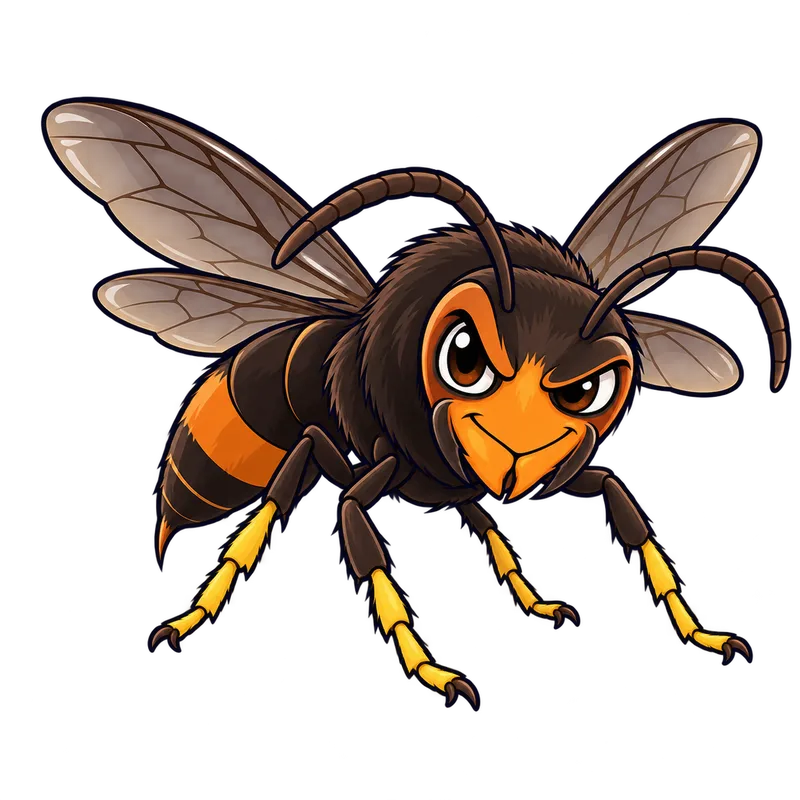
Yes, the yellow-legged hornet is an invasive species in the United States, with breeding populations established after being first detected near Savannah, Georgia. Agricultural authorities and federal agencies have launched active eradication campaigns to track and destroy nests across parts of the Southeast.
What is actually going on
Picture walking out to check your backyard beehive on a warm September afternoon, only to notice something strange hovering near the landing board. It is a chunky, dark-bodied wasp, but instead of darting straight inside like the usual workers, it hangs motionless in the air like a tiny helicopter, waiting to ambush a returning forager. You might wonder if you are looking at one of those notorious invasive pests you keep hearing about on the evening news.
Yes, the yellow-legged hornet is indeed invasive in the United States. First detected near Savannah, Georgia, this Southeast Asian native has since established breeding populations and triggered active eradication campaigns across parts of the Southeast. Agricultural authorities and federal agencies have been racing to track and destroy nests before the species gains a permanent foothold across North America.
It helps to understand why these hornets create such intense concern among regulators. They are specialized predators of social insects, particularly the western honey bee. Workers employ a hunting strategy known as hawking, hovering outside hive entrances to intercept and capture bees laden with pollen and nectar. A single nest can consume enormous amounts of insect biomass annually. Beyond direct kills, the constant threat of these aerial ambushes frightens honey bees so badly that they refuse to leave the hive at all. That foraging paralysis starves colonies from the inside out, making the hornet a formidable threat to both wild pollinators and commercial honey production.
How to tell for sure
Telling a yellow-legged hornet apart from our native and long-established insects usually comes down to a few distinctive field marks, provided you can observe them safely from a distance. An adult worker usually measures about three-quarters of an inch to an inch long, which makes it smaller than a native European hornet and much smaller than the giant hornets that sometimes make headlines.
Look closely at the coloration if you spot one resting or hunting. The thorax, which is the middle section of the body, is solid dark brown or velvety black. The head features a bright yellow or orange face, and the abdomen is mostly dark with fine yellow banding, featuring a prominently bright orange band near the end.
The most reliable diagnostic feature, however, is right on the legs. The upper parts of the legs are dark, but they usually end in striking, bright yellow lower segments that look remarkably like the insect is wearing bright yellow crew socks. If you see a dark hornet with these bright yellow feet hovering near a garden or apiary, you might be looking at the invasive species.
Do not confuse them with native lookalikes. The European hornet is larger, with a reddish-brown head and a yellow abdomen marked with black teardrops. Cicada killers are massive, solitary ground-nesting wasps that reach up to 2 inches in length. Bald-faced hornets have distinct white markings on their faces and tips, while common yellowjackets display bright yellow and black stripes across their entire bodies.
What usually comes next
If you suspect you have spotted a yellow-legged hornet in an affected region, your most practical move is to document it properly instead of trying some improvised pest control project. State departments of agriculture and local university extension services depend heavily on clean photographic proof before they send out field teams to investigate or track down nests.
Try to capture a sharp picture of the insect, and if you can do it safely without drawing a defensive reaction from nearby foragers, place something familiar like a coin or a pen close by to show scale. Once you have the shot, send it straight to your state agricultural reporting website or the dedicated email address set up by your local department of agriculture.
Resist the temptation to knock down or spray any paper nest you happen to find hanging from a tree branch or a porch ceiling. Yellow-legged hornets build massive secondary nests by late summer that can hold thousands of workers, and they will fiercely defend their home if anything disturbs them. Half-hearted removal attempts usually leave the main queen alive, letting her slip away to start a brand-new colony nearby. Monitoring traps, like simple plastic bottles baited with sweet juices or protein, are generally better left as surveillance tools for apiarists and researchers rather than used as a DIY eradication method.
When to get help
There are times when you simply need to step back and leave the problem to the experts, starting with the actual removal of any suspected hornet nest. Because these insects defend their colonies with vigor and a botched removal lets fertile queens escape, the job belongs strictly to licensed pest management professionals or state and federal agricultural officials who wear heavy protective gear and carry authorized treatments.
You also need to seek help immediately if a sting causes severe medical distress. Yellow-legged hornet stings bring intense pain and swelling, but multiple stings or a hidden allergy can trigger life-threatening anaphylactic shock. Pest control operators cannot treat or diagnose medical reactions. Anyone showing systemic symptoms like trouble breathing, swelling in the throat or face, dizziness, or a racing heartbeat needs emergency medical care right away or should contact poison control. If a sting happens, always double check that your tetanus booster is current.