
What should you do about wasps entering siding?
When wasps are entering your siding, never plug the gap while the nest is active because trapped insects will chew through your interior drywall. Your best move depends entirely on the calendar. If it is spring or summer, bring in a licensed pest control technician, but if the weather has turned cold, you can wait until winter and seal every gap.
What is actually going on
You are sitting on the couch on a warm Tuesday afternoon, and you notice a steady, purposeful stream of yellow-and-black insects disappearing right behind the vinyl siding near your porch roof. You might feel a sudden urge to run out with a tube of silicone caulk and plug up that gap before things get out of hand. Resist that urge. When wasps are entering your siding, they are not just visiting. They have built an active paper nest inside your wall void, and blocking their front door right now is the worst possible move.
Think of it like closing the main exit ramp on a packed highway during rush hour. The traffic does not simply vanish because you put up a barricade. Instead, those trapped wasps will turn around and start looking for any other way out, which usually means chewing through your interior drywall, baseboards, or electrical outlets to spill right into your living room. A colony in mid-summer contains hundreds or thousands of workers, and denying them their outdoor exit redirects their entire workforce straight toward your bedroom or kitchen.
Social wasps look for pre-existing architectural flaws in early spring, sliding through tiny gaps in trim, unsealed corner joints, or damaged weep holes. Once inside, they chew wood fibers to build layered paper combs, expanding as the warm months roll on. The insulation inside your exterior walls gives them a cozy, protected environment where their population can surge.
How to tell for sure
Before you decide what to do, you need to know who your uninvited guests are. Stand back at a safe distance during the warm daylight hours and watch their flight patterns.
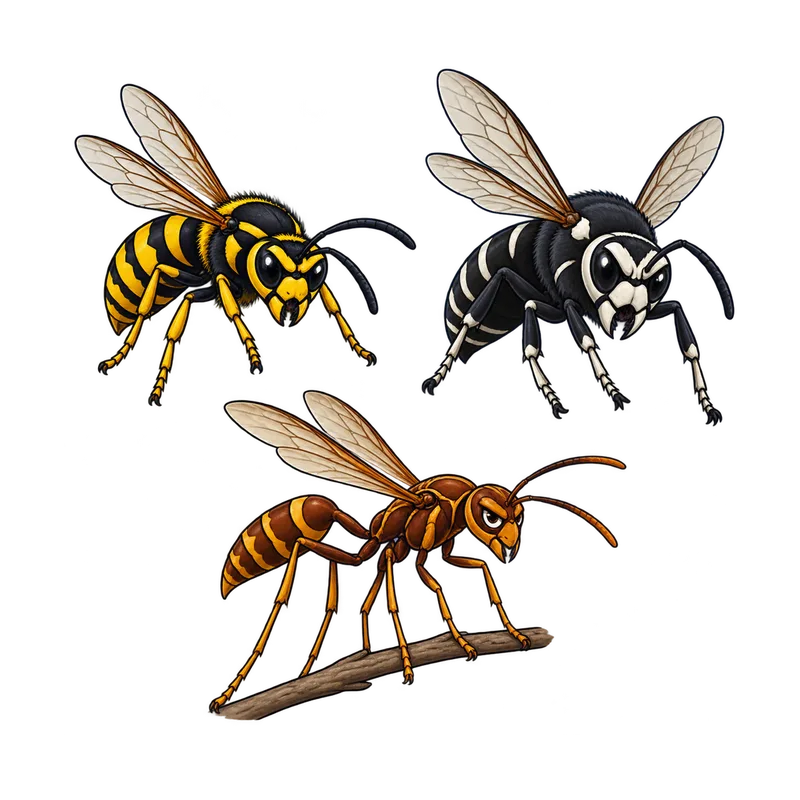
If you see slender insects with long, dangling legs and brownish bodies, you are usually looking at paper wasps. They usually build open, umbrella-shaped nests under eaves or porch ceilings rather than deep inside wall voids, though they occasionally slip into siding gaps.
If the insects are about half an inch long with bold yellow and black bands and fly in a fast, direct line straight into a siding crack, you are usually dealing with yellowjackets. They love nesting deep inside wall cavities, attics, and soil spaces.
If you spot massive insects with reddish-brown heads and yellow abdomens marked with black shapes, you usually have European hornets. They often nest in hollow trees or structural wall voids, and unlike most other wasps, they sometimes forage at night and bump against your lighted windows.
Pay close attention if you live in parts of the country where agricultural agencies track invasive species. If you suspect an invasive hornet, do not attempt any control yourself. Take a clear photograph from a safe distance and report it directly to your state department of agriculture or local extension office.
What usually comes next
Your main practical choice comes down to timing and whether you want to call a professional. Since you cannot plug that hole while the nest is humming with life without driving the insects into your living room, and those cans of spray from the hardware store usually just agitate the colony without reaching the core comb, your best move depends entirely on the calendar.
If it is spring or summer and the nest is buzzing right by your front door or creating a real health risk, you generally need to bring in a licensed pest control technician. These pros use specialized insecticidal dusts and heavy protective gear built specifically for dealing with hidden wall voids.
If the weather has turned cold and hard frosts are rolling in, the picture looks completely different. Social wasp colonies in colder regions only last a single season. Once winter hits, the workers die off, and only the newly mated queens leave to hibernate elsewhere. If you notice wasps poking around your siding in November or December, the colony is already dead. You can skip the pesticides and go straight to fixing up the house, grabbing your caulk, foam, or fine steel mesh to seal every gap so next year's queens do not try to move in.
When to get help
Certain situations mean you should put down the tools and call in outside help or emergency services right away.
Reach out to a certified pest management company if the nest is tucked deep inside a wall, if the entry point is high up on a second-story roof that needs a risky ladder climb, or if anyone living in your home has a dangerous allergy to stings.
If you figure out that those insects heading into your siding are honeybees instead of wasps, call a local beekeeping group or a specialist who does live removals. Honeybees stick around all winter, and leaving a abandoned honeycomb full of honey inside your wall will eventually lead to melting wax and a wave of secondary pests like ants and mice.
If you or someone near you gets stung and starts showing signs of a severe allergic reaction like throat swelling, dizziness, trouble breathing, or hives all over the body, treat it as an emergency. Use an epinephrine auto-injector if one is available, call 911 right away, or get in touch with poison control. Wasp stings hurt plenty on their own, but severe reactions need immediate medical care rather than home remedies.