
What is an eastern cicada killer wasp?
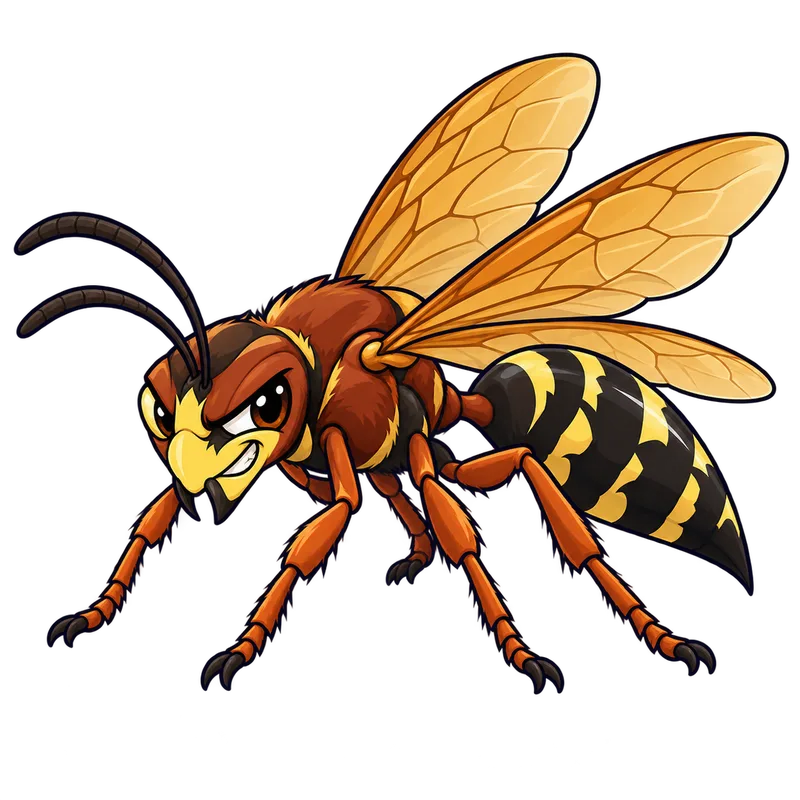
An eastern cicada killer wasp is a native North American solitary digging wasp that can grow up to 2 inches long. Females hunt cicadas to feed their developing larvae underground, and these insects are remarkably docile unless trapped or stepped on. They are common across the Eastern and Midwestern United States.
What is actually going on
You are out trimming the tomatoes in the middle of July, and a flying insect the size of your thumb-joint buzzes past your ear. It lands on the bare soil near the garden bed, starts kicking up dirt, and your heart immediately skips a beat because it looks like something out of a horror movie. That is usually when people freeze, wonder if an invasive monster has just set up camp in the yard, and ask what an eastern cicada killer wasp actually is.
To put it simply, the eastern cicada killer is a native North American solitary digging wasp. It is not an invasive pest, it does not build those massive paper nests you find hanging from eaves or tree branches, and it is not looking to terrorize your family. These insects earn their name because the females hunt cicadas, paralyzing them to feed their developing larvae underground. They are common across the Eastern and Midwestern United States, and while their sheer size can make anyone reconsider their gardening plans, they are remarkably docile unless you actively trap or step on them.
The reason people get so worked up over them comes down to a case of mistaken identity. Because they can grow up to 2 inches long, they routinely get misidentified as invasive hornets that make headlines for attacking honeybee hives. Agricultural agencies actually track them as a major look-alike species precisely because property owners panic and report them by mistake.
How to tell for sure
When you are staring at a massive insect on your lawn, you want a quick way to figure out what you are dealing with without getting too close for comfort. Start by keeping a safe distance and look at the color of its chest. If the thorax, which is the middle section of the body, is a distinct reddish-brown, you are usually looking at a native cicada killer rather than an invasive hornet, which typically has a solid dark black or brown chest.
Next, look at the head. A cicada killer usually has a head that looks proportional and modest in size compared to its massive body, whereas invasive giant hornets possess noticeably oversized heads. If you happen to catch a glimpse of its face under good lighting, a cicada killer usually features round compound eyes, while true social hornets have deeply notched eyes.
Geography also plays a role in what you are seeing. If you live east of the Rocky Mountains, it is likely the eastern species, while properties further west generally host its close cousin, the western cicada killer. If the insect is active around outdoor porch lights after dark, it is usually a European hornet rather than a cicada killer, which prefers the daytime shift.
What usually comes next
When you spot one of these giant wasps tunneling in your yard, the sensible move is often just letting them be. Since they live alone rather than in colonies, they lack a queen to protect and do not launch those coordinated group attacks you get from yellowjackets or paper wasps. They are simply passing through for the summer, keeping to themselves, and their burrowing rarely harms your property.
If you are still sweating over whether the visitor is an unwelcome invader, put down the broom and the bug spray. Instead, grab your phone, keep a safe distance, and take a sharp picture with a coin or a pen next to the insect for scale. You can send that photo straight to your local university extension office or state department of agriculture if you want someone else to verify what you are looking at.
When a nest pops up right in the middle of a heavy foot-traffic area and you feel you have to do something, remember that any pesticide treatment must follow the product label down to the letter. If a nest is tucked inside a wall or crawlspace, or if you simply cannot tell whether you are dealing with a harmless native or an invasive pest, call in a licensed pest control professional instead of guessing.
When to get help
Most encounters with native cicada killers call for nothing more than a bit of breathing room, but certain moments demand a backup plan. If someone happens to step on a wasp barefoot and gets stung, standard first aid means washing the wound with soap and water, slapping on a cold pack, and propping the limb up.
Wasp stings can still trigger severe allergic reactions in people who are sensitive to them. If a sting brings on signs of trouble like breathing problems, trouble swallowing, swelling around the face or throat, chest pain, dizziness, or a rapidly spreading rash, call for emergency medical help right away or reach out to Poison Control at 1-800-222-1222.
You should also pick up the phone and call state agricultural authorities if you think you have stumbled onto a true invasive hornet instead of a cicada killer, particularly if you see them mounting organized raids on backyard beehives. Leave suspected invasive nests completely alone and let the experts handle the identification and removal.