
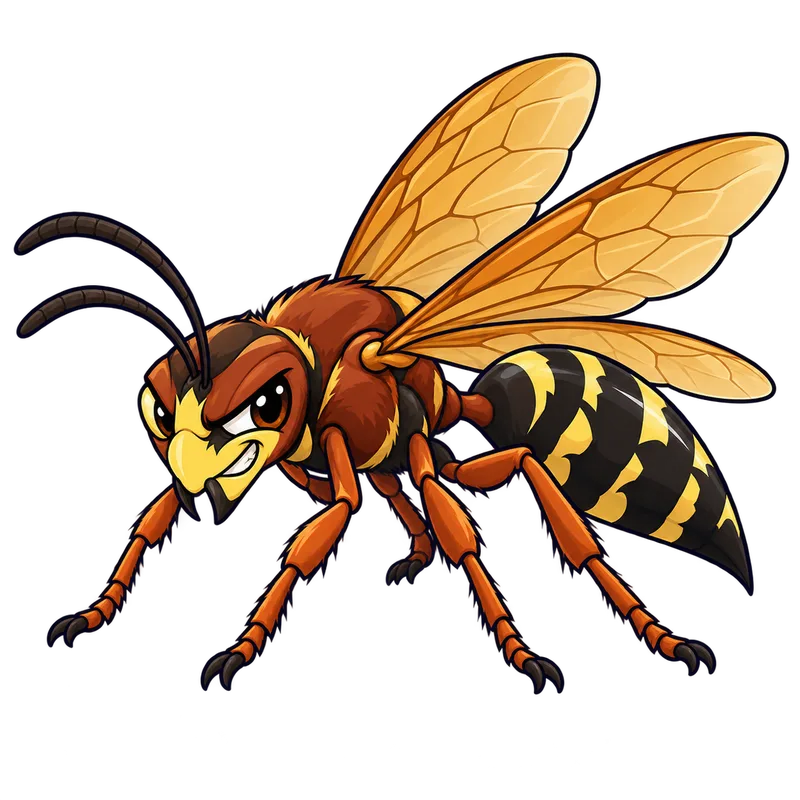
Eastern cicada killer
Sphecius speciosus
- Size
- Up to 2 inches long
- Color
- Reddish thorax, dark body, distinct abdominal banding
- Habitat
- Terrestrial outdoor environments across the Eastern and Midwestern United States
- Diet
- Predatory relationship with cicadas
- Life cycle
- Solitary burrowing cycle
The Eastern cicada killer, scientifically known as Sphecius speciosus, is an impressive native North American insect that frequently startles homeowners simply by virtue of its massive build. Reaching up to 2 inches long, this solitary wasp is one of the largest flying insects you are likely to encounter in a garden or lawn. Despite its formidable dimensions, it is entirely manageable to identify in the field with the naked eye. You do not need specialized equipment or magnification to sort it out from other large stinging insects.
Identity
The key field marks sit right on the front half of the creature. Look closely at the head and thorax. The thorax features a distinct reddish hue that contrasts with the solid black thoraxes typical of dangerous invasive hornets like the Northern giant hornet, which also reaches up to 2 inches long. That head is also noticeably small in proportion to the rest of the body, and its eyes are round rather than notched. Add in a low color contrast between the head and that reddish thorax, along with a distinct pattern of dark abdominal banding, and you have a clear blueprint of the species. This combination separates it immediately from the Western cicada killer, which is restricted to the Western United States.
Habitat & behaviour
You will typically cross paths with this large wasp outdoors in terrestrial environments across the Eastern and Midwestern United States. Unlike social wasps that build paper nests high in trees or under eaves, this species is a solitary creature that digs terrestrial burrows in soil, often favoring sunny patches of lawn or bare earth in yards and gardens.
It does not exhibit the aggressive hive defense strategies or territorial swarming behavior you might associate with social hornets. While the common name points to a predatory relationship with cicadas, these wasps are generally indifferent to human presence unless directly handled or trapped against the skin. They are native neighbors going about their solitary business in the landscape, sharing your yard without malicious intent.
Visual variations
Since it lives a solitary life, the eastern cicada killer skips the complicated social hierarchy you see in yellowjacket colonies or honeybee hives. You will not find sterile workers, dedicated guards, or a pampered queen running the show in a shared nest. Every single adult female is fertile and digs her own underground burrow to provision for her future offspring.
The adult is fully winged and wears the heavy, thickset proportions that tend to startle people when it crosses the patio. That small head sits out front with its telltale round eyes, while the thorax holds onto its warm reddish shade rather than the dark, solid black tones of true hornets. The abdomen sports crisp banding across the top surface, finishing the look. Meanwhile, the immature stages stay hidden deep underground inside subterranean cells, growing up far away from daylight.
Why it matters
The main reason this wasp makes news is its uncanny ability to look like the invasive exotic hornets that make public health headlines. Growing up to 2 inches long, it routinely sends nervous homeowners straight to the phone to report a dangerous foreign invader to agricultural extension agents.
Having one around simply means you share your yard with a native insect that will not cause quarantine panics or chew up your home's framing. If the worst happens and you get stung, standard first aid takes the lead, which means washing the spot with soap and water, slapping on a cold pack, and heading straight to the emergency room if an allergic reaction or systemic illness starts showing up. Calling in an expert or contacting an agency is really only necessary when you genuinely cannot tell whether you are looking at a harmless native giant or a regulated interloper.
Similar species
 Blue mud dauberChalybion californicum
 German yellowjacketVespula germanica
 Eastern yellowjacketVespula maculifrons
 Western yellowjacketVespula pensylvanica
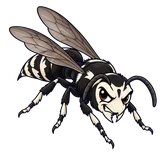 Bald-faced hornetDolichovespula maculata
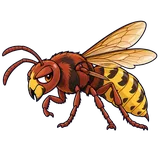 European hornetVespa crabro