
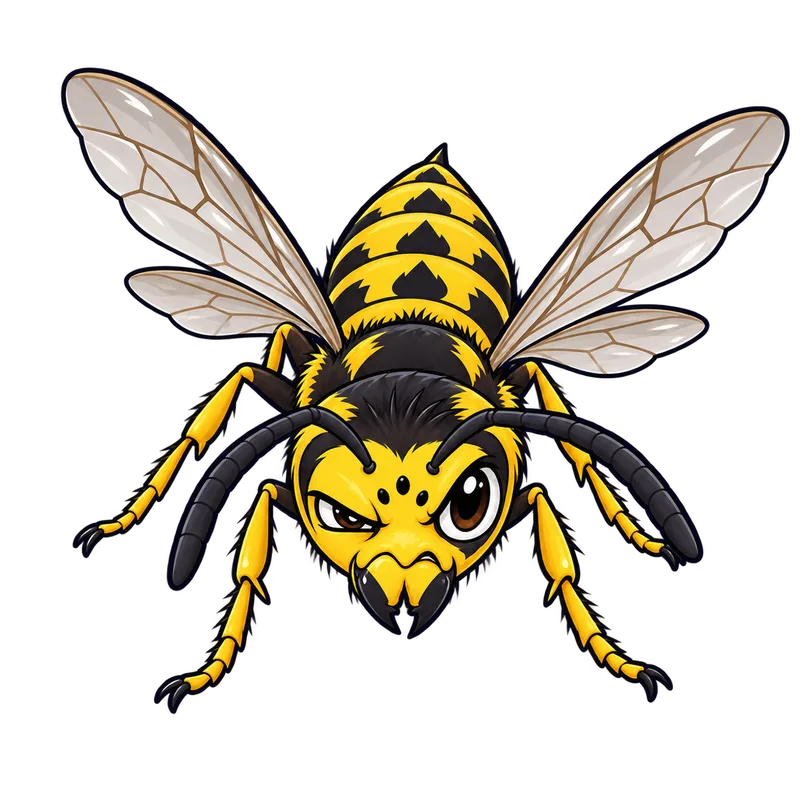
German yellowjacket
Vespula germanica
- Size
- Approximately 0.5 inches for adult workers
- Color
- Bold yellow and black alternating bands
- Habitat
- Underground burrows, soil voids, wall voids, and attics
- Diet
- Sugary liquids, fruit juices, and animal protein
- Life cycle
- Annual colony cycle from spring queen to fall peak
The German yellowjacket is a social wasp that frequently crosses paths with humans during late summer cookouts and garden work. To pick one out in the field without getting too close for comfort, look for a compact body measuring roughly half an inch long with a smooth, polished skin entirely lacking the fuzzy look of a honeybee. The alternating bands of bright yellow and deep black provide a high-contrast warning signal.
Identity
You can spot these field marks with the naked eye from a safe distance of a few feet, especially when the insect is hovering around a trash can or a ripening piece of fruit. That said, telling this specific species apart from other common yellowjackets or the common wasp requires a closer look. Positive identification down to the species level generally calls for a captured specimen and a 10x magnification glass to check the tiny anchor marks and spot patterns on the face and the sides of the abdomen. Without magnification, you are mostly just looking at a yellowjacket, which is usually all you need to know if it is hovering too close to your sandwich.
Habitat & behaviour
These wasps are architectural opportunists that prefer to build out of sight. The most common nesting site is underground, tucked away inside an abandoned rodent burrow, a natural soil void, or a gap beneath landscaping stones. Above-ground nests also happen with some frequency, tucked safely inside hollow structural wall voids, dark attics, eaves, or old garden sheds. Inside these hidden cavities, the workers construct a papery nest from chewed wood pulp mixed with saliva, layering hexagonal combs inside a protective outer envelope that eventually grows from the size of a golf ball in spring to a massive basketball-sized structure by late summer.
Activity peaks during the warm daylight hours of summer and early fall, driven entirely by the needs of the colony. In the earlier months, adult workers hunt caterpillars and other soft-bodied insects, chewing up the protein to feed the hungry larvae back at the nest. As the calendar turns toward late summer, the colony's appetite shifts. With fewer larvae demanding protein, the adult workers develop a relentless craving for sugar, which explains why they suddenly swarm soda cans, sticky patio tables, and fallen orchard fruit with such persistence. They are not trying to ruin your afternoon on purpose, but natural nectar sources are drying up, and your lemonade is an easy substitute.
Visual variations
Life inside the paper envelope splits strictly by caste, and every role looks a little different. The founding queen is the biggest adult in the colony, spending her early spring entirely alone while she builds the first few cells and rears her first batch of helpers. Once those initial workers emerge, they take over all foraging and building duties. These workers are smaller, averaging about half an inch long, built strictly for speed and tight turns with slender waists and legs tucked flat against their bodies during flight.
As the summer hits its peak, the colony starts producing reproductive castes. New queens and male drones grow in larger cells near the end of the cycle. The males, or drones, do not have stingers at all and exist only to mate with the new queens before the whole generation gives up to the cold weather.
Before they reach these adult stages, the wasps go through complete metamorphosis hidden inside the sealed comb cells. The egg hatches into a legless, grub-like larva that stays put while workers feed it. That larva eventually spins a silk cap over its cell, turns into a pupa, and finally comes out as a fully winged adult ready to take its place in the colony.
Why it matters
Finding a nest near a doorway, inside an outside wall void, or beneath a frequently mowed lawn means you are sharing space with a colony that will defend its home with aggressive force. Unlike honeybees, which leave behind their barbed stingers and die after a single defensive strike, yellowjackets have smooth stingers and can jab repeatedly without slowing down, making accidental lawnmower bumps or vibration near a hidden entrance a painful surprise for people and household pets alike.
The presence of a nest or a heavy foraging swarm takes careful handling, especially for anyone who reacts poorly to insect venom. When a sting brings on signs of a severe allergic reaction like trouble breathing, throat swelling, dizziness, or widespread hives, it is a medical emergency that needs immediate help from a clinician or your regional poison control center at 1-800-222-1222. If you need to deal with a nest in your walls or underground, a licensed pest control professional should be brought in to handle the colony safely instead of trying a risky do-it-yourself removal.
Similar species
 Eastern yellowjacketVespula maculifrons
 Western yellowjacketVespula pensylvanica
 Bald-faced hornetDolichovespula maculata
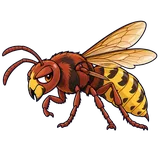 European hornetVespa crabro
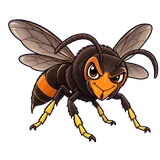 Yellow-legged hornetVespa velutina
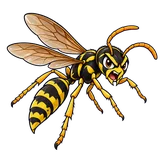 European paper waspPolistes dominula