
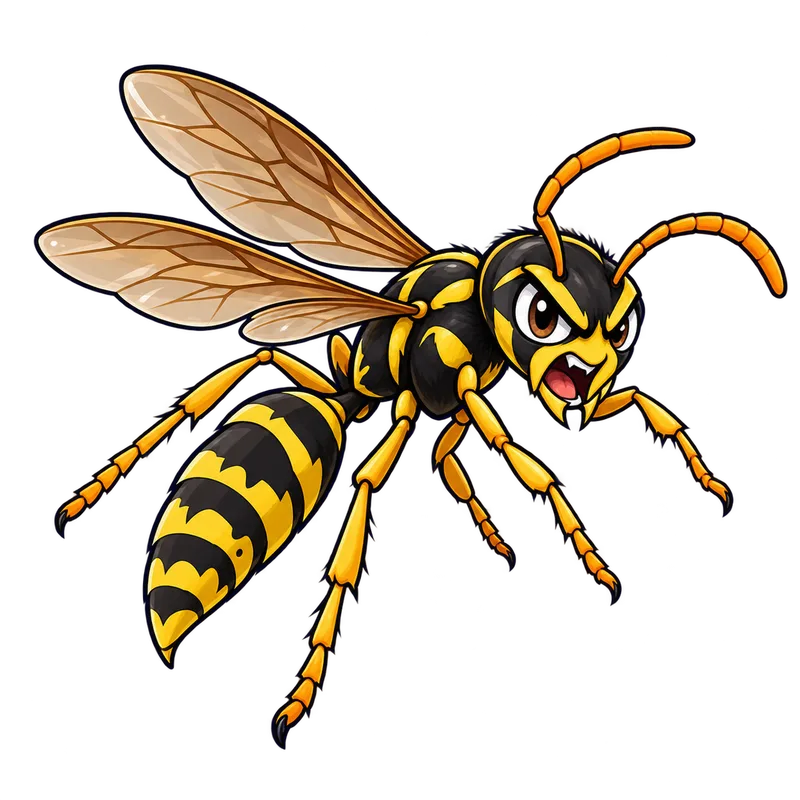
European paper wasp
Polistes dominula
- Size
- Three-quarters of an inch
- Color
- Brownish with yellow, red, or black
- Habitat
- Porch ceilings, roof overhangs, and deck railings
- Diet
- Garden insects, flower nectar, and plant sap
- Life cycle
- Annual colony cycle from spring to autumn
Spotting one of these insects buzzing around the patio usually starts with noticing its silhouette. They possess a slender, graceful frame coupled with a distinct and tightly constricted waist that separates the thorax from the abdomen. Up close, without needing any magnification at all, adults measure roughly three-quarters of an inch from head to tip. Their coloration typically leans toward a brownish ground tone accented by striking splashes of yellow, red, or black.
Identity
The most reliable field mark happens the moment they take to the air. Unlike many other stinging insects that tuck their limbs tightly against their bodies during flight, paper wasps let their long hind and middle legs dangle loosely beneath them like landing gear. Looking up at the eaves, the nest itself provides an immediate confirmation. They build open, umbrella-shaped combs crafted from chewed wood fibers mixed with saliva, giving the structure a gray, papery texture. Every single hexagonal cell remains entirely exposed from underneath, lacking any protective outer paper shell.
Habitat & behaviour
Spring marks the kickoff of their annual cycle, when a single fertilized queen emerges from winter shelter and immediately starts scouting for a suitable real estate site. Human structures offer prime shelter from the elements. Porch ceilings, roof overhangs, window frames, outdoor equipment, and deck railings become favored anchors for their exposed nests.
Once summer arrives, the colony expands rapidly as the queen's first brood takes over foraging duties. Adults spend their days hunting garden insects to feed protein to the developing larvae, while also visiting flowers and sap for carbohydrates. They are generally peaceful neighbors while foraging away from home, but bumping into a porch railing or brushing against a hidden nest under a gutter will quickly trigger defensive behavior. When the autumn chill sets in, the colony breaks down naturally. The workers and the old queen perish, while newly mated females seek out bark crevices, leaf litter, or wall voids to ride out the winter.
Visual variations
Life inside the paper wasp colony revolves around distinct stages and roles. The immature stages spend their entire development hidden within the safety of those open hexagonal comb cells, progressing quietly through egg, larval, and pupal phases before emerging as adults.
Adults themselves divide into specific social castes. The population consists primarily of a single overwintering queen and female worker castes, keeping colony sizes significantly smaller than the massive populations found in yellowjacket or hornet nests. While the queen focuses heavily on egg production during the height of the summer, the workers handle the daily grind of nest expansion, foraging, and brood care. All adult workers and the queen share that same slender profile, constricted waist, and signature dangling leg trait during flight, maintaining a consistent appearance throughout the colony's lifespan.
Why it matters
Having a nest tucked right above the front door means sharing space with a colony that will readily defend its home if disturbed, making painful stings a distinct possibility if human traffic crosses their threshold. While they do offer a modest benefit by preying on garden insect pests, their habit of choosing human structures for shelter requires careful observation around high-traffic outdoor areas.
Anyone who experiences a sting should monitor for symptoms closely. A skin lesion or a photograph of a welt can never confirm a specific pest identity, and no one should attempt to diagnose reactions or prescribe home remedies. Individuals experiencing severe swelling, respiratory distress, systemic symptoms, or signs of anaphylaxis must seek immediate care from a qualified clinician, urgent care facility, or regional poison control center, such as calling 1-800-222-1222 in the United States. Furthermore, all chemical control measures must strictly follow the registered product label, and any decisions regarding restricted-use pesticides belong exclusively to licensed applicators.
Similar species
 Paper waspsPolistes species
 Mud daubersSceliphron and Chalybion species
 Eastern cicada killerSphecius speciosus
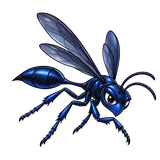 Blue mud dauberChalybion californicum
 German yellowjacketVespula germanica
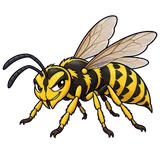 Eastern yellowjacketVespula maculifrons