
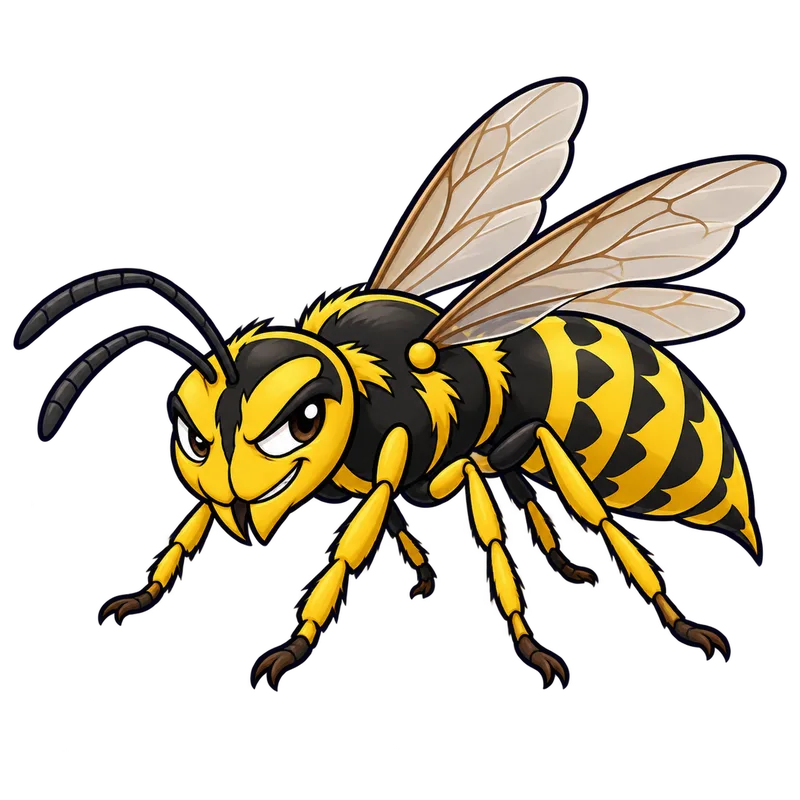
Eastern yellowjacket
Vespula maculifrons
- Size
- Approximately 0.5 inches long
- Color
- Bold yellow and black abdominal banding
- Habitat
- Underground burrows, wall voids, and trees
- Diet
- Nectar, fruit, sweet human foods, and insects
- Life cycle
- Annual colonies starting fresh each spring
If you are squinting at something striped hovering near your soda can, you are likely looking at a social wasp belonging to the genus Vespula. An adult worker measures about half an inch long, sporting a sleek, polished body marked with stark, high-contrast bands of yellow and black. Unlike honeybees or bumblebees, which look like they rolled in dust thanks to a dense coat of fuzzy hair, these wasps are virtually hairless.
Identity
You will also notice a sharply pinched waist separating the thorax from the abdomen, giving them that classic, purposeful silhouette. Their stingers are smooth and unbarbed, which means a single worker can deliver multiple stings without leaving its stinger behind in your skin.
To tell them apart from look-alikes, look closely at the body structure and markings. European hornets are much larger, reaching up to 1.4 inches with reddish-brown thoraxes, while bald-faced hornets trade yellow markings for stark white ones on a mostly black body. True paper wasps are slimmer with long legs that dangle awkwardly in flight, and they build open, umbrella-like nests without a protective paper shell. Honeybees are stout and fuzzy, carrying pollen baskets on their hind legs. If you need absolute confirmation down to the exact species level, a handheld magnifying lens or a stereomicroscope is required to examine tiny facial and abdominal patterns on a collected specimen, as photographs alone rarely suffice.
Habitat & behaviour
Yellowjackets are remarkably adaptable neighbors, though they prefer keeping out of sight until late summer. Most colonies start underground in abandoned rodent burrows, soil voids, or hidden beneath landscape timbers. Others choose above-ground cavities like hollow trees, wall voids, or the corners of garden sheds.
Their activity shifts dramatically with the seasons. In spring, a lone, overwintered queen emerges to build a tiny paper nest from chewed wood pulp and saliva, raising her first batch of workers in solitude. By summer, the colony explodes in population as workers take over foraging and nest expansion, sometimes reaching thousands of individuals housed inside a multi-layered paper envelope.
What draws them to your yard depends entirely on what time of year it is. Earlier in the season, adult workers hunt caterpillars, flies, and other soft-bodied insects to feed their protein-hungry larvae, while sipping flower nectar and tree sap for themselves. But by late summer and fall, natural food sources dwindle and the colony's nutritional needs shift. That is when they pivot to scavenging aggressively around garbage cans, picnic tables, and sports events, hunting for sugary drinks, ripening fruit, and discarded meat.
Visual variations
Life inside the paper nest runs on a strict caste system. Adult workers are the ones you usually meet on your deck, measuring roughly half an inch long with bright yellow and black bands and smooth stingers built for repeated defense.
Founding queens are noticeably larger than workers, though they spend most of their time tucked safely inside the nest laying eggs once the colony gets going. Later in the season, the colony shifts gears to rear the next generation of reproductives, producing drones and new virgin queens that emerge in the fall to leave the nest and mate before cold weather sets in.
Beneath the adults, the immature stages develop quietly inside horizontal hexagonal paper combs. These hidden stages include tiny white eggs, legless larvae that depend entirely on protein brought back by the workers, and pupae undergoing transformation. While workers and queens share a similar striking color palette, their roles dictate their size and daily habits, with workers shouldering all the foraging, nest building, and colony defense while the reproductives focus solely on securing the next year's cycle.
Why it matters
The presence of a yellowjacket colony usually means a delicate truce with your local ecosystem has tipped into potential conflict. On the beneficial side, they act as generalist predators that suppress garden pests like caterpillars throughout the spring and summer. On the frustrating side, their late season scavenging habits put them on a direct collision course with outdoor human activities.
Accidentally stepping near an underground nest entrance while mowing the lawn or weeding can trigger a rapid, defensive mass attack from hundreds of workers, posing a genuine sting hazard to people and domestic pets. Stings cause immediate pain, localized swelling, and redness. Because multiple stings increase the risk of systemic reactions or severe allergies, anyone experiencing widespread hives, facial swelling, difficulty breathing, or dizziness needs emergency medical evaluation immediately, or may contact Poison Control at 1-800-222-1222. If you suspect an active nest in a high traffic area or inside a structural wall void, a licensed pest control professional equipped with proper protective gear should evaluate and handle the situation rather than attempting a risky do-it-yourself removal.
Similar species
 Western yellowjacketVespula pensylvanica
 Bald-faced hornetDolichovespula maculata
 European hornetVespa crabro
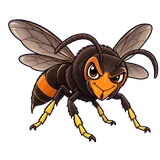 Yellow-legged hornetVespa velutina
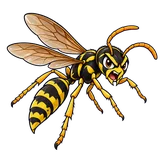 European paper waspPolistes dominula
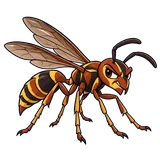 Paper waspsPolistes species