
What are ground wasps?
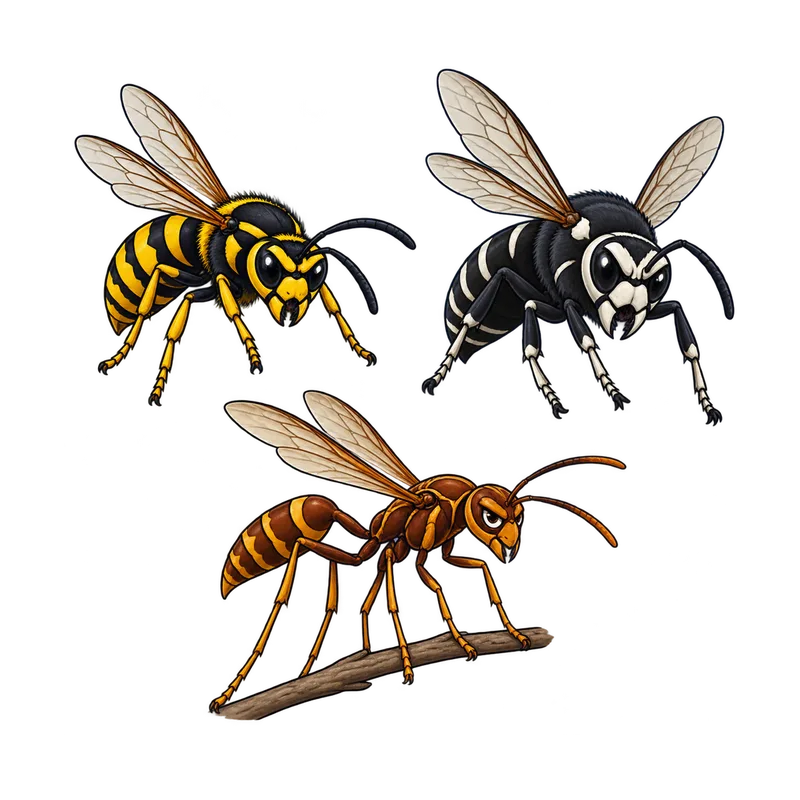
Ground wasps are an umbrella term for any insect that digs a tunnel or moves into an abandoned rodent burrow in the earth. The answer depends on whether you have social yellowjackets that build massive subterranean empires or solitary digger wasps that carve out a private room to raise a single offspring.
What is actually going on
Picture stepping out onto the lawn on a warm Saturday morning, coffee in hand, only to watch a steady stream of yellow and black insects darting in and out of a small, hidden hole in the grass near the garden bed. Your first instinct might be to picture a swarming colony of angry hornets setting up camp right where the kids play. In reality, ground wasp is just a loose conversational label rather than a proper biological name. It is an umbrella term people use for any insect that happens to dig a tunnel or move into an abandoned rodent burrow in the earth.
The trouble with that catch-all phrase is that it lumps entirely different creatures together. On one side, you have social yellowjackets that build massive subterranean empires complete with thousands of defensive workers. On the other side, you have large, solitary digger wasps that simply carve out a private room in the dirt to raise a single offspring, caring very little about what happens in the rest of the yard.
This lifestyle choice of nesting underground comes down to basic survival. Soil provides a steady, climate-buffered shelter that protects against blazing summer heat and sudden drying out. But the differences in how these insects behave underground matter a great deal. Social yellowjackets treat that underground chamber like a fortress and will mobilize the whole colony if someone bumps their front door. Solitary digger wasps, by contrast, are working alone without a crew or guards to back them up, meaning they rarely pay any attention to human foot traffic unless someone steps on them directly.
How to tell for sure
Figuring out what is actually coming out of that hole in your yard usually requires standing back about 10 to 15 feet to observe the traffic without stirring anything up. If you spot a steady, rapid stream of fast-moving insects flying straight into a clean, unpaved hole in the soil, you are usually looking at social yellowjackets. Those workers typically measure about half an inch to three-quarters of an inch long, sporting smooth, hairless bodies with sharp yellow and black bands.
When you see a single, very large insect up to two inches long digging in the dirt and pushing up a distinct horseshoe-shaped mound of loose earth, that is usually a solitary cicada killer or a related digger wasp. They look intimidating because of their size, but they generally ignore people entirely.
If you happen to live in a region targeted by invasive species monitoring and spot a hornet with a mostly dark body, narrow yellow abdominal bands, and unmistakable bright yellow lower legs that look like athletic socks, that is usually a sign to take a closer look at the local agricultural alerts. Non-wasp lookalikes, such as bumblebees, are easily told apart because they are covered in dense, fuzzy body hairs and carry pollen on their legs, unlike smooth wasps. If visual identification from a distance fails, you should never try to catch one with your bare hands. A clear photograph taken from a safe distance with a coin for scale is usually what a local extension office needs if you want an expert to check the species.
What usually comes next
Deciding what to do about these dirt-dwelling insects usually comes down to a quiet conversation between you and your lawn care plans. If you are sharing the back fence with solitary digger wasps in some forgotten corner of the garden, the smartest move is often just to let them be. They are actually helpful native predators that keep other pests down, and since they do not have a whole colony backing them up, they simply pack up and disappear when cooler weather sets in.
Things look a bit different, though, when you have an active yellowjacket nest right beneath the path where the kids or the mail carrier walk every day. Grabbing a random jug of chemical soil drench from the hardware store and pouring it down the hole without reading the fine print usually backfires. Those liquid treatments rarely sink deep enough to reach the actual nest chamber underground, and broad-spectrum poisons can wipe out harmless native bees that happen to be nesting nearby.
When you are looking at a buzzing fortress of social yellowjackets right where people walk, the safest course is to call a licensed pest control operator who knows how to use registered products properly and safely.
When to get help
Certain scenarios mean it is time to put the sprayers away and hand the problem over to someone with the right gear and training. If you spot suspected invasive hornets, such as the yellow-legged hornet, trying to deal with them yourself is a bad idea. Disturbing an invasive social colony can cause the queens to scatter and make the infestation much worse, which is why those cases belong in the hands of state agricultural departments or local extension offices.
Stings from social ground wasps can also bring real health risks that go far beyond a simple swelling on the arm. You need to call for emergency medical help right away if a person who got stung starts having trouble breathing, notices swelling in the throat or tongue, breaks out in a rapidly spreading rash, feels dizzy, or shows any signs of a severe allergic reaction. For a normal, everyday sting, washing the skin with soap and water, holding a cold pack to the spot, and making sure your tetanus shot is current are the usual steps, but any sign of a whole-body reaction means it is time to skip the home remedies and call for professional help.