
Do cicada killer wasps sting?
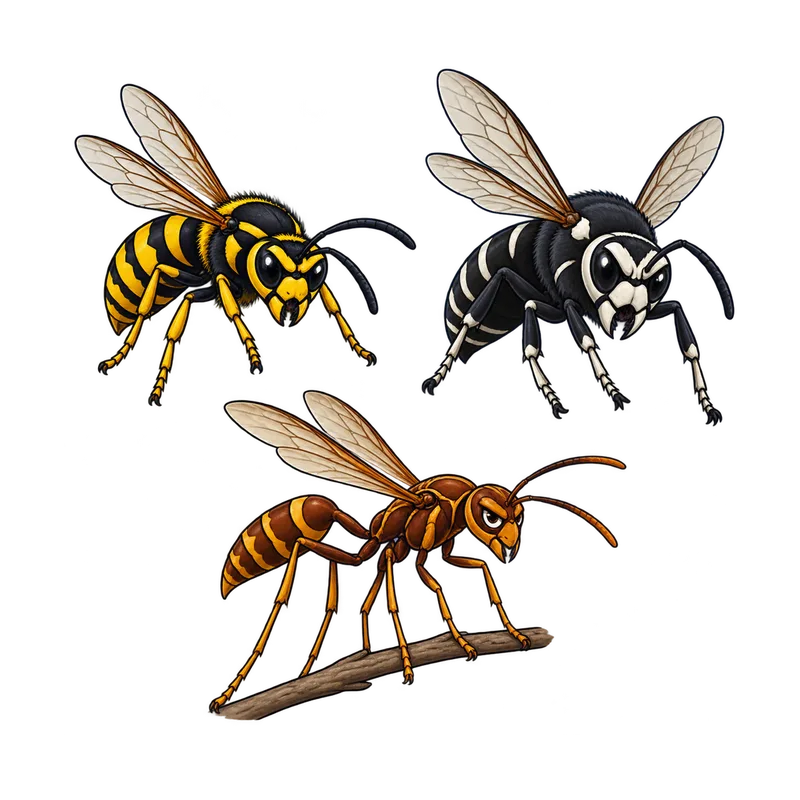
Yes, cicada killer wasps can sting, but the answer depends on which wasp you encounter. Male cicada killers lack a stinger entirely, while females have one but rarely use it unless you grab or trap them. These solitary digger wasps reach up to 50 millimeters in length and almost always choose to fly away.
What is actually going on
Picture walking out to your front lawn on a warm July afternoon to grab the mail, and suddenly a flying insect the size of your thumb comes zooming straight at your face. It is easily two inches long, sporting fierce yellow-and-black stripes, and it hovers right over your hydrangeas like a tiny helicopter. Your immediate instinct is to drop the envelopes and sprint back to the front porch before you take a painful hit.
The short answer is yes, cicada killer wasps can sting, but you have to work remarkably hard to make it happen. Despite looking like terrifying invaders that belong in a horror movie, these solitary digger wasps are remarkably mild-mannered.
The males love to put on a theatrical show, zooming aggressively around your ankles and darting past your head to scare off rivals or curious onlookers. Here is the catch that changes everything: male cicada killers do not even possess a stinger. That intimidating buzz and high-speed flight pattern is all bluff, much like a barking dog behind a chain-link fence.
The females do carry a stinger, since it is a modified egg-laying organ, but they are too busy hunting cicadas in the tree canopy to care about you. They do not live in giant colonies with thousands of angry workers ready to defend a shared paper nest. Each female works alone in her own little underground burrow, which looks like a small mound of dirt resembling a tiny lawn volcano. Unless you step on one barefoot, grab one barehanded, or trap one tightly against your skin, a female cicada killer will almost always choose to fly away rather than deploy her venom.
How to tell for sure
Before you panic about a stinging threat in the yard, you need to look closely at what is actually buzzing around your flowerbeds. People frequently confuse these native giants with invasive pests because of their sheer size, which usually reaches up to 50 mm in length, roughly matching the top joint of an adult thumb or a standard AA battery.
If you happen to find a specimen safely resting or trapped in a clear container, grab a ten times magnification hand lens to check its features. Eastern and Western cicada killers usually display a distinct reddish or reddish-brown thorax, which is the middle section of the body, sitting right between a relatively small head and bright yellow-and-black abdominal bands. Their eyes are rounded at the margins.
That appearance sets them apart right away from the invasive Northern giant hornet or the yellow-legged hornet. Those social hornets feature deeply notched eyes, solid dark brown thoraxes, and vastly different nesting habits. Cicada killers dig simple subterranean burrows in loose soil or sunny turf banks, whereas social hornets build massive multi-layered paper envelopes in trees or subterranean cavities. If you spot a massive wasp hanging around a single hole in the dirt of a dry sunny lawn, you are usually looking at a harmless native digger wasp rather than an aggressive colony raider.
What usually comes next
When homeowners notice a dozen giant wasps patrolling their turf, the first impulse is usually to call an exterminator or drown the lawn in harsh chemical drenches. Take a breath and choose observation over eradication instead.
Those solitary wasps provide free pest control by hunting annual cicadas to feed their developing larvae, and their underground digging helps aerate the soil. Pouring broad-spectrum synthetic neurotoxins into your yard kills off beneficial native ground-nesting bees and other helpful invertebrates while contaminating local groundwater.
If the burrows are far away from your main patio or walkway, simply let them be. They will complete their life cycle by late summer and disappear on their own. Should a sting ever happen outdoors from an unidentified insect, standard first aid applies immediately. Cleanse the wound right away with mild soap and clean water, apply a cool compress or an ice pack wrapped in a cloth for ten to fifteen minutes to keep swelling down, and elevate the limb to heart level. Never squeeze, cut, or try to mechanically extract venom from the site, as that only damages surrounding tissue and invites a secondary bacterial infection.
When to get help
While cicada killer stings are rare and typically cause nothing more than a mild, localized ache, you must always monitor for severe physical reactions. Individual immune systems vary wildly, and any insect sting can trigger systemic anaphylaxis in a sensitized person.
Send yourself or someone else straight to emergency medical services or an urgent care clinic if red-flag symptoms appear within minutes or hours of a sting. Those warning signs include trouble breathing, wheezing, swelling of the lips, tongue, or throat, chest tightness, severe dizziness, widespread hives, or persistent nausea and vomiting.
You also need to factor in environmental risks. Any puncture wound inflicted outdoors in soil introduces dirt and bacteria, meaning that tetanus risk comes into play. If the sting breaks your skin and your last tetanus booster shot was more than five years ago, schedule a professional medical evaluation promptly.
Finally, if you suspect the insects in your yard are actually social hornets building an aerial nest rather than solitary digger wasps, do not attempt a do-it-yourself removal. Confirmed sightings of aggressive invasive species or nests attached to structures require a licensed professional applicator or local agricultural extension office to handle the situation safely.