
How is a wasp nest removed safely?
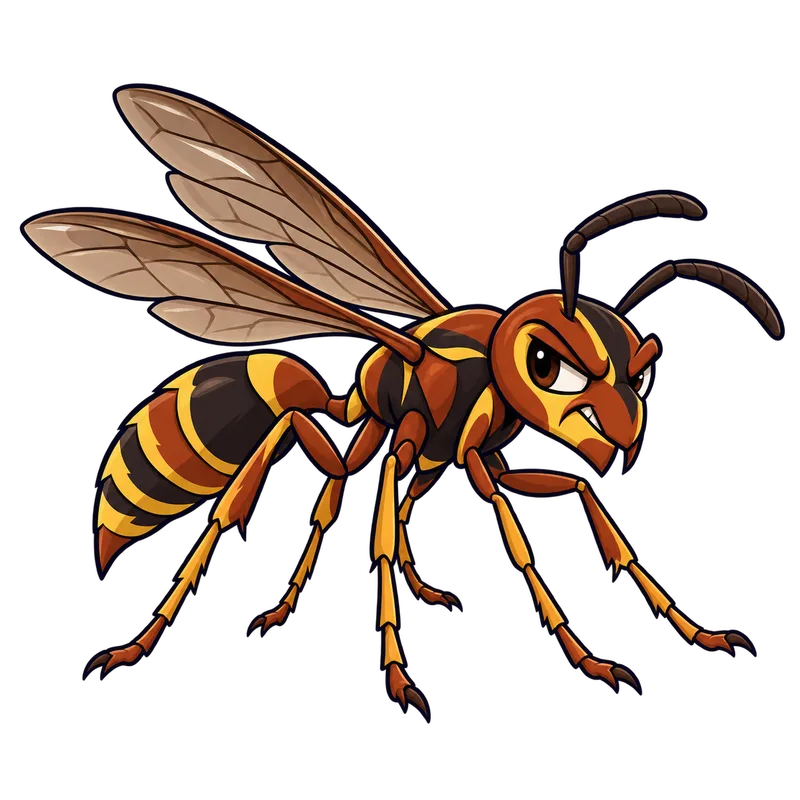
Wasp nest removal safety depends entirely on who built the nest and where it is located. You can often handle a small paper wasp comb yourself on a cool morning if you wear long sleeves and heavy gloves, but large or hidden colonies require professional help. Never try to remove an invasive yellow-legged hornet nest yourself.
What is actually going on
Imagine stepping out onto the back porch on a warm Saturday morning with your coffee, only to notice a grey, papery sphere the size of a grapefruit tucked snugly under the roofline. A few angry wasps are buzzing in and out of a small hole near the bottom. Your immediate instinct might be to grab the nearest aerosol can and start spraying. Before you do that, it helps to understand what you are actually looking at. Wasp nests are not random piles of debris. They are highly organized seasonal colonies built from chewed wood pulp mixed with saliva.
The queen starts the whole operation in the spring as a solitary builder, creating a small embryo nest the size of a tennis ball. By midsummer, that humble beginning swells into a primary nursery housing dozens or even hundreds of workers. In late summer or autumn, some colonies scale up into massive secondary structures holding thousands of insects. How you handle that nest depends entirely on who built it and where it is hanging.
What usually catches people off guard is that not all stinging insects play by the same rules. Native paper wasps construct open, umbrella-shaped combs with exposed cells that you can easily spot dangling under low eaves. Yellowjackets and hornets prefer to build enclosed, multi-layered paper globes that hide their numbers completely. If you treat every nest the same way, you are bound to make a costly mistake. Some can be swept down with a broom on a cool morning, while others require specialized agricultural intervention.
How to tell for sure
Identification always comes before control. You usually need to get a clear look at the physical traits of the insects and the architecture of the nest before making any moves. Native paper wasps have slender bodies with long, dangling legs in flight, and their nests look like exposed paper honeycombs with no outer shell. Yellowjackets usually have bold yellow and black markings on smooth bodies, and they typically build their nests underground, inside wall voids, or in aerial paper envelopes.
If you live in parts of the country where invasive pests are a concern, you need to watch out for different visitors. The yellow-legged hornet features a dark body with distinctive lower legs that look like bright yellow socks. It measures around 0.7 to 1.0 inches long, which is noticeably larger than a standard yellowjacket. People often confuse these invasive hornets or large European hornets with native cicada killers or oversized bumblebees.
Never try to identify a hornet from a fast-moving blur or a sting mark on your skin. If you suspect you have an invasive species on your property, you usually need a clear photograph or a physical specimen for official verification. Look at the legs, check the nest shape from a safe distance, and note whether the insects are flying with dangling legs or hovering aggressively near local beehives.
What usually comes next
Once you have figured out what you are dealing with, you have to decide whether you can safely handle it yourself or if you ought to back away. If you find a small, visible paper wasp comb tucked under a lower porch eave in the spring, you can usually take care of it during the cool early morning hours when the insects are still sluggish. Putting on long sleeves, long pants, heavy gloves, and closed boots is simply smart preparation for any physical removal.
Some folks wonder if they can just use a vacuum cleaner to suck a small nest right off the siding and skip the chemicals. You can try that, but there is a major catch. Vacuum machines do not instantly kill social wasps. If you fail to remove the vacuum bag, seal it tightly, and throw it out right away, the live insects will crawl right back out the moment you turn off the suction.
When you decide to use a commercial spray, keep in mind that federal law states the label is the law. You have to follow the application directions, safety precautions, and re-entry intervals down to the letter. Never mix chemicals stronger than the package instructions hoping for a faster knockdown, and avoid spraying blooming flowers where honeybees and native pollinators gather food. If the nest is hidden inside a wall void or burrowed underground, regular surface sprays usually fail and only make the colony furious.
When to get help
There are moments when trying to fix a pest problem yourself is just a terrible idea. If you spot a suspected invasive yellow-legged hornet nest, leave it alone and do not try to remove it yourself. State and federal agricultural authorities strictly prohibit homeowners from disturbing these colonies because amateur attempts usually trigger aggressive swarm defense and let reproductive queens escape to start new infestations nearby.
You should also reach out to a professional pest control operator if you are facing an enclosed nest larger than a softball, a hidden underground yellowjacket colony, or a massive secondary hornet nest dangling high up in a tree canopy. Professional help is also mandatory for nests found on school grounds, daycares, or healthcare facilities where public safety margins leave no room for error.
If someone gets stung, keep a close eye on them for warning signs. Localized pain, redness, and minor swelling are normal reactions that usually calm down with soap, water, cold compresses, and over-the-counter antihistamines. However, red-flag emergency symptoms demand immediate medical attention. If a person has trouble breathing, throat or facial swelling, widespread hives, dizziness, or a rapid pulse, call emergency services right away or contact Poison Control at 1-800-222-1222. Anyone who gets stung should also make sure their tetanus booster is up to date within the past five years.