
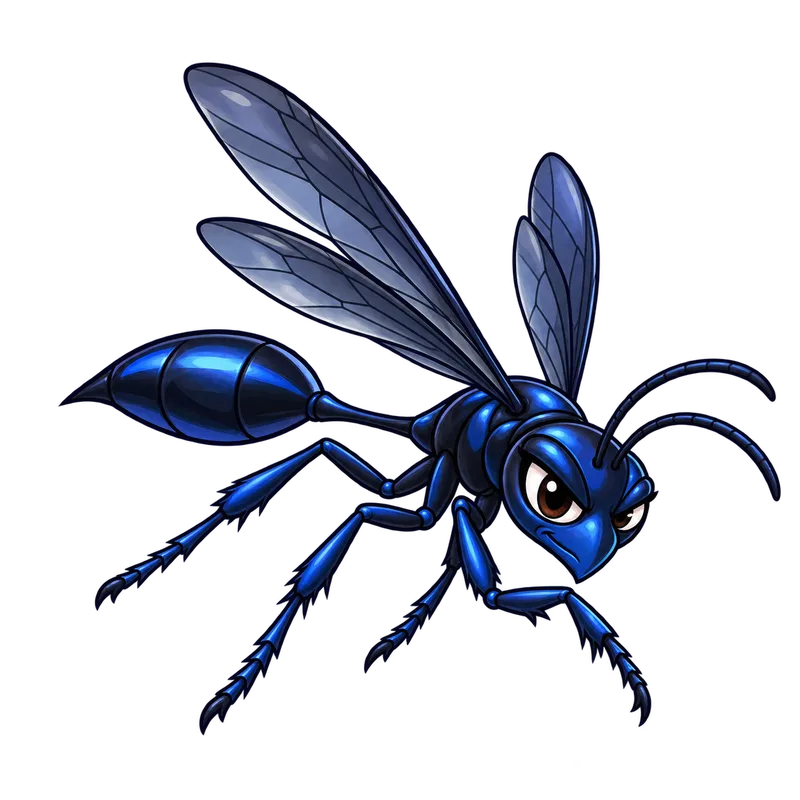
Blue mud dauber
Chalybion californicum
- Size
- 10 to 23 mm long
- Color
- Uniform metallic blue to blue-black
- Habitat
- Sheltered structural eaves, masonry, and old nests
- Diet
- Floral nectar and paralyzed spiders
- Life cycle
- Complete metamorphosis from egg to adult
The blue mud dauber is a solitary hunting wasp that catches the eye with a uniform metallic blue to blue-black sheen across its entire body, paired with dark, iridescent wings that flash violet and blue in the sun. If you spot one resting on a porch rail, you will notice its body is smooth and hairless, which immediately sets it apart from fuzzy bees. A narrow, thread-like waist connects the middle body segment to the abdomen, giving the insect a dramatic silhouette. Adults measure 10 to 23 mm in length, and while they look striking, they are docile creatures that rarely sting. When a sting does happen, usually because a wasp was accidentally crushed against bare skin, it causes only mild, temporary discomfort rather than an aggressive defense response.
Habitat & behaviour
You are most likely to encounter these wasps around dry, protected areas like porch ceilings, barn rafters, building eaves, and bridge crevices where rain cannot reach them. Instead of gathering mud from the yard to build a nest from scratch, the female plays a clever game of home renovation. She carries water in her jaws to soften existing mud nests built by other species, clears out the old contents, and moves in. She specializes in hunting venomous spiders and other arachnids, landing on webs and vibrating the silk to trick the resident spider into coming out. Once the spider is paralyzed by a sting, the wasp packs it into her newly claimed nursery cell. Aside from hunting spiders for their young, adults spend their time quietly visiting wildflowers to sip nectar for flight energy.
Visual variations
Both male and female adults sport that same polished metallic coat and dark, smoky wings that catch the light. Only the females carry the equipment for the job, meaning they have a stinger to handle prey while the males are entirely unarmed. The insects move through a complete transformation from start to finish. A tiny, cylindrical egg gets laid right on top of the final paralyzed spider packed into the nursery. Out pops a pale, legless grub that works its way through the pantry of spiders left behind. That larva eventually spins a tough, silky cocoon right inside the mud compartment before turning into an adult. When the time is right, the fully formed wasp chews its way through the dried mud and heads out into the summer sun.
Why it matters
Spotting these wasps usually starts with noticing small mud structures plastered up against a porch ceiling or tucked into the corner of a shed. They leave wood and masonry completely alone, meaning your house stays safe from any structural chewing. Having them around actually works to your advantage since they hunt down and remove venomous spiders near where you walk and relax. Because they live solitary lives and refuse to swarm or defend their nursery against passersby, they present practically zero danger to people or pets. Folks mix them up with other stinging insects all the time, but that glossy blue color and the habit of moving into abandoned mud houses give them away immediately. If you happen upon a nest, stepping back and letting them finish their seasonal routine on their own schedule is generally the smartest play.
Similar species
 German yellowjacketVespula germanica
 Eastern yellowjacketVespula maculifrons
 Western yellowjacketVespula pensylvanica
 Bald-faced hornetDolichovespula maculata
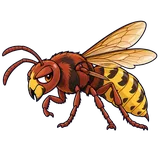 European hornetVespa crabro
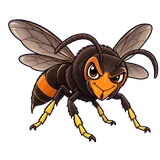 Yellow-legged hornetVespa velutina