
Does a suspected Asian hornet nest need to be reported?
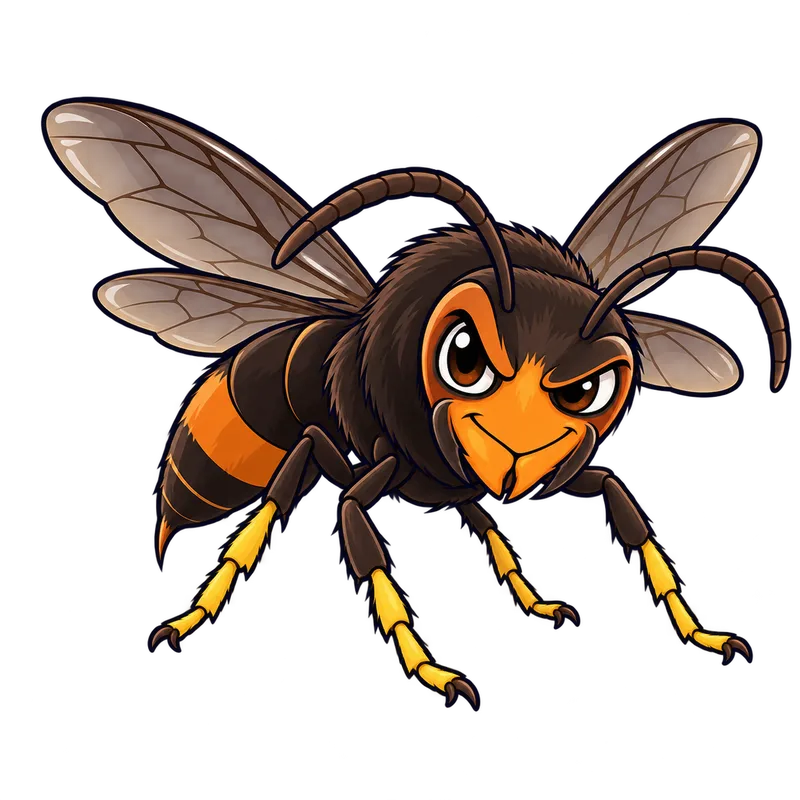
Yes, a suspected Asian hornet nest or sighting must be reported immediately to state or national agricultural authorities. Before official field teams deploy, you must provide a clear photograph or a physical specimen of the hornet as evidence to prevent false alarms involving native lookalikes.
What is actually going on
Picture stepping out onto your back porch on a warm August afternoon to water the hanging ferns, only to notice a thick-bodied, dark-colored wasp hovering in front of your wooden garden shed with terrifying military precision. Your mind instantly flashes to the headlines about invasive hornets destroying honeybee colonies across the country. You wonder if you need to sound the alarm, or if you are simply looking at a harmless native bug that just happens to be oversized.
Yes, a suspected Asian hornet nest or sighting does need to be reported immediately to state or national agricultural authorities. Regarding invasive pests like the yellow-legged hornet, which is actively spreading across parts of the Southeast, regulatory agencies rely on the public to act as frontline scouts. If an established population gets ahead of agriculture officials, the damage to managed honeybee hives and local ecosystems escalates fast.
Yet you cannot just pick up the phone with a vague hunch. State and federal departments maintain a strict evidence threshold before they dispatch field personnel to track down a colony. They require a clear photograph or a physical specimen before they will deploy their traps and tracking teams. That requirement keeps them from chasing false alarms involving native lookalikes that look fierce but pose no quarantine threat.
You might wonder why governments care so much about a few stray bugs in someone's backyard. The answer lies in how these predators hunt. Worker hornets practice what entomologists call hawking, hovering statically outside beehive entrances to ambush incoming foragers and chop them up for protein. A single active colony can consume massive amounts of insect biomass and paralyze apiaries with fear, causing honeybees to refuse to leave their hives until the colony starves. Reporting a sighting is the first step in stopping that domino effect before it ruins local agriculture.
How to tell for sure
Before you report anything, you need to know what you are actually looking at, because mistaken identity happens constantly. The yellow-legged hornet, often referred to as the Asian hornet in Europe, usually measures between 0.7 and 1.0 inches long. Its body is mostly dark brown or black, but it has a very distinct fourth abdominal segment colored in a bright yellow-orange. Look closely at its lower legs if you can safely do so. They feature bright yellow tips that look remarkably like neon athletic socks against an otherwise dark suit.
People frequently confuse these invaders with native species that have been part of the landscape for generations. The European hornet, for instance, is larger, measuring up to 1.4 inches, and features a reddish-brown head with a yellow abdomen marked by dark teardrop shapes. If a massive hornet crashes into your porch light after dark, it is almost certainly a native European hornet because Asian hornets hunt exclusively during daylight hours. Another common lookalike is the bald-faced hornet, which sports a black-and-white pattern and builds large paper nests in trees.
You should also keep nest size and location in mind as the seasons change. In spring, a founding queen builds a tiny embryo nest about the size of a tennis ball in sheltered spots like porch eaves or open sheds. By mid-summer, the colony expands into a primary nest the size of a volleyball. Later in the year, they often abandon those locations for massive secondary nests high up in tree canopies that can grow larger than a basketball.
One rule stands above all others during identification. Never try to confirm whether you have an Asian hornet by letting it sting you, and never rely on a skin reaction to make a diagnosis. Different stinging insects trigger identical histamine responses, so a red welt tells you nothing about the species involved.
What usually comes next
Once you capture a sharp, high-resolution photograph of the hornet or the nest from a safe distance of at least 10 to 15 feet, you can submit your report through the official online portal for your state department of agriculture or national plant protection service. If you happen to find a dead specimen intact on the ground, place a clear glass jar over it before taking your picture, and try to include a coin or a pen nearby to show scale.
You upload your photo, log the exact address or GPS coordinates, note the date and time, and then wait for an official response. If the experts verify from your picture that you have found a genuine invasive hornet nest, state or federal agricultural teams usually step in to handle the eradication completely free of charge to the property owner. They use specialized baiting arrays, flight-line tracking, and occasionally tiny radio telemetry tags glued to captured workers to trace the insects straight back to their canopy nests.
What happens if your photo turns out to be a native species instead? Agricultural agencies generally will not deploy eradication teams for native European hornets, paper wasps, or bald-faced hornets. Your official reporting obligation is finished, but the nest remains yours to manage. If a native nest sits right over your front door and creates a dangerous stinging hazard, you will need to hire a private, licensed pest control operator at your own expense to remove it.
When to get help
Never attempt to destroy, spray, or burn a suspected Asian hornet nest yourself. A mature secondary nest can house up to 6,000 highly defensive workers, and store-bought aerosol sprays will only anger them while failing to penetrate thick paper envelopes located high in trees. Disturbing a nest without proper containment gear risks sending a swarm of aggressive defenders into your yard and can flush fertilized queens out into the surrounding environment, making the regional invasion worse.
If you or someone nearby suffers multiple stings, watch closely for signs of a severe allergic reaction. Anaphylaxis is a medical emergency that requires calling emergency services immediately if the victim experiences trouble breathing, swelling of the lips or throat, dizziness, or widespread hives. For non-emergency stings and local symptom questions, reach out to your local poison control center for guidance.
When a nest is tucked into a high-risk public area like a school walkway or a busy park, cordon off the immediate space with warning tape to keep people away while you wait for agricultural inspectors to arrive. Professional state and federal teams have the heavy protective gear and specialized equipment required to neutralize large colonies safely, leaving you to return safely to your weekend gardening.