
German wasp vs paper wasp nest: how can you tell?
You can tell a German wasp nest from a paper wasp nest by looking at the structure and shell. Paper wasp nests feature a single layer of open honeycomb cups hanging without any outer walls. German wasp nests form a solid, closed ball of paper with a single entry hole, hidden safely underground or inside wall voids.
What is actually going on
You are standing on your back porch on a warm Saturday in June, holding a can of stain and a paintbrush, when you notice something dangling from the roof overhang. It looks like a gray, open-air honeycomb the size of a fifty-cent piece, with tiny hexagonal cups staring right back at you. Or perhaps you are mowing the lawn and notice a steady stream of buzzing insects disappearing into a small hole in the grass near the edge of your flower bed. Both situations involve stinging insects, but you are looking at two entirely different architectural marvels built by very different neighbors.
The core difference between a German wasp nest and a paper wasp nest comes down to whether the home is open to the elements or safely tucked inside an armored shell. Paper wasps build single-layer, open combs that look like tiny, upside-down umbrellas hanging by a slender stalk. They do not bother with walls or roofs for their brood, leaving every individual cell exposed to the open air. Because they lack thermal insulation, they choose sheltered, elevated spots like porch ceilings, window frames, and deck eaves where rain cannot easily reach them.
German wasps and their yellowjacket cousins take a completely different engineering approach. They build large, multi-tiered apartment complexes completely encased in a thick, papery outer envelope made from chewed wood fibers mixed with saliva. You will rarely spot the actual comb structure of a German wasp nest unless it has been damaged. Instead, you see a smooth, swirled gray or brown sphere with a single, tiny entry hole. They prefer dark, hidden cavities, which means their nests usually end up tucked underground in old rodent burrows, inside hollow trees, or deep within your home wall voids.
How to tell for sure
Telling these nests apart usually depends on a quick visual inspection of the nest silhouette and the insects themselves, provided you keep a safe distance of at least 6 feet away.
Start by looking at the structure. If you can see the open cups of the comb directly without any outer covering, you are looking at a paper wasp nest. If you see a solid, closed ball of paper with only a tiny door for coming and going, or if the insects are simply vanishing into a crack in your siding or a hole in the lawn, you are dealing with German wasps or yellowjackets.
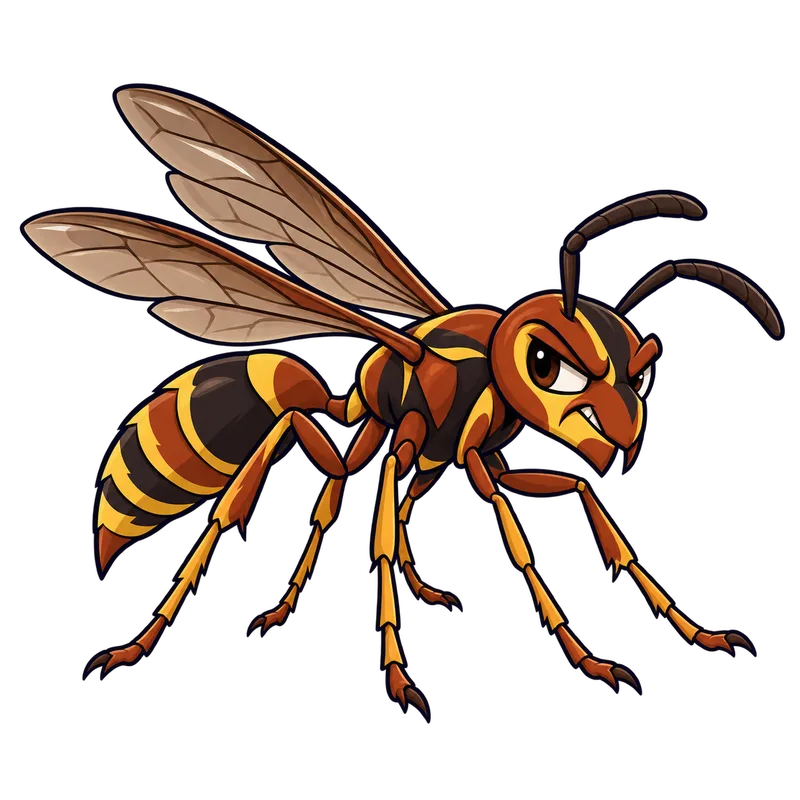
Next, watch the insects in flight for a few seconds. Paper wasps have long, slender bodies and tend to let their legs dangle loosely beneath them as they fly, looking almost like trailing threads or tiny landing gear. German wasps and yellowjackets have shorter, more compact bodies with striking yellow-and-black stripes, and they tuck their legs tightly against their abdomens as they dart through the air with fast, aggressive precision.
You should also keep in mind that early in the season, during spring, a founding German wasp queen starts with a small embryo nest about the size of a golf ball or tennis ball. Even this early version has a thin outer shell, which separates it from the naked, open comb of a paper wasp right from the start.
What usually comes next
Once you figure out what you are looking at, you have to decide whether to live and let live or deal with it. Paper wasps tend to mind their own business unless you practically knock into their home, and they pull their weight by eating garden caterpillars. If a paper wasp nest is dangling in some quiet corner where nobody ever goes, you can usually ignore it until winter rolls around, at which point the colony packs it in and the nest sits empty.
German wasp nests hidden behind walls are a whole different beast. Because their numbers explode from a handful of workers in spring to thousands by late summer, an underground colony right next to your patio is asking for trouble. If the nest is tucked inside your drywall or buried under the yard, do not get clever and plug the hole with caulk or blast it with bug spray. Trapped German wasps will just chew right through the interior wall and find their way into your living room.
For small, bare nests or early-season setups in easy-to-reach places, stopping them before they start is your best bet. Seal up cracks in your siding, fix gaps around your soffits, and patch up window frames in late winter before the queens start house hunting, and make sure your outdoor trash cans stay locked up tight.
When to get help
Certain jobs need a professional or even an immediate call for medical help. If you stumble upon a hidden German wasp nest bigger than a baseball, or any nest buried deep inside a wall or crawlspace, bring in a licensed pest control operator. Powerful chemical treatments need heavy-duty gear and legal licensing to use, and DIY attempts on hidden colonies usually end with an angry swarm coming right at you.
Keep an eye out for alerts about invasive bugs in your area too. If you think you are looking at an invasive yellow-legged hornet, which has bright yellow lower legs and builds huge secondary nests high up in trees, leave it alone. Snap a quick photo from far away and report what you saw straight to your state department of agriculture.
Stings from these insects require careful attention to health and safety. If someone gets stung and starts having trouble breathing, a tight throat, swelling around the face, dizziness, or hives breaking out all over their body, call emergency services or Poison Control instantly because those are signs of a dangerous allergic reaction. For normal stings, wash the spot with soap and water, and check that your tetanus shot is current, since boosters are generally recommended every 10 years.