
Which wasps are introduced pests in New Zealand?
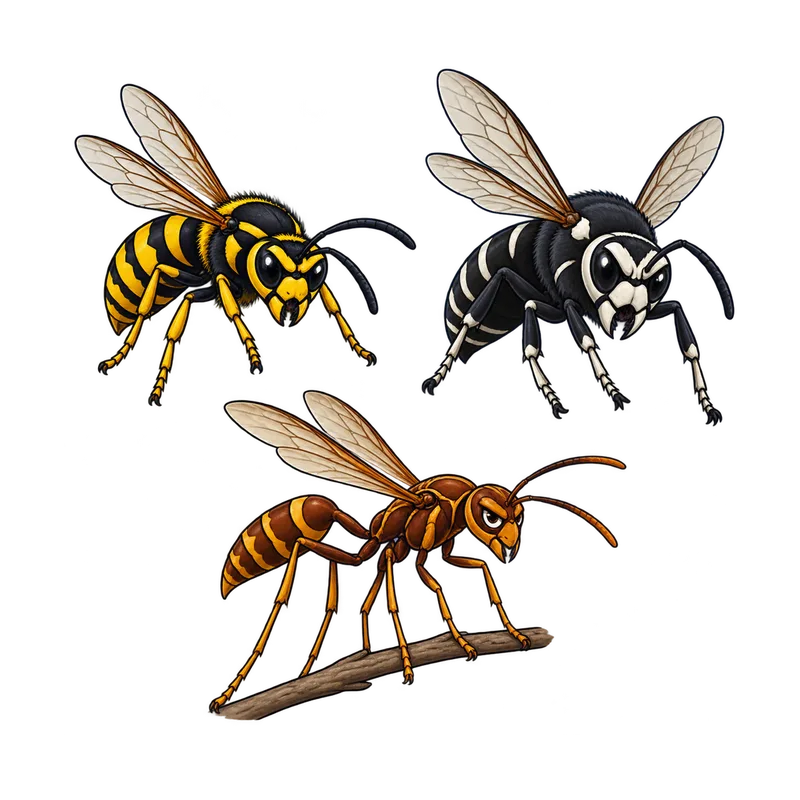
The introduced social wasps causing problems in New Zealand belong broadly to the subfamily Vespinae. These high density invasive predators build massive colonies with thousands of workers by late summer and feature distinct black and yellow markings with a pinched waist.
What is actually going on
Picture walking out to your back deck on a warm afternoon in Nelson or the Waikato, only to find a steady stream of sharp-faced insects hijacking the jam jar or stealing honeydew right off the native trees. You reach for a rolled-up magazine, but before you start swinging, it helps to know what you are actually dealing with in the local landscape. In New Zealand, the introduced social wasps causing these headaches belong broadly to the subfamily Vespinae. These are not your solitary garden visitors that politely mind their own business. They are high-density invasive predators that build massive colonies, outcompete native birdlife and invertebrates for food, and create serious complications for regional land management and businesses running forestry, honey production, and eco-tourism.
You might wonder why researchers and land managers keep talking about technical things like simulation models or parasitic nematodes instead of just handing everyone a can of spray. The truth is that social wasps are persistent because of how they live. A single colony starts with a queen in the spring, balloons into thousands of workers by late summer, and defends its territory with genuine hostility. Because traditional chemical treatments have limits across wide acreage, past scientific work has explored biological control methods meant to suppress colony growth over time. For example, historical simulation modeling from 2004 evaluated whether introducing mermithid nematodes could successfully parasitize and reduce social wasp populations, though field success varies based on environmental conditions and nest moisture.
Of course, people often mix up their garden nuisances. It is easy to assume every creepy-crawly with a sting is part of the same invading army, but that usually leads to the wrong solution. For instance, homeowners sometimes confuse flying social wasps with introduced crawling spiders like Australian white-tailed spiders or the false black widow spider. Those spiders are wandering ground hunters that do not build aerial or subterranean paper nests, meaning a wasp trap will do nothing for a spider hiding in your laundry basket. Keeping the identification straight saves you from buying the wrong supplies or worrying about the wrong hazard.
How to tell for sure
Before you take any steps, you usually need to look closely at the pest from a safe distance. Social wasps in the Vespinae subfamily generally feature distinct black and yellow markings, a pinched waist, and a habit of flying with their legs dangling slightly. They build papery structures that look a bit like massive papier-mâché lanterns, tucked away in underground rodent holes, hollow trees, wall voids, or dense vegetation. You can gauge their size from a safe vantage point by comparing them to a coin or pen cap rather than trying to trap a live specimen.
If the creature in front of you is a dark, cylindrical crawler with no wings and a pale tip on the abdomen, it is a spider rather than a wasp. A quick look from several feet away will usually tell you if you are dealing with a flying insect or a wandering arachnid. Remember that specific species-level breakdowns, such as naming exact individual yellowjacket species or checking local pesticide label rules, are details not covered here, and local biosecurity regulations can vary depending on where your property sits.
What usually comes next
Once you have a clear idea that you are looking at a social wasp nest rather than a stray spider or a harmless native insect, you have to make a practical choice about management. If the nest is small, hidden underground, or tucked near an entryway where children and pets play, do not try to poke it or flood it with a garden hose. Social wasps defend their papery homes aggressively and can sting repeatedly, which turns a quick weekend chore into an emergency room visit.
For significant nests near human habitation or commercial landholdings, the sensible path is usually to contact a trained pest management professional. Licensed operators carry the proper protective gear and follow strict safety guidelines for dealing with large subterranean or structural colonies. If you are dealing with wandering spiders indoors instead, focus on structural sealing and physical removal rather than setting out wasp bait stations. Any control strategies implemented on Māori-owned lands or business properties must align with local governance, environmental ethics, and biosecurity priorities.
When to get help
Never take unnecessary risks when dealing with active Vespinae nests. If a nest is large, located inside a building wall void, or situated near a school, public walkway, or busy business operation, call a licensed pest control applicator or your regional authority.
If anyone is stung and experiences severe symptoms, systemic allergic reactions, trouble breathing, or signs of anaphylaxis, seek emergency medical attention immediately by contacting a clinician, urgent care facility, or poison control center.