
Can a sting photo identify the wasp species?
No, a sting photo cannot identify a wasp species. Human skin reacts to insect venom and spider venom using a very standard playbook, meaning hundreds of different pests produce identical visual symptoms. Accurate identification relies entirely on capturing a clear photograph of the physical body of the insect rather than the resulting skin lesion.
What is actually going on
Imagine waking up with an angry red lump on your arm, burning and itching like nobody's business. You are sitting at the kitchen table, scrolling through your phone, trying to match the welt to a lineup of neighborhood pests, and wondering if snapping a quick picture of it will tell you what kind of wasp paid you a visit. It feels like a logical move. After all, digital cameras are everywhere, and we photograph everything else in our lives.
The short answer is no, a sting photo cannot identify a wasp species.
Think of a skin welt like a dent on a car bumper. It tells you that something made forceful contact with the vehicle, but it gives you zero clues about the make, model, or color of the car that caused the damage. Human skin reacts to insect venom, spider venom, and even bacterial intrusions using a very standard, repetitive playbook. A localized bump, some redness, and a bit of swelling are simply your body shouting for help, not a signed confession from the specific bug that bit you.
When dermatologists or entomologists look at a photograph of a red mark on someone's skin, they are essentially looking at a blank page. Hundreds of different wasps, bees, ants, spiders, and even common skin infections produce identical visual symptoms. In fact, many stubborn sores and angry red spots that people confidently label as wasp stings or spider bites are actually bacterial infections trying to make themselves comfortable. Without the actual insect in hand or captured cleanly in a photograph showing its physical body, any species identification based solely on the resulting skin lesion is just an educated guess at best.
How to tell for sure
If the skin mark is useless for identification, how are you supposed to know what you are dealing with? You usually have to catch the culprit in the act, or at least find it nearby. Accurate identification relies entirely on the physical body of the insect, not on what it did to your arm.
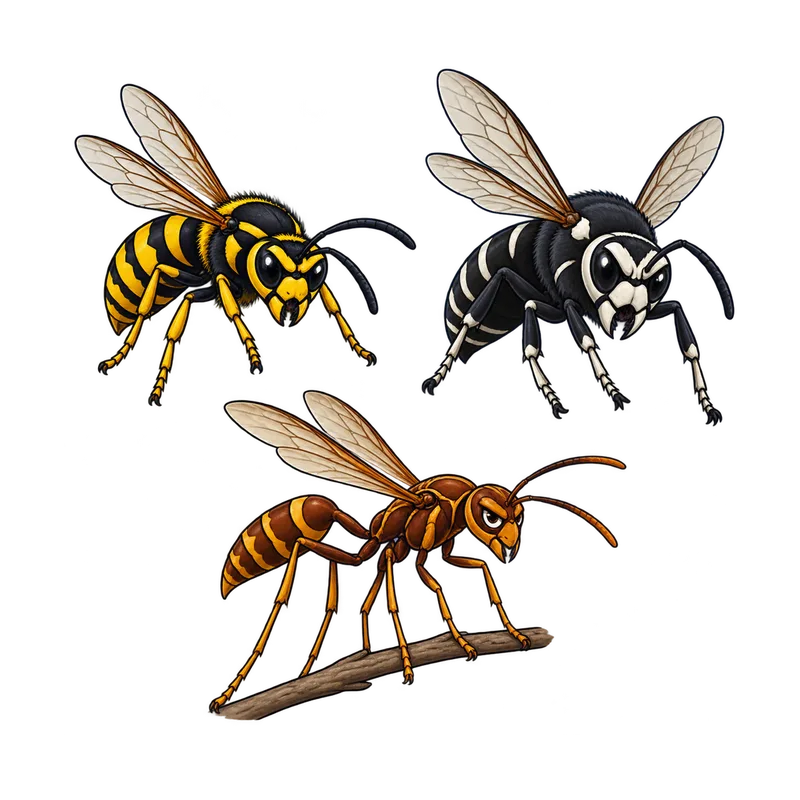
To figure out which insect is hovering around your yard, you need to look at actual physical traits. A casual glance from across the porch usually lets you see general size and major color patterns. For instance, if you happen to spot an invasive yellow-legged hornet, you will usually notice its dark body paired with bright yellow lower leg segments that look almost like neon athletic socks pulled up over dark trousers. Native European hornets, by contrast, sport a reddish-brown head and thorax with a yellow abdomen marked by dark teardrop shapes.
When you need a closer look without putting yourself in danger, trapping a specimen safely inside a jar or a bottle gives you a fighting chance. If you are submitting photos to a state agricultural department or an official reporting app, public health officials do not want to see your skin. They want a crisp, well-lit photograph of the insect itself, preferably with a common object like a coin placed nearby for scale. If the specimen is too mangled or ambiguous, specialists might need to examine fine anatomical details under magnification, looking closely at wing veins, eye shapes, or body hair distribution.
Location also does heavy lifting when figuring out what is in your yard. Certain hornets and spiders simply do not live in your region, which automatically crosses them off the suspect list.
What usually comes next
Once you accept that your skin welt is not going to solve the mystery, your next practical move is to focus entirely on first aid and safety, while keeping an eye out for the real witness.
Wash the affected area thoroughly with plain soap and warm water to clear away any lingering residue. Slap a cold pack wrapped in a clean cloth onto the spot for 10 to 15 minutes to take the edge off the swelling and dull the throbbing pain. If it is itching fiercely, an over-the-counter antihistamine or a dab of topical cream can keep you from scratching the skin raw and inviting a secondary infection.
If you suspect a more serious visitor, such as an invasive pest you have never seen before, resist the urge to go poking at nests or trying amateur extermination tactics with a can of household spray. Aerial nests and large colonies require professional treatment or guidance from your local agricultural extension office. If you manage to trap a suspected insect safely under a glass container, take a clear photo of the insect resting against a neutral background. You can then submit that image to your state department of agriculture website for an authoritative verdict.
When to get help
Most common wasp stings clear up nicely within a couple of days with basic home care, but certain symptoms cross the line from a mild nuisance into an urgent medical event.
Call for emergency medical help immediately if you notice any signs of a severe allergic reaction. This includes trouble breathing, wheezing, swelling around your lips, tongue, or throat, dizziness, confusion, or a rash spreading rapidly across parts of your body far away from the original sting site. These are red flag warnings of anaphylaxis that require immediate professional intervention.
Consult a clinician if the local reaction seems unusually aggressive, or if you are dealing with a sting on a young child, an elderly adult, or someone with underlying health vulnerabilities. If the skin wound starts worsening after a couple of days instead of getting better, showing expanding redness, radiating warmth, red streaks, or pus, you need a medical evaluation to rule out a developing bacterial infection. For suspected stings or bites from regulated invasive pests, your local state extension office or department of agriculture is the right authority to contact once you have secured a safe photograph of the insect itself.