
What should you check before arranging wasp nest removal in the UK?
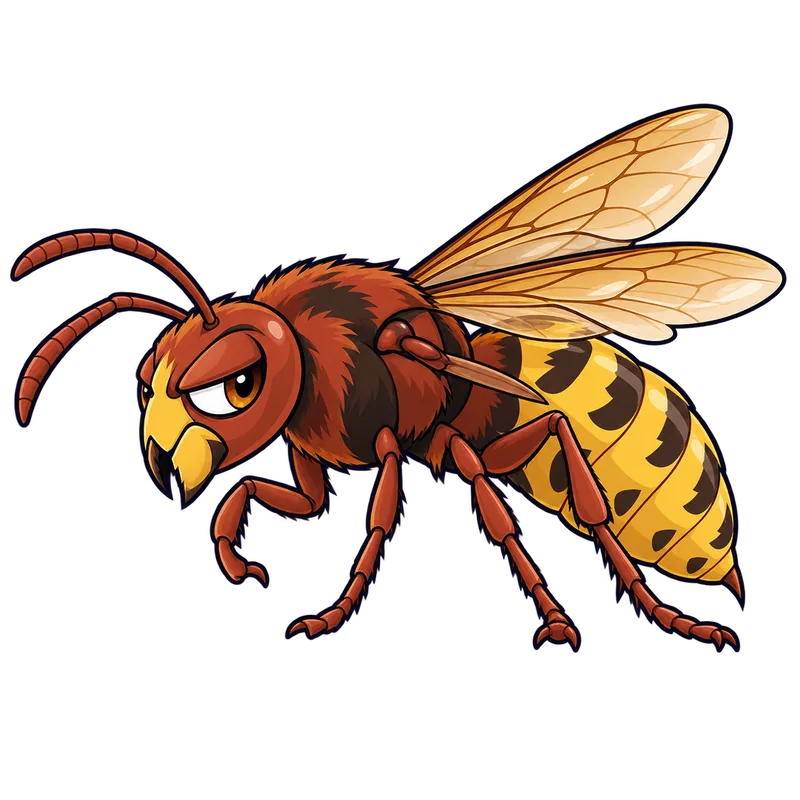
Before arranging wasp nest removal in the United Kingdom, you must check what specific insect species is flying in and out of the cavity to avoid breaking conservation rules. Native social wasps measure roughly half an inch with bold yellow and black stripes, while invasive Asian hornets feature bright yellow leg tips. Your next move depends on identifying these residents correctly.
What is actually going on
You are standing in the back garden on a warm Tuesday afternoon, ready to deal with that papery grey football tucked under the eaves of the shed before someone gets stung. It is tempting to grab a can of foaming spray from the hardware store or call up the local pest controller right away. Before you pay for a treatment or shake a can, you need to pause and take a hard look at what is actually flying in and out of that hole. The insects buzzing around your property might not be the common garden pests you think they are, and treating the wrong nest can land you in serious trouble with both the law and the local ecosystem.
Why does a simple backyard insect problem require such careful thought before you act? Because not all striped fliers are created equal, and your local authorities take a very dim view of people destroying protected or invasive-tracking wildlife by mistake. Rushing into a pest control contract without checking what is inside the cavity can waste your money on a treatment that does not fit the species or, worse, destroys a colony that government inspectors are actively trying to monitor. Taking a moment to inspect the residents first saves you from paying for the wrong service and keeps you on the right side of conservation rules.
How to tell for sure
Identification is usually the most important step, and it starts with looking closely at the insects without getting close enough to trigger a defensive attack. If the creatures are small, measuring roughly half an inch, with smooth, hairless bodies marked by bold yellow and black stripes, you are usually dealing with native social wasps. They generally build paper nests inside wall cavities, underground rodent burrows, or sheltered garden spaces. You might also spot paper wasps with slender bodies and dangling legs constructing open, umbrella-shaped combs beneath porch ceilings.
If you are looking at a much larger insect measuring up to 1.4 inches long, you might have a European hornet, which features a reddish-brown thorax and a yellow abdomen marked with black teardrops. These native hornets are often nocturnal and tend to bump against porch lights on warm summer nights. You might wonder how to tell them apart from their more infamous cousins without putting yourself in danger, and the trick is to look at the legs and general coloring rather than just guessing based on size.
The real concern in the United Kingdom involves the invasive Asian hornet. These workers measure 20 to 25 mm, featuring a velvety dark brown or black body, an orange face, a bright yellow band on the fourth segment of the abdomen, and unmistakable bright yellow leg tips that look like tiny yellow socks. You might also spot them hovering statically outside honeybee hives to snatch returning foragers, a predatory hunting strategy known as hawking. Honeybees and bumblebees, on the other hand, are fuzzy, hairy, and valuable pollinators that you want to protect rather than destroy.
What usually comes next
Once you have figured out who is living in the wall, your next move depends entirely on what you found out there. If you suspect an Asian hornet, stop what you are doing and back away from the nest immediately. Never attempt to remove or spray an Asian hornet nest yourself, because private destruction scatters the colony and prevents official trackers from finding the mother nest. Instead, grab your phone, snap a clear photograph with a coin or pen for scale if you can do so safely, and submit a report straight away using the official Asian hornet watch mobile app or the online reporting tool provided by the National Bee Unit.
If your inspection reveals a swarm of honeybees tucked inside a wall or tree hollow, leave the chemical sprays in the cupboard and contact a local beekeeping association for safe, live collection. For ordinary native wasps or European hornets causing an active hazard in your garden, a licensed pest controller can apply approved treatments safely, following all product label directions. Choosing the right path ensures you do not harm beneficial pollinators while still keeping your outdoor living spaces secure.
When to get help
There are times when handling a nest yourself is out of the question, and knowing when to step back is a matter of basic safety. If you spot a confirmed or suspected Asian hornet, your responsibility is to report it immediately to the Animal and Plant Health Agency or the Non-Native Species Secretariat rather than hiring private help, because statutory eradication is handled centrally by government bee inspectors.
When dealing with large native wasp nests located high up in tree canopies or deep inside structural wall voids, always bring in a professional pest control operator who has the proper protective gear and high-access equipment. Wasps and hornets possess unbarbed stingers and can sting repeatedly when defending their territory, which presents a severe risk of toxic envenomation when a large colony is disturbed.
Seek immediate emergency medical attention if a sting causes symptoms beyond normal local pain and swelling, such as dizziness, fever, facial or throat swelling, hives, or difficulty breathing. Individuals with known severe insect allergies must carry an epinephrine autoinjector and treat any sting as a potential medical emergency.