
Is a mud nest made by a mud dauber or another wasp?
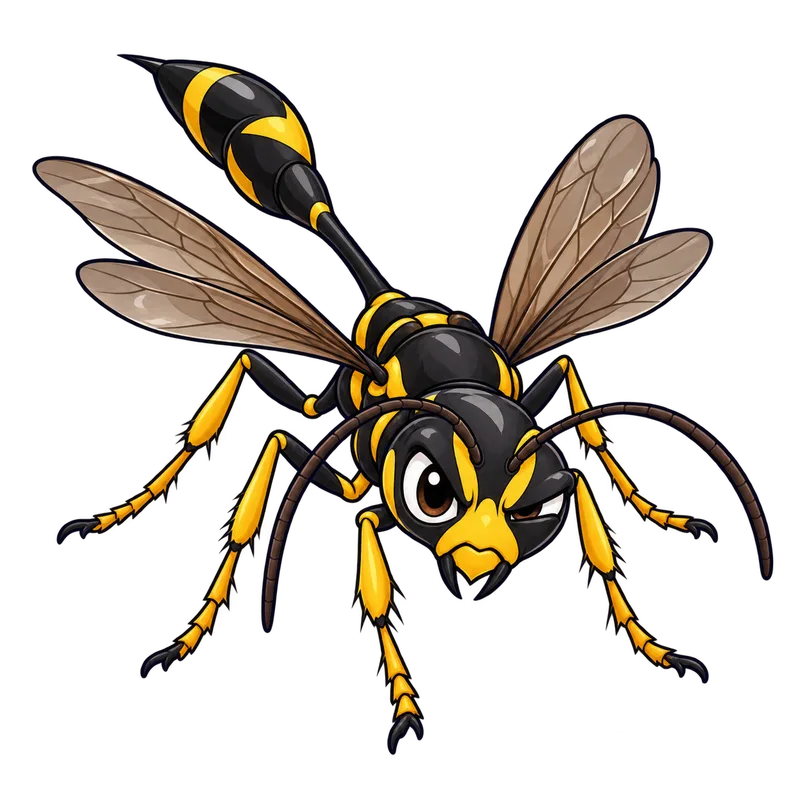
A mud nest is almost always built by a solitary wasp like a mud dauber, a mason wasp, or a potter wasp. The answer depends on the exact texture and shape of the clay structure, though you might also find an abandoned nest taken over by a blue mud wasp.
What is actually going on
You step out onto the porch with your coffee, look up at the eaves, and spot a lump of dry, gray-brown clay plastered against the wood. It looks like a fistful of mud slapped right below the roofline. Your first thought is probably that some bizarre insect built a concrete bunker on your house, and you reach for a broom to knock it down.
Before you swing, you want to know what you are actually dealing with. A mud nest on a building is almost always built by a solitary wasp, most commonly a mud dauber or a mason wasp, though you might occasionally stumble upon an abandoned nest that a different insect has taken over. These solitary builders work alone. A female wasp spends her day scooping up wet soil in her jaws, flying it to a sheltered spot under a porch or rafter, and shaping it into a sturdy clay nursery cell.
You might wonder why a wasp would bother hauling dirt instead of chewing up wood like the paper wasps do. The mud acts as a durable, thermally stable ceramic shell that protects the developing larvae from weather and predators. Once the cells are filled with paralyzed spiders and a single egg is laid inside each one, the mother plasters over the whole cluster with an extra layer of mud.
The trouble starts when people confuse these harmless clay homes with the paper nests built by aggressive social insects. A hardened lump of mud on a wall usually means you have a quiet neighbor who minds its own business, but misidentifying the structure can lead to an unnecessary panic or, worse, mistaking an invasive hornet nest for a simple mud dauber lump.
How to tell for sure
You do not need an entomology degree to figure out whose handiwork is attached to your siding. You just need to look closely at the texture, shape, and location of the structure.
Start by inspecting the material. Hard, brittle dried clay or dirt usually points straight to a solitary mud dauber or a potter wasp. If the nest has a smooth, rounded surface that looks like a handful of mud smeared against the wall, you are usually looking at the work of the black and yellow mud dauber. If you see a series of long, parallel mud tubes that look like tiny organ pipes stuck side by side on a brick wall or vertical beam, that usually belongs to the organ-pipe mud dauber. Should you find a tiny, delicate, vase-shaped mud jug hanging from a plant stem or tucked into a masonry crack, you usually have a potter wasp in the neighborhood.
Now, you have to watch out for the squatters. If you see a brilliant, metallic-blue wasp hanging around an existing mud nest, you might assume she built it. That is usually false. The blue mud wasp lacks the behavior to harvest raw mud, so she carries water droplets to soften up an old, abandoned mud dauber nest, cleans out the original contents, drops in her own paralyzed spiders, and seals it back up.
You also need to rule out the look-alikes. Paper wasps build open, umbrella-shaped combs that hang from a single stalk, and those combs are made of gray, chewed wood pulp with visible hexagonal paper cells, not mud. More critically, early-season nests of the invasive yellow-legged hornet can appear in similar sheltered spots and feature a papery construction with a muddy brown or reddish hue. If the wasps guarding the nest are compact with dark bodies and bright yellow leg tips, stop right there. That is usually not a mud dauber, and you should treat it with extreme caution.
What usually comes next
Once you figure out the nest is just a genuine, hard clay creation left behind by a mud dauber, you have to decide whether to leave it be or scrape it off.
Most of the time, the smartest move is to ignore it completely. Solitary mud daubers are surprisingly mellow, they do not run massive colonies, and they basically never sting unless you manage to squeeze one directly against bare skin. To top it all off, they spend all their time hunting down spiders, including nasty ones like black widows, to feed their growing larvae. If the nest is tucked away in some quiet corner of the shed where nobody bothers it, letting them finish their life cycle causes zero harm.
When the nest sits right above the front door or in the middle of a weekend painting project, you can easily take it down yourself. Wait for a cool morning when the wasps are sluggish or not even home, grab a stiff putty knife, and slide the blade right behind the mud mass to pop it off the siding. Scrub away any remaining dirt with a bit of soapy water so the surface is clean. Drop the scraped-off mud and the hidden cocoons into a sealed outdoor trash bag so you do not wake up to unexpected guests hatching on your porch next spring.
If you suspect the structure is actually a paper nest, or if you spot the telltale dark bodies and bright yellow feet of the yellow-legged hornet, put the scraper down immediately. That requires a completely different plan of action.
When to get help
There are times when a simple do-it-yourself scrape and wash is a terrible idea, and you need to hand the problem over to a professional or the right agency.
If you suspect that the nest belongs to the yellow-legged hornet or another social hornet species instead of a solitary mud dauber, do not try to knock it down or spray it with an aerosol can. These social wasps defend their homes as a team and will attack in swarms if anyone disturbs them. Take a clear photo from a safe distance, write down the exact location, and call your state department of agriculture or the relevant agricultural agency right away so they can track down and manage invasive populations.
As for stings, keep in mind that a solitary mud dauber sting usually brings mild pain and swelling similar to a minor insect nip, but a severe allergic reaction is always an individual medical emergency. Anyone showing signs of a whole-body allergic reaction needs an epinephrine autoinjector and immediate emergency care. For ordinary sting pain or questions about allergic symptoms, talk to a licensed clinician, an urgent care clinic, or your local poison control center. Finally, because mud nests involve wet soil and outdoor debris, always check your tetanus vaccination status after any puncture wound or sting involving dirt, as a booster is recommended if you have not had one in the last 5 to 10 years.