
Asian hornet vs European hornet in the UK: what can be identified safely?
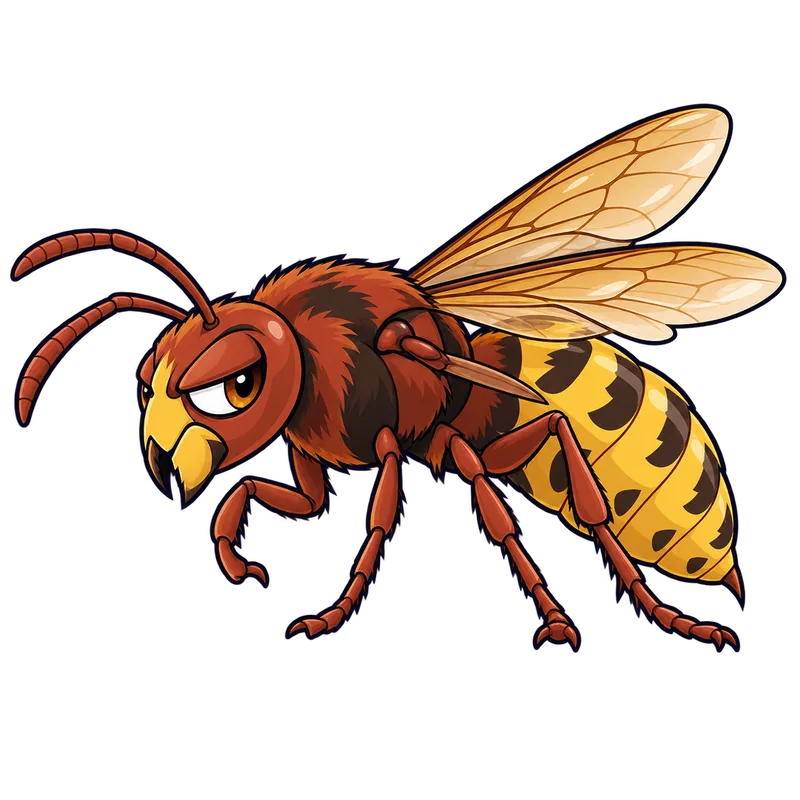
You can safely identify an Asian hornet by its dark velvety chest, orange face, dark abdomen with a single orange-yellow fourth segment, and bright yellow leg tips that look like socks. Meanwhile, the native European hornet is larger, has a reddish-brown chest, and sports a bright yellow belly patterned with black teardrops.
What is actually going on
Picture walking down your garden path on a warm September afternoon, perhaps pausing by the hedge to check your flowers, when a large insect catches your eye. It is hovering right in front of a nearby beehive, darting back and forth like a tiny, suspended helicopter. Naturally, your mind jumps straight to the headlines about the invasive Asian hornet. After all, the media loves a good panic about flying insects with scary reputations. But before you reach for a rolled-up newspaper or start panicking about your prize runner beans, take a closer look at what is actually perched out there.
Distinguishing the invasive Asian hornet from our native European hornet usually comes down to a few very specific field marks that do not require an entomology degree to spot. The short answer is that you can safely identify an Asian hornet at a distance by its dark velvety chest, its bright yellow leg tips that look like someone dressed it in yellow socks, an orange face, and a dark abdomen with just one distinct orange-yellow fourth segment. Meanwhile, our native European hornet is actually larger, features a reddish-brown chest, and sports a bright yellow belly patterned with black teardrop shapes.
People often assume that any large, menacing, yellow-and-black flyer must be the invader everyone is talking about on the news. In reality, size works against that assumption. The Asian hornet is smaller than our native European hornet, measuring roughly twenty to twenty-five millimeters, while the native species can easily stretch up to thirty-five millimeters. That is a noticeable difference if you happen to see them side by side, though admittedly nobody is waiting around for a lineup.
How to tell for sure
Relying on a quick glance can lead to mistakes, so building a mental checklist helps when you are standing six feet away from a buzzing visitor. Start with the legs because they offer the most reliable field marker on individual insects. The lower leg segments of the Asian hornet are bright yellow, contrasting sharply with the dark upper legs, creating that signature yellow sock effect. The native European hornet has uniformly dark reddish-brown legs all the way down.
Head and chest coloration also usually separates the two species clearly. The Asian hornet displays a solid dark brown or velvety black chest paired with an orange face. The native European hornet wears a reddish-brown chest mixed with black, and its head leans toward a brownish-yellow hue. If you manage to look at the abdomen, the invasive species is predominantly dark with a single bright yellow-orange fourth segment near the back, while the native species features a bright yellow background marked with striking black bands and side spots.
Behavior provides another strong clue, especially if you happen to watch them near a garden apiary. Asian hornets practice hawking, which means hovering stationary in mid-air right outside a beehive entrance to ambush returning honeybees. European hornets are opportunistic predators that hunt various flies and caterpillars, but they rarely specialize in that precise hovering technique.
Time of day usually settles the matter without a second guess. Asian hornets are strictly daytime creatures that clock out as the sun goes down. If a large, hornet-like insect is thumping against your patio window light at ten o'clock at night, it is almost certainly a native European hornet drawn to the illumination, not an Asian hornet.
What usually comes next
Spotting something unusual in the garden brings a familiar fork in the road where you have to decide between doing nothing and making a report. If you suspect you have found an Asian hornet, the most practical step is to keep your distance, snap a clear photograph if you can manage it safely, and submit a record through official channels. In the UK, the standard route is the free Asian Hornet Watch smartphone app or an email to the non-native species alert service. Beekeepers can also loop in their local seasonal bee inspector.
Spring and summer monitoring often involves setting up non-lethal bait stations near hives, using simple mixtures like sweet cider or a blend of grape juice and brown sugar, to check for foraging activity. That proactive approach helps catch incursions early before colonies grow from small spring embryo nests hidden in garden sheds into massive secondary nests tucked high in the tree canopy by autumn.
When to get help
Never attempt to tackle a suspected hornet nest yourself. That rule is absolute, regardless of whether the nest is the size of a tennis ball under a porch roof or a basketball high in an oak tree. Hornets defend their colonies aggressively when disturbed, and an amateur attempt to spray a nest with household insecticide or knock it down with a pole usually results in a painful swarm attack and multiple stings.
Leave nest eradication entirely to the statutory authorities or trained specialists who possess heavy-duty protective gear and approved removal methods. If someone suffers multiple stings or shows any signs of a severe allergic reaction, such as difficulty breathing, swelling around the face and throat, dizziness, or a rapid pulse, treat it as a medical emergency and dial emergency services immediately. For ordinary stings without systemic symptoms, consult a pharmacist, a GP, or a non-emergency health line if local swelling becomes unusually severe.