
Why are mud dauber nests attached to a house wall?
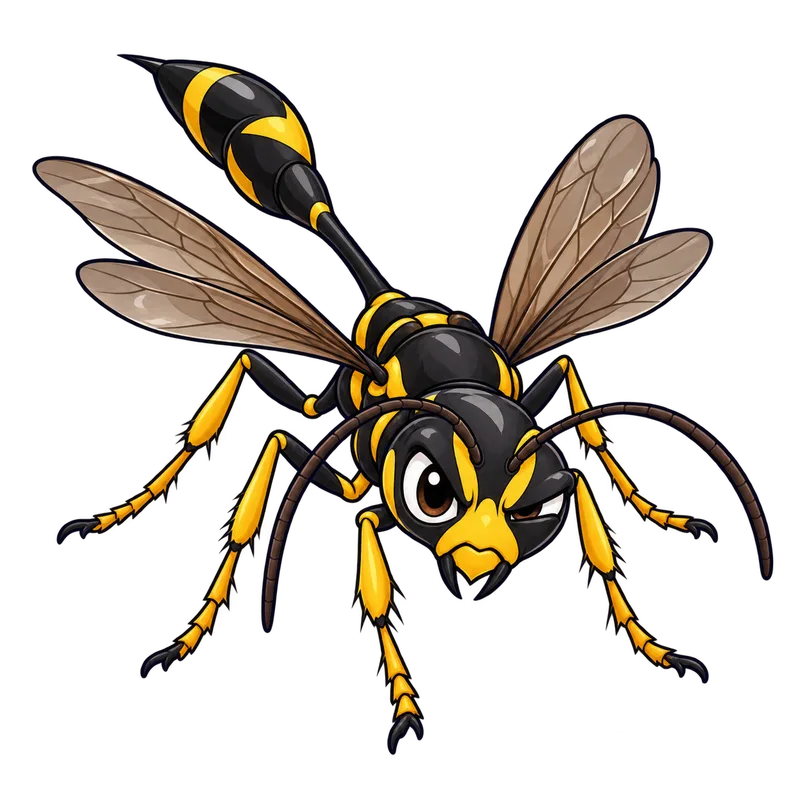
Female mud daubers attach nests to exterior house walls because these flat, rigid structures offer durable anchorage and shelter against rain. Houses provide stable surfaces that easily support the weight of wet mud, and they sit within flying distance of moist soil mud sources and abundant spider prey.
What is actually going on
Picture stepping out onto your front porch on a warm Saturday morning, coffee mug in hand, only to notice a rough, hardened lump of dirt plastered right under the wooden eave where the siding meets the roof. It looks like a miniature collection of clay pipes or a dried mud pie left behind by a determined child. Naturally, your mind might jump to worrying about an aggressive swarm setting up camp right above your doorway.
The short answer is that female mud daubers attach these nests to exterior house walls, eaves, and porch overhangs because these flat, rigid structural surfaces offer durable anchorage and essential shelter against rain and weathering, situated within flying distance of moist soil mud sources and abundant spider prey.
Unlike social insects that build massive paper colonies and defend them with your skin in mind, solitary mud daubers operate entirely on their own. A female wasp visits a damp garden patch or a leaking outdoor spigot, rolls wet dirt into a small ball with her mouthparts, and carries it back to your house. She selects your walls or roof overhangs because they keep her handiwork safe from rainfall, which would otherwise soften and wash away her mud nursery.
You might wonder why she picks a human-made structure instead of a tree branch out in the woods. Houses offer stable, high-friction substrates like brick, vinyl siding, or timber that easily support the weight of wet mud, provisioned prey, and developing larvae. Add in the exterior lighting and landscaping around your home that naturally attract dense populations of spiders, and your house becomes a prime real estate market for a traveling mason wasp.
How to tell for sure
Figuring out what is actually stuck to your wall usually comes down to looking closely at the nest shape and the insect itself. Black and yellow mud daubers usually build cylindrical cells that they eventually cover with a smooth, fist-sized plaster layer of mud. Organ-pipe mud daubers usually construct long, parallel vertical mud tubes that genuinely resemble the pipes of a miniature church organ, and you can sometimes hear the females making a loud buzzing sound while they shape the wet clay.
You might also spot the striking metallic blue to blue-black body of the blue mud wasp. These particular wasps usually do not build original mud nests from scratch. Instead, they usually carry water to soften old mud dauber nests left behind by other species, clear them out, and move in.
It helps to know that these wasps are generally non-aggressive. They lack the colony-defense instincts of social yellowjackets or hornets, meaning they will usually fly away if you disturb them rather than attack. Their stings are mild, and they usually reserve their venom for paralyzing spiders rather than defending real estate.
One common doubt involves whether these insects are chewing into your home. You can rest easy knowing that mud daubers do not consume, bore into, or structurally damage wood, brick, or vinyl siding. The mud is simply stuck to the surface like mortar.
What usually comes next
Stumbling upon a mud nest on your house leaves you with a simple choice. Do you scrape it off, or do you just leave it alone? Since solitary mud daubers earn their keep by hunting down garden spiders, lots of homeowners simply ignore empty nests tucked away out of sight.
When a nest sits right above your back door and drives you crazy every time you step outside, physical removal is the logical first step. You do not need harsh chemicals or expensive traps for an old mud dauber nest. You can easily pop the dried mud right off the siding using a standard putty knife, then wash away any remaining dust with warm soapy water and a stiff brush.
If you happen to catch active wasps still packing the cells with spiders, you might want to wait until evening when the insects are resting and less mobile. Should you decide to reach for an insecticide spray, the product label rules the entire job. Always read and follow the instructions on the registered aerosol jet-stream spray word for word, making sure you never guess at application rates or spray blooming plants where honeybees are foraging.
You can also make your siding far less tempting to future visitors by sealing up tiny gaps with exterior caulk. Regularly sweeping down spider webs with a broom also helps, cutting off the exact food supply that draws these wasps to your walls in the first place.
When to get help
Certain situations mean it is smarter to step back and let a professional handle the removal. If the nests are plastered high up on a steep roofline, climbing an extension ladder introduces a serious fall risk, and a pest control technician with proper gear can clear them safely.
You should also pause if you cannot tell exactly what kind of insect you are looking at. Mistaking a docile mud dauber for an aggressive social wasp like a yellowjacket can turn into a painful experience in a hurry. If you spot an open paper nest or an early colony of hornets tucked into your wall voids, skip the do-it-yourself removal entirely. In some regions, finding certain invasive hornets means you need to report them straight to your local agriculture authorities.
Finally, anyone with a known severe allergy to stinging insect venom should steer clear of nest removal altogether. If a sting does happen, remember that outdoor punctures carry a small risk of infection or tetanus, meaning anyone who has not had a booster shot in the last ten years needs to call a clinician for advice.