
When do paper wasps reuse a nesting area?
No, paper wasps do not reuse a nesting area with the same colony, because every single colony collapses completely when autumn temperatures drop. Instead, a newly mated young queen is drawn back to the exact same sheltered microclimate the following spring to build a brand-new nest.
What is actually going on
Picture stepping out onto your front porch on a brisk October morning, coffee mug in hand, and glancing up at the roof eave. You spot the gray, papery remains of a wasp nest that kept you on edge all summer, and you wonder if you need to tear it down right now so the same stinging tenants do not move right back in next April. It is a reasonable fear, especially when it feels like the exact same spot hosts a buzzing metropolis year after year.
The short answer is no, paper wasps do not reuse an old nesting area in the sense that the same colony comes back for another round. Paper wasps operate on a strictly annual cycle. Every single colony, no matter how aggressive it felt in August, collapses completely when autumn temperatures drop. The workers, the males, and the old founding queen all die off entirely. The physical paper comb left hanging under your porch is as empty and abandoned as a seasonal beach rental in the dead of winter.
So why does it look like they are moving right back into the same address every single spring? The answer comes down to real estate preference rather than family loyalty. When a newly mated young queen wakes up from her winter sleep under a piece of loose tree bark or inside a dry woodpile, she goes looking for a home that offers specific luxuries. She wants an elevated spot, protection from heavy wind and beating rain, and structural warmth.
If your porch eave or window frame provided those exact conditions last year, it will provide them this year, too. A new queen finds that same sheltered microclimate and builds a brand-new nest right there, sometimes right next to the remnants of the old one. She treats the location like a prime commuter bus stop with a roof over it. It is not that the previous occupants handed down the deed, but rather that the spot is simply too good to stay vacant for long.
How to tell for sure
If you want to know what you are looking at before you decide to knock anything down, you need to look at the architecture. Paper wasp nests are usually distinct, open, umbrella-shaped paper combs consisting of a single layer of hexagonal cells attached to a surface by a central stalk. They generally measure anywhere from 3 to 10 inches across, and you can see the open cells staring right back at you without any outer covering.
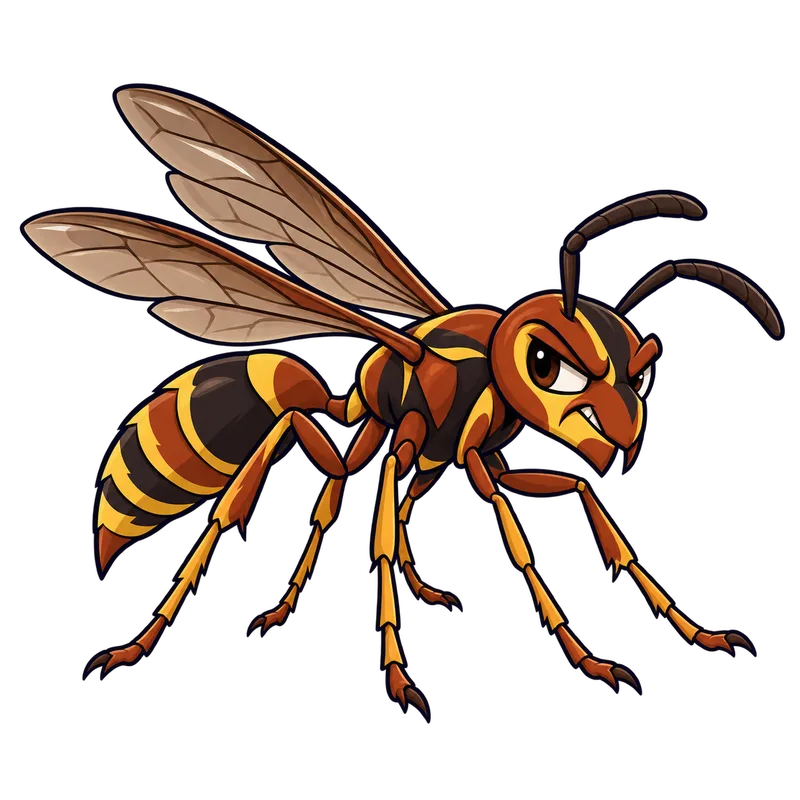
If you see the wasps themselves in flight, look at their posture. Paper wasps usually have slender bodies with a distinct narrow waist and long legs that dangle visibly below them as they fly, making them look a bit like slow-motion skydivers. Their colors are typically brownish with yellow, red, or black markings.
Do not assume every papery gray mass is a paper wasp nest, however. If the structure is an enclosed, ball-shaped paper envelope with internal horizontal layers and a tiny entrance hole, you are usually looking at yellowjackets or hornets rather than paper wasps. Yellowjackets tend to build these enclosed nests underground or inside structural wall voids, while hornets might tuck them high up in trees or large roof cavities.
Remember that you cannot identify an insect from a sting mark or a red welt on your skin. Arthropod stings and bites cause non-specific localized inflammatory reactions, and a skin lesion or a photograph of a swollen mark can never tell you which species stung you. Positive identification usually requires a clear photograph or a physical specimen examined up close.
What usually comes next
When you find an old, abandoned paper comb hanging around after the winter freeze, your best practical move is usually to knock it down and scrub the area clean before spring arrives. Leaving the old nest up will not scare new wasps away because they are not territorial about past generations. In fact, an old nest serves as proof that the micro-site offers ideal environmental protection, which can inadvertently signal to a newly emerged queen that your porch is a great place to set up shop.
Grab a long pole or a broom in late winter before the spring thaw gets underway, and sweep the old comb away. Scrubbing the attachment point with mild soap and water helps remove residual paper fibers and debris.
If you decide to treat an active nest later in the season using an outdoor insecticide, you must read and follow the product label instructions carefully. Federal and state laws require that you use pesticides strictly according to their labeling, as applying them at unauthorized concentrations or to non-listed sites violates the law. Always wear the label-mandated personal protective equipment, such as long sleeves, trousers, and eye protection, and target the nest during the cool early morning hours when the insects are resting quietly on the comb.
When to get help
There are times when handling wasps on your own is simply a bad idea. If you suspect that the nest belongs to an invasive and aggressive species rather than common native paper wasps, such as the yellow-legged hornet or the northern giant hornet, never attempt do-it-yourself removal. Disturbing an invasive hornet nest creates extreme sting risks and can accidentally scatter queens to start new colonies elsewhere.
If you spot an invasive hornet, take a safe photograph and report it immediately with location details to your state department of agriculture, university extension office, or the appropriate national plant health authority.
Medical risks also demand caution. Paper wasps possess non-barbed stingers that can deliver multiple painful injections. While a normal reaction involves localized pain and a red welt that fades after a short while, stings can trigger severe, life-threatening systemic allergic reactions known as anaphylaxis. Watch for signs such as facial or throat swelling, difficulty breathing, dizziness, hives, or widespread fever.
Anyone experiencing signs of a systemic reaction or severe allergic shock must seek immediate medical evaluation at an urgent care facility or emergency room. Individuals with a known history of severe sting allergies should carry an epinephrine autoinjector at all times. For any puncture wound or insect sting, remember that individuals who have not received a tetanus booster within the last 5 years should consult a clinician to prevent secondary infections.