
When is a yellow jacket nest near a walkway a professional job?
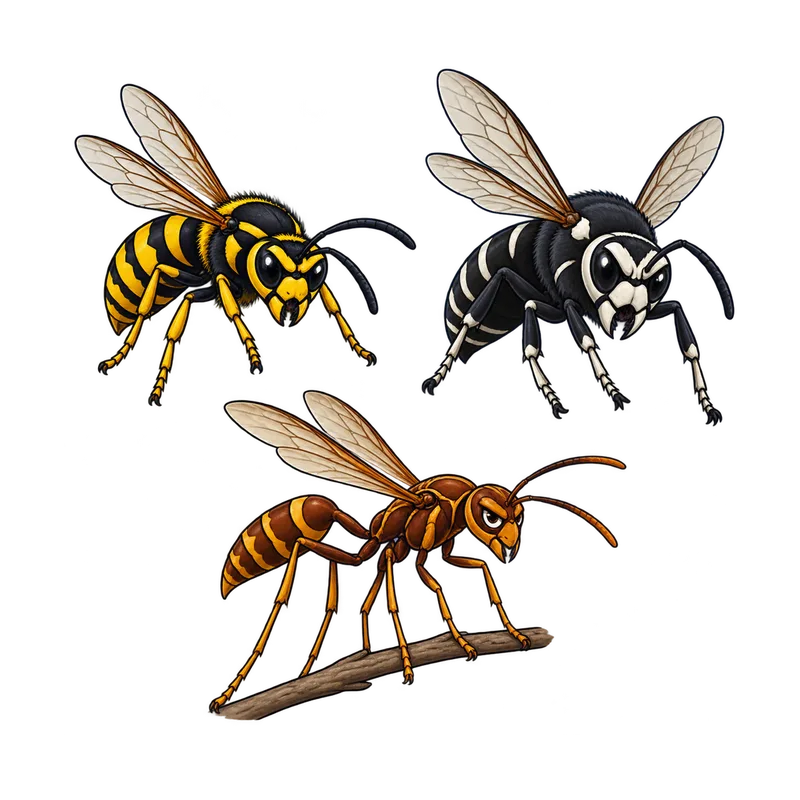
A yellow jacket nest near a walkway is a professional job whenever the nest is underground or hidden inside a structural wall void where foot traffic triggers defensive mass stinging. It also requires a professional when treating the nest safely means breaking federal pesticide rules, or when you suspect the insects belong to an invasive hornet species.
What is actually going on
You are stepping out onto the back patio with a cup of coffee, minding your own business, when your foot lands on a patch of lawn near the paving stones and a dozen angry yellow jackets burst from the turf like a swarm of tiny, furious fighter jets. You jump back, heart pounding, wondering if you can just grab a can of bug spray from the garage and blast the hole.
A yellow jacket nest near a walkway is a professional job whenever the nest is underground or hidden inside a structural wall void where foot traffic and ground vibrations trigger defensive mass stinging. It also becomes a professional matter when treating the nest safely requires breaking federal or state pesticide rules, or when you cannot tell for sure whether the insects belong to an invasive hornet species that requires official state eradication.
That little hole in the ground by the garden path looks harmless enough, but underneath it sits a bustling subterranean city. A single queen started that nest in the spring as a tiny nursery, and by late summer it has expanded into a complex web of paper combs housing hundreds or even thousands of workers. Think of it like an unmarked commuter subway station hidden right under your grass, where thousands of worker wasps pass through every hour.
When you or someone else walks down that path, your footsteps send rhythmic vibrations down into the soil. To the guard wasps stationed at the entrance, those vibrations feel like an earthquake and an imminent attack on the colony. They release chemical alarm signals into the air, and within seconds, the whole underground army pours out to defend their home. Because yellow jackets have smooth stingers, unlike honeybees that leave their stingers behind and die after a single use, every single wasp can sting you multiple times in rapid succession.
Trying to solve this with a hardware store aerosol can usually makes things worse. Surface sprays rarely reach deep enough into the subterranean chambers to kill the queen and all the brood combs. Instead, the chemical irritates the survivors, driving them straight up out of the hole and directly into the path of anyone walking by.
How to tell for sure
Before you decide who deals with the nest, you need to know what you are looking at. Yellow jackets usually nest underground in old rodent burrows, though they can occasionally set up shop in hollow tree stumps or wall voids. They are about half an inch long, sporting bold yellow and black banding on a smooth, mostly hairless body.
Paper wasps look somewhat similar, but they usually build open, umbrella-shaped paper combs hanging from porch eaves or tree branches rather than hiding underground. Their nests have exposed hexagonal cells, and their long legs dangle loosely as they fly.
If you spot an insect that looks massive, around one to one and a half inches long with a reddish brown head and thorax, you are likely looking at a European hornet. These larger hornets sometimes fly around porch lights at night.
One exception that changes everything is the invasive yellow-legged hornet. These hornets have dark brown or black bodies, a distinct yellow or orange fourth abdominal segment, and lower legs that look like they are wearing bright yellow neon socks. If you suspect you are looking at these, do not approach them and do not attempt control on your own. State and federal agricultural authorities actively track and destroy these nests to prevent them from establishing in the region, and they require official verification.
What usually comes next
When you find a nest right next to a path your family and pets use, your first practical move is to establish an immediate exclusion zone. Cordon off the walkway with chairs or caution tape, keeping people and pets at least 15 to 20 feet away from the entrance. Put away the lawnmower and the weed trimmer for now, because the buzzing vibration of small engines will set off an immediate defensive attack even if you are several feet away.
Do not listen to old advice about pouring gasoline, diesel fuel, or boiling water down the hole. Pouring petroleum products into the soil violates environmental laws, contaminates groundwater, creates a severe fire hazard, and usually fails to reach the deep chambers where the queen lives. Boiling water cools down too quickly once it hits the dirt and mostly just succeeds in making the colony furious.
If the nest is tucked safely away at the far corner of a large property where nobody walks, you can usually leave it alone. Yellow jackets do plenty of beneficial pest control by eating garden caterpillars earlier in the season, and the entire colony dies off naturally after the first hard autumn frost anyway. But when the nest sits right beside a high-traffic walkway, waiting it out is rarely an option.
When to get help
Call a licensed pest control professional when the nest sits within striking distance of daily foot traffic, especially if you have young children, elderly family members, or anyone with a severe allergy to insect venom living in the house. A professional pest control operator brings the right protective gear, respiratory equipment, and EPA-registered products designed to handle subterranean colonies safely without creating toxic runoff near your home.
If you or someone else gets stung, wash the area with soap and water, apply a cold pack to keep the swelling down, and monitor the reaction closely. Call the Poison Control Helpline at 1-800-222-1222 if a child or older adult receives multiple stings or if swelling spreads rapidly. Seek emergency medical care by calling 911 immediately if the victim shows signs of a severe allergic reaction, such as trouble breathing, swelling in the throat or tongue, dizziness, chest tightness, or widespread hives. Anyone stung outdoors should also check their tetanus vaccination status, as a booster shot may be necessary if it has been more than 5 to 10 years since their last one.