
Where has the yellow-legged hornet been found in Georgia?
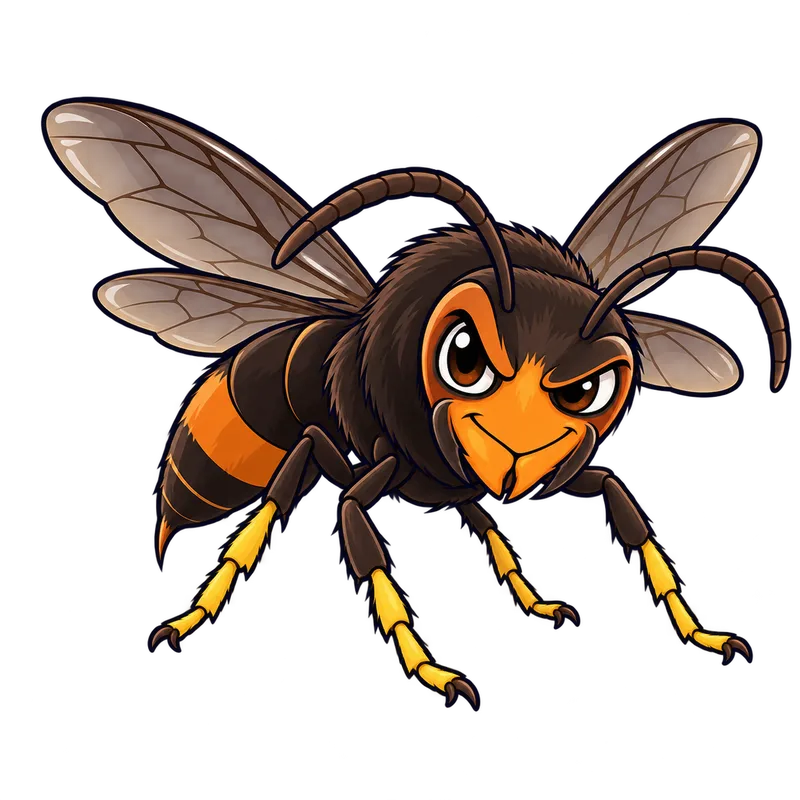
The yellow-legged hornet has been found in Georgia across Chatham, Bryan, Effingham, and Liberty Counties. It was first detected in August 2023 near Savannah in Chatham County, and established populations have since been confirmed in those neighboring coastal regions.
What is actually going on
Imagine walking out to check your backyard beehives on a humid Georgia morning, only to notice a heavy, menacing insect hovering right outside the landing board like a miniature drone. You might wonder if it is one of those invasive pests you have heard about on the news. In Georgia, the yellow-legged hornet was first detected in August 2023 near Savannah in Chatham County, and since then, established populations have been confirmed across Chatham, Bryan, Effingham, and Liberty Counties.
That initial find near Savannah caught state agriculture officials and beekeepers off guard, triggering an immediate multi-agency response. Because insects do not check state lines or road maps, active trapping and surveillance soon revealed that the hornet had expanded into neighboring regions. Populations have now cropped up across several counties in coastal South Carolina, and an established presence has even been verified further north in parts of North Carolina.
You might ask why these particular areas are seeing them. Invasive queens are surprisingly good at hitchhiking in commercial freight, nursery stock, and vehicular cargo, which explains how they manage long-distance jumps beyond their natural flight range. Once a queen establishes herself, she starts a colony that grows from a tiny spring nest into a massive summer structure housing thousands of workers. State response teams and university extension services track these movements closely, but backyard observers play a vital role in spotting new arrivals before they spread any further.
How to tell for sure
Before you panic every time a large wasp buzzes past your garden, it helps to know what you are actually looking at. The yellow-legged hornet usually measures between 0.7 and 1.0 inch in length, making it noticeably smaller than the infamous northern giant hornet that made headlines out west. Its most defining field mark is right in the name. The insect features a dark body with a solid black or dark brown thorax, an orange face, an orange-yellow fourth abdominal segment, and legs that end in bright yellow lower segments that look uncannily like athletic socks pulled up against a dark suit.
People often confuse them with native lookalikes, which leads to a lot of false alarms. European hornets are larger, have reddish-brown thoraxes, and sport distinctive teardrop markings on their yellow abdomens, plus they tend to fly around outdoor lights at night. Eastern cicada killers are even bigger, reaching up to 2.0 inches long, and they dig solitary burrows in the dirt rather than building hanging paper nests. Common yellowjackets and paper wasps are much smaller and lack those striking yellow leg tips entirely.
If you spot a suspect insect, you usually cannot rely on a casual glance from ten feet away for a definitive diagnosis. State entomologists need clear, focused photographic evidence, ideally with a common object like a coin or pen placed nearby for scale, before they can take official action. Trying to identify a stinging insect solely from a painful sting or a vague description of a mark on your skin is impossible, so always look for the physical insect and check those yellow socks before jumping to conclusions.
What usually comes next
When you suspect you have spotted a yellow-legged hornet or find a suspicious paper nest hanging near your property, your next move calls for caution instead of immediate aggression. Homeowners and beekeepers regularly ask if they should run out to buy heavy-duty insecticides and spray the nest by themselves. The short answer is usually no, particularly if the colony has moved past its early spring phase.
If you happen to find a tiny, tennis-ball-sized embryo nest early in the season and you are certain the queen is gone, careful removal is occasionally practical. However, as summer progresses, those nests expand into watermelon-sized primary structures and eventually turn into massive secondary nests the size of beach balls tucked high up in tree canopies. Attempting to spray or knock down a mature secondary nest on your own is a recipe for a severe stinging attack and usually scatters surviving queens to start new colonies elsewhere.
Instead of taking matters into your own hands, your best practical decision is to document the insect safely and report it. Hang a simple DIY monitoring trap made from an inverted plastic soda bottle baited with grape juice and brown sugar near your garden or apiary if you want to help with surveillance. If you capture or photograph a suspect hornet, keep your distance, take a clear picture, and submit your finding directly through the Georgia Department of Agriculture online reporting portal so state response teams can handle the eradication safely.
When to get help
There are clear boundaries where DIY pest control ends and professional intervention must take over. If you observe live hornets exhibiting hawking behavior, where they hover outside your honey bee hives to pick off returning foragers, or if you locate a primary or secondary nest hanging in a tree or attached to a building structure, you need to step back immediately. At that point, the situation belongs strictly to state regulatory agency teams, such as the Georgia Department of Agriculture and USDA APHIS, or licensed commercial pest control applicators who possess the proper protective gear and restricted-use equipment.
Safety warnings on hornet encounters are not meant to be taken lightly. Hornet venom contains potent toxins and allergens that can cause severe localized pain, swelling, and life-threatening systemic allergic reactions known as anaphylactic shock. If someone suffers multiple stings, shows signs of breathing difficulty, dizziness, or swelling of the face and throat, immediately call emergency medical services at 911 or contact the Poison Control Center Helpline at 1-800-222-1222.
Environmental regulations also dictate how nests are handled. Professional removal teams must carefully inspect surrounding trees and structures to protect non-target native wildlife, including nesting migratory birds and bats, which are shielded under state and federal laws. When an invasive species of this magnitude turns up in your neighborhood, let the trained specialists manage the removal while you focus on safe observation and prompt reporting.