
Where are cicada killer wasps found?
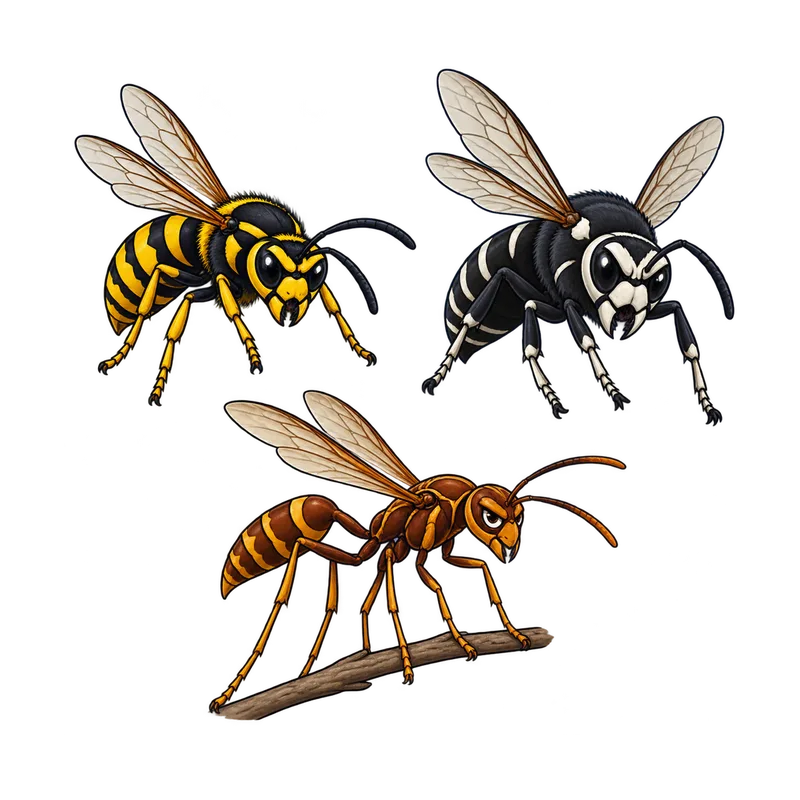
Eastern cicada killer wasps are found across the Eastern and Midwestern United States, while Western cicada killer wasps live in the Western states. Where you find these solitary digger wasps depends entirely on which side of the country you call home.
What is actually going on
Imagine stepping out onto the front porch with your morning coffee, only to spot a massive flying insect patrolling your flower bed with the aggressive zoom of a miniature fighter jet. It easily reaches the length of a standard AA battery, its body stretching close to two inches. Naturally, you take a step backward and wonder if some terrifying exotic invader has just moved into your lawn. The short answer is that you are almost certainly looking at a native cicada killer wasp, and where you find them depends entirely on which side of the country you call home.
If you live across the Eastern or Midwestern United States, the insect buzzing around your yard is the Eastern cicada killer. Shift your geography to the Western states, and you will encounter its close cousin, the Western cicada killer. These insects belong to a group of solitary digger wasps native to North America. Unlike the social yellowjackets or hornets that build massive paper colonies containing thousands of stinging workers under a deck or high in an oak tree, these giant wasps live entirely alone. A female cicada killer spends her summer excavating a modest, marble-sized hole in bare soil, complete with a tiny horseshoe-shaped pile of freshly kicked-out dirt, where she provisions provisions for a single offspring.
People often panic upon seeing something so large, assuming it must be one of the dangerous exotic hornets making news headlines. That confusion makes complete sense because agricultural agencies frequently use cicada killers as classic look-alikes when training the public to spot invasive pests. But before you call in a panic, it helps to understand that these native wasps have a very specific geographic range and lifestyle. They are not colonizing your property to take over the neighborhood, and they generally ignore humans completely unless you happen to grab one bare-handed.
How to tell for sure
Telling a native cicada killer apart from a genuinely alarming invader usually comes down to a few basic physical cues you can check from a safe distance. First, look at the coloring on the upper part of the body, right behind the head. Cicada killers usually feature a reddish or brownish thorax, which contrasts very little with their head. Dangerous invasive hornets tend to have a solid dark brown or black thorax that creates a sharp, unmistakable contrast against a bright yellow or orange head.
Next, check the eyes if you happen to get a close look through a magnifying lens or a sharp photograph. Cicada killers have round eyes, whereas true hornets feature deeply notched, kidney-shaped eyes. You can also look at their legs. Some invasive hornets sport distinctive bright yellow lower leg segments that look like tiny socks, a feature cicada killers simply do not have.
Another major giveaway is the nesting site itself. If the insect is emerging from a neat, solitary hole in a sunny patch of bare soil or a thin lawn edge, you are usually looking at a native digger wasp. If you find a gray paper nest hanging from a tree branch or tucked under a roof eave, you are dealing with social vespids instead. Male cicada killers often dart right at you or hover near driveways, but they are just showing off their territorial bluster. They lack a stinger entirely, so all that noisy patrolling is nothing more than empty posturing.
What usually comes next
When you figure out you are sharing your yard with a native cicada killer, you normally just have to decide whether to leave them be or change the conditions that brought them there. Since these wasps need bare dirt to dig their tunnels, they tend to turn up in thin lawns, sandy spots, or flower beds sitting in full sun. Thickening up your turf with a bit of seed and keeping the grass watered usually persuades them to look for a different patch of earth next year.
If you are itching to grab a can of bug spray and clear out every single hole, it helps to remember these solitary hunters actually do you a favor by keeping the local cicada population in check. On top of that, pesticide labels carry the full weight of federal law, meaning any soil treatment has to follow those printed rules precisely. Doing DIY treatments with commercial restricted products is simply against the law, and many states have strict rules protecting pollinators that ban certain common chemicals like neonicotinoids. When a chemical option is the only sensible route near high-traffic zones, leave that call to a licensed professional who knows the local laws and safety boundaries.
When to get help
Most of your dealings with cicada killers will end quietly because they care a lot more about finding cicadas than harassing people, but a few scenarios mean it is time to bring in outside help. If someone gets stung and starts showing severe signs like trouble breathing, a tight throat, dizziness, spreading hives, or swelling far from the sting mark, treat it as a medical emergency right away. Call 911 or reach out to the Poison Control Helpline at 1-800-222-1222 without a second thought.
You ought to contact your state agricultural department or local university extension office if you suspect you are looking at an invasive hornet instead of a harmless native digger wasp. If a large wasp starts acting like a predator by stakeout-hovering near a honeybee box to catch returning workers, or if you actually spot a paper nest hanging up in a tree, keep your distance. Snap a clear photo with something for scale, like a coin or a pen, next to the insect if you can do it safely, and send it over to your regional plant agency to get a proper ID.