
What does a bald-faced hornet queen look like?
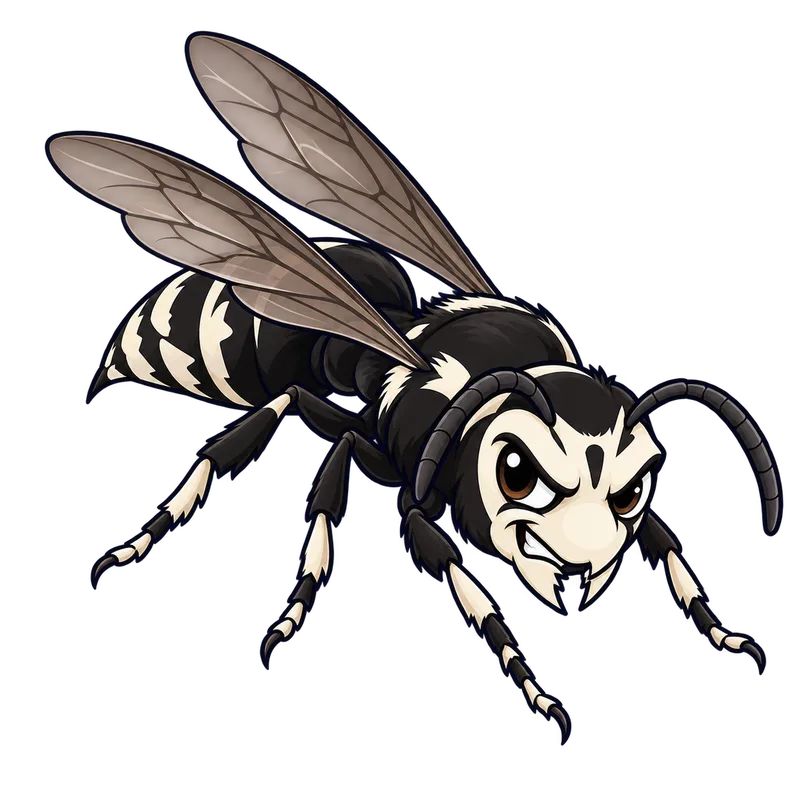
A bald-faced hornet queen is a stout, medium-sized wasp measuring half an inch to three-quarters of an inch long. She has a mostly black body with a stark, ivory-white face and matching white markings near the tip of her abdomen.
What is actually going on
Picture walking out to your backyard on a warm late-summer afternoon, reaching for the garden hose, and noticing a large, football-shaped gray paper bulb dangling from the low branch of an oak tree or tucked right under the eaves of your shed. That is the handiwork of the bald-faced hornet, scientifically known as a large aerial-nesting yellowjacket rather than a true hornet. If you have managed to catch a glimpse of the queen hovering near that nest, you are probably wondering what you are looking at, especially if you have heard scary news reports about giant exotic pests arriving from overseas.
To answer the question directly, a bald-faced hornet queen looks like a stout, medium-sized wasp measuring roughly half an inch to three-quarters of an inch long, sporting a mostly black body with a stark, ivory-white face and matching white markings near the tip of her abdomen. Unlike standard ground-nesting yellowjackets that flash bright yellow warning stripes, this native North American insect wears a much more formal, almost tuxedo-like palette of deep black and cream.
People often get confused because common names carry a lot of baggage. She starts her year entirely alone after surviving the winter in a sheltered spot like rotting wood or leaf litter. Once spring arrives, she builds a tiny, thumb-sized embryo nest, rears her first batch of workers, and then settles down inside the colony to let her workforce handle the foraging and remodeling while she focuses purely on laying eggs.
How to tell for sure
When you are trying to confirm whether the insect buzzing around your porch is a bald-faced hornet queen or worker rather than a dangerous exotic invader, focus on a few distinct visual cues. Look for that contrasting white facial plate, which gives the species its other common name, combined with solid black segments across the thorax and distinct white patches on the back end of the abdomen. If you see bright yellow-and-black stripes, you are usually looking at a standard ground-nesting yellowjacket.
Size also gives you a reliable clue without needing magnification. Adults usually measure between 13 to 19 mm, which roughly matches the width of a standard penny. You can contrast this modest size with the northern giant hornet, which reaches a thumb-stretching 2 inches long with a massive orange head, or the yellow-legged hornet, which usually displays distinct yellow leg tips that look like tiny socks.
Nesting architecture usually seals the identification. Bald-faced hornets construct enclosed, aerial paper nests that look like hanging papier-mâché sculpted from chewed wood pulp and saliva, typically fading to a uniform gray color. If the nest is an open, umbrella-shaped paper comb hanging exposed under a patio chair, you are usually looking at a paper wasp.
What usually comes next
Once you spot a bald-faced hornet nest hanging around your property, you have to decide what to do about it, and the best move usually depends entirely on where it is located. If the nest is tucked away in the back corner of a large wooded lot where nobody walks, many homeowners simply leave it alone because these native wasps act as aggressive predators of other nuisance insects like flies and caterpillars.
However, if that gray paper bulb is swinging right above your back porch steps, your children's play area, or your main pathway to the garage, waiting it out is rarely a smart gamble. Before you take any action, capture a clear digital photograph from a safe distance if you can do so without disturbing the colony. If you live in a region running active surveillance programs for invasive pests, submitting that photo to your local state agricultural extension or department of agriculture helps experts screen out native look-alikes from actual threats.
Remember that you should never attempt to knock down, spray, or physically destroy an active hornet nest on your own. Home remedies involving garden hoses, long sticks, or generic aerosol cans usually result in dozens of defensive stings. If the nest sits in a high-traffic zone where safety is a genuine concern, your best practical step is to contact a licensed pest management professional who has the proper protective gear and equipment to handle stinging aerial colonies safely.
When to get help
Sting hazards are the primary reason to involve professionals or medical personnel when dealing with these insects. Vespine stings deliver sharp localized pain, swelling, and redness, which is unpleasant enough for anyone, but for individuals with known insect allergies, a sting can trigger a life-threatening medical emergency known as anaphylaxis.
Watch closely for rapid warning signs after a sting, including chest pain, swelling of the face or mouth, difficulty breathing or swallowing, dizziness, a widespread rash, or sudden fainting. If any of these symptoms appear, seek emergency medical attention immediately or contact poison control at 1-800-222-1222 in the United States. Do not attempt to diagnose or treat severe systemic allergic reactions at home.
When a nest is large, active, and located in a structural wall void or immediately adjacent to a heavily occupied entryway, leave the removal to a professional service. If you suspect you have found an actual invasive exotic pest like the northern giant hornet rather than our native bald-faced hornet, contact your state department of agriculture or plant industry division so their regulatory specialists can manage the response according to official protocols.