
What does a cicada killer wasp nest look like?
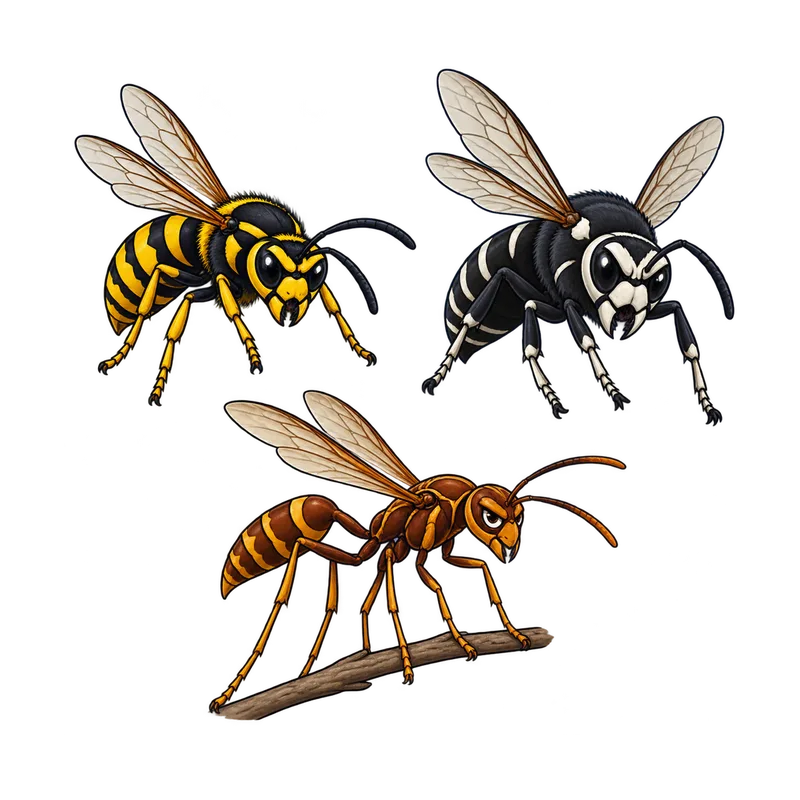
A cicada killer wasp nest looks like a simple hole in the ground about the width of a thumb. The underground tunnel is surrounded by a distinct U shaped horseshoe of loose soil pushed up during excavation. You will usually find these subterranean nests in dry and sunny patches of turf or garden beds.
What is actually going on
Picture stepping out onto the back patio on a warm July afternoon to water the hydrangeas, only to notice a massive, two-inch wasp darting aggressively low across the lawn. Your heart skips a beat. It looks big enough to carry off a small pet, and right beneath its landing spot is a neat little pile of loose dirt with a hole leading straight underground. Naturally, your mind leaps to the worst-case scenario. You are probably wondering what kind of nightmare insect has set up camp right where the kids play.
To answer the question plainly, a cicada killer wasp nest looks like a simple hole in the ground, about the width of a thumb, surrounded by a distinct U-shaped horseshoe of loose soil pushed up during excavation. Unlike social hornets that construct massive paper balloons in trees or wall voids, these native solitary digger wasps work entirely alone. A single female uses her legs and jaws to carve out a subterranean tunnel to store paralyzed cicadas for her developing offspring.
You will usually find these underground excavations in dry, sunny patches of turf, sparse lawns, or garden beds where the soil is easy to dig and lacks dense vegetation shade. There is no shared colony, no guarding army of workers rushing out in a synchronized swarm, and no complicated paper-mache architecture. It is just an independent nursery dug into the earth by a solitary mother.
How to tell for sure
Finding a massive insect emerging from the dirt naturally invites panic, but a few straightforward visual checks usually separate a harmless native digger wasp from an alarming lookalike. First, take a close look at the thorax, which is the middle section of the body right behind the head. Cicada killers usually feature a distinct reddish or brown-red thorax, whereas invasive social hornets display a solid dark brown or black thorax.
Next, consider the sheer size of the insect. Adults can reach up to two inches in total length, which is roughly comparable to placing two US quarter coins side by side. That impressive size often triggers panic, but size alone does not mean danger. If you can safely manage a photograph from a distance using a pen or a coin on the ground for scale, look closely at the head shape and eyes. Cicada killers usually have smaller heads relative to their bodies and round eyes, while true social hornets have larger, broader heads with notched eyes.
Geography also matters quite a bit for proper identification. If you live across the Eastern and Midwestern United States, you are usually looking at the Eastern cicada killer, while the Western cicada killer occupies the drier landscapes of the Western states. If you happen to be reading this from the United Kingdom, Ireland, or Australia, you can rule out cicada killers entirely because these North American digger wasps do not occur there. In British gardens, large yellow-and-black insects are usually native European hornets, while Australian ground holes are far more likely to belong to spiders or emerging cicada nymphs rather than wasps.
What usually comes next
Deciding how to handle a yard full of dirt mounds usually comes down to balancing how much you care about a pristine lawn against the short time these insects actually spend active. Because these wasps live alone and mostly ignore people, the males put on a loud flying show that looks terrifying even though it poses no real threat. The males do not have stingers at all, and the females are famously calm, saving their venom for hunting cicadas and only stinging if someone accidentally traps one directly against their skin.
If the holes pop up right where kids run around or pets hang out, you might feel like you have to do something right away. Before grabbing any sprays, take a good picture to make sure you are really looking at a cicada killer and not an aggressive social wasp that will actually defend its home. When you decide to treat the ground, always read and follow the instructions on a registered bug spray label, and never try mixing up your own concoctions or guessing how much to use.
Often, the smartest move is simply waiting them out. The adult wasps finish their season and vanish by late summer, and thickening up your grass with a little extra water and fertilizer usually stops females from picking your bare dirt spots to dig next year.
When to get help
Even though these native digger wasps rarely bother people, some situations mean you need to step away and call in the pros. If a sting leads to serious swelling, redness that spreads fast, trouble breathing, or signs of a severe allergic reaction, get to an urgent care center or emergency room right away, or call poison control immediately. Anyone who takes a direct hit from a sting should also double-check that their tetanus shot is up to date.
When you suspect you are dealing with invasive pests instead of native wasps, the rules change completely. If you think an insect is an aggressive social pest rather than a solitary digger, do not try to wipe out the nest on your own. Take a clear photo next to a coin or ruler and send it straight to your local agricultural extension office or state department of agriculture website.
For large underground nests of aggressive yellowjackets or tricky pest issues around the house that call for special gear or restricted chemicals, leave the job to a licensed pest control professional who has the training to handle it safely.