
How do you get rid of starlings?
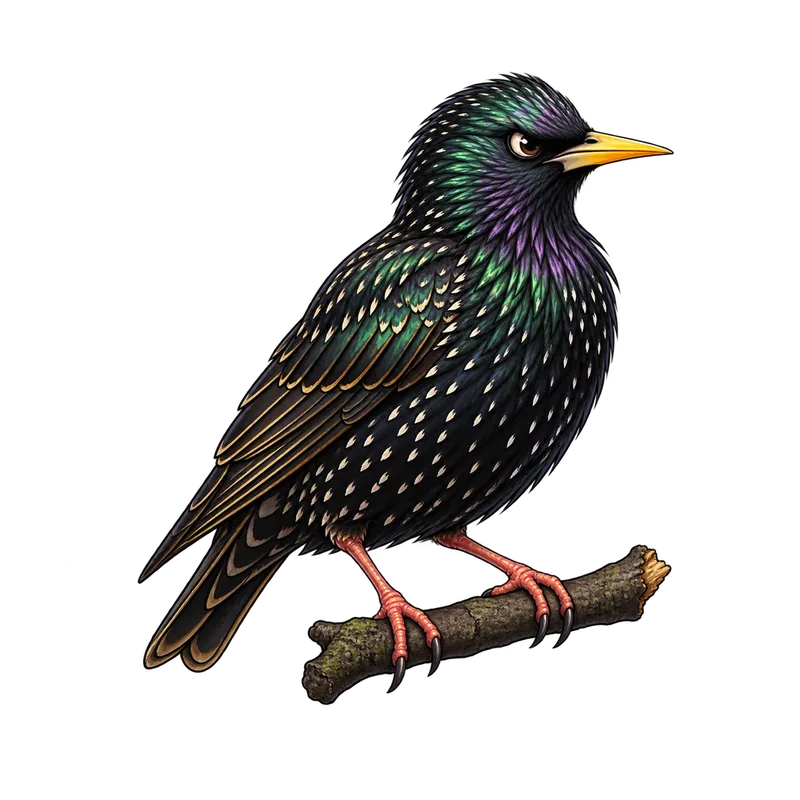
To get rid of starlings, you have to cut off their access by sealing every gap larger than one-quarter of an inch and removing food sources like open bird feeders. True control depends on combining physical exclusion with unpredictable scare tactics, such as moving visual decoys and adding auditory hazing, to keep the birds from adapting.
What is actually going on
You walk out onto the back patio on a quiet Tuesday morning, coffee mug in hand, only to find your carefully tended fruit trees swarmed by a noisy, iridescent brown cloud of birds. By the time you notice the white, splattered droppings baking onto your outdoor furniture and the frantic fluttering coming from behind your bathroom exhaust vent, you realize you have a starling problem. Getting rid of them is not a matter of finding one magic gadget, because these birds are far too adaptable for simple shortcuts.
Think of it like trying to keep neighborhood teenagers out of an open-air clubhouse where someone left free pizza on the table. Starlings move into your roof cavities and feast on your property because you are offering them free housing and an all-you-can-eat buffet. If you rely on a single trick, like hanging a plastic owl from a tree branch, the birds figure out the game within a few days. They realize the owl never moves, never breathes, and poses zero threat, so they simply use it as a perch.
True control requires a methodical approach that changes the environment around your house. You have to lower the biological carrying capacity of your yard. That means taking away their food sources, blocking every single entry point into your home, and keeping them perpetually guessing with unpredictable deterrents.
How to tell for sure
Adult starlings are stocky, short-tailed birds measuring about 8 inches long. In the spring, their feathers put on a show with an iridescent purple and green gloss paired with a bright yellow bill. By the time autumn and winter roll around, that sleek look gives way to a duller, heavily speckled coat covered in pale buff spots, and the bill darkens to a drab brown.
You usually spot them traveling in dense, wheeling flocks that descend on lawns, orchards, and open architectural ledges. When they walk on the ground rather than hop, their tracks show three forward-facing toes and one rear-facing toe. Their droppings are small, dark, tubular or splatted wastes topped with distinct white urate deposits.
Do not try to identify the culprit solely by a mark on a wall or a pile of droppings left on a patio stone. Confident species identification usually requires a clear look at adult plumage or flocking behavior. If you are trying to tell them apart from similar dark birds like female blackbirds or juvenile grackles from a distance, you typically need 10x magnification binoculars or a closer inspection.
What usually comes next
Your best move is to cut off their access and their food supply before you try any frightening tactics. Trying to scare starlings away while leaving your attic soffits wide open is like trying to shoo flies out of the living room while leaving the front door wide open.
Start by walking the perimeter of your house and sealing every gap, crack, and entry hole larger than one-quarter of an inch using heavy galvanized hardware cloth or stainless steel mesh. Cover your gable vents, soffit openings, and fan exhaust pipes with heavy metal screening. Put animal-proof chimney caps over your open flue tiles, and switch out open bird feeders for weight-gated designs that shut when heavier birds land. Bring pet food indoors immediately after feeding, store household garbage in rigid containers with tight lids, and clean up fallen seed from the lawn daily.
Once your home is physically locked down, you can introduce scare tactics, but they must follow a strict rule of randomness and diversity. Compare starling habituation to your morning alarm clock. If your alarm goes off at the exact same volume and pitch in the exact same spot every day, you eventually sleep right through it. Starlings do the same thing with visual decoys. You have to combine visual items like reflective tape and hawk decoys with auditory hazing like loud noises, and you need to move the visual decoys every few days while mixing up your sound schedule to keep them off balance.
When to get help
Sometimes the job outgrows a weekend DIY project. If the starling nests or roosting sites sit high up on steep roof pitches, multi-story commercial eaves, or awkward architectural ledges, climbing a ladder yourself introduces an unacceptable risk of a serious fall.
You should also call a professional wildlife control operator or pest controller if your building harbors protected native wildlife or bat maternity colonies that share the same structural space. State and federal regulations strictly prohibit disturbing certain protected animals during their breeding and maternity seasons, and a professional knows how to navigate those legal windows safely.
Never try to clean up a massive accumulation of dried bird droppings with a standard broom, vacuum, or leaf blower. Dry sweeping aerosolizes infectious dust and fungal spores that carry severe respiratory risks, including histoplasmosis. If you must clean smaller messes yourself, wear disposable nitrile gloves and an approved N95 respirator. Lightly mist the droppings with water from a spray bottle to suppress dust, scrape the waste away, wash the surface thoroughly with hot soapy water, and double-bag all waste in heavy plastic trash bags before washing your hands. If you experience a persistent cough, fever, or breathing difficulty after cleaning up bird waste, seek medical evaluation from a clinician right away.