
Where are European starlings native to?
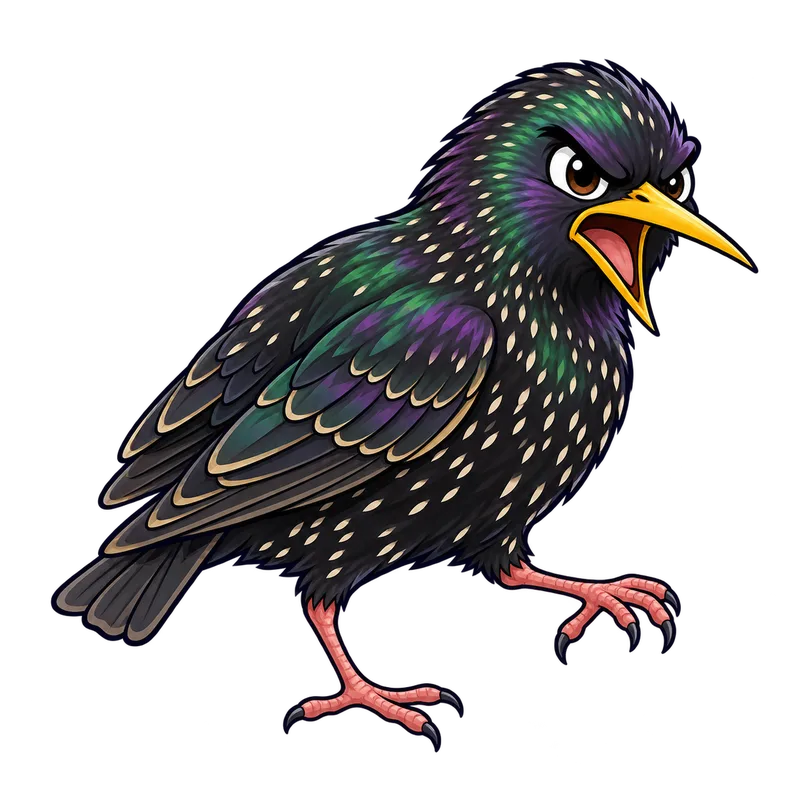
European starlings are native to Europe, parts of Asia, and North Africa. They were deliberately introduced to North America in the nineteenth century by enthusiasts trying to bring every bird mentioned in Shakespeare plays into the local environment.
What is actually going on
You are standing on your back patio with a morning cup of coffee, looking up at a noisy flock of dark, iridescent birds arguing on your roofline, and you suddenly wonder how on earth these creatures ended up in your yard in the first place. You might assume they have always been part of the local scenery, just like the robins and sparrows. When you look up the European starling in standard wildlife management handbooks, however, you run into an unexpected gap. While these reference guides officially list the species in their bird damage chapters, the specific text covering their native geographic range is missing from the working source notes, which simply means we have to look further back into ecological history.
To answer the question plainly, European starlings are native to Europe, parts of Asia, and North Africa. They were deliberately introduced to North America in the nineteenth century, largely due to enthusiasts attempting to bring every bird mentioned in Shakespeare's plays into the local environment. Once they arrived, they found an agreeable continent with few natural competitors, and their populations exploded from a few dozen birds in New York to hundreds of millions spanning the entire continent today.
That historical context highlights a basic rule of pest management. You cannot rely on guesswork or generalized lore when trying to understand an animal on your property. Wildlife professionals approach these situations by looking at physical evidence rather than assuming background history. Whether you are dealing with a flock of starlings treating your gutters like a downtown apartment complex or an unknown creature scratching in the attic, the first real step is identifying the exact culprit through concrete signs like tracks and droppings.
Building management extension guides emphasize a structured approach called integrated wildlife damage management to handle these conflicts. Instead of panicking or running out to buy a dozen different gadgets, you look at four distinct pillars. Prevention involves sealing up structural gaps. Avoidance means changing your yard to remove attractants. Monitoring tracks your visitor traffic. Suppression acts as a last resort when other methods fall short.
How to tell for sure
Before you try to fix any bird or vertebrate problem, you need to match the physical clues to the animal. Birds leave distinct evidence if you know what to look for on the ground or along your roofline. Tracks usually display a three-toed pattern facing forward with one toe pointing backward, often resembling a miniature three-pronged garden fork pressed into soft mud or dust.
Dropping appearance also usually gives away your visitors. Bird feces characteristically contain a prominent white component made of uric acid, usually appearing as splatters on siding or small tubular deposits on concrete. If you find these markers near your vents or eaves, you are usually dealing with avian residents rather than rodents or small mammals.
Do not guess the species based on a quick glance or a strange noise in the wall. Wildlife control laws and behavior patterns vary wildly between species. Misidentifying your pest usually leads to wasted money on ineffective deterrents. Take a close look at the physical evidence, check the shape of the tracks, and confirm what you are up against before taking any action.
What usually comes next
Once you confirm you have a bird problem, your next move should focus entirely on physical exclusion rather than temporary fixes like plastic owls or sound machines. Relying on single cookbook solutions or unsystematic scare tactics rarely works for long because animals quickly figure out when a fake predator is not moving.
Instead, treat your home like a fortress by shutting every entry point. Install durable exclusion materials such as heavy metal screening, steel mesh over roof vents, or stainless-steel chimney caps. Closing off gaps measuring one quarter of an inch or larger is much like shutting a storm door. It creates a permanent physical barrier that stops unwanted visitors without requiring endless chemical sprays or constant harassment tricks.
You also need to lower your property carrying capacity by removing outdoor food sources. Leaving pet food on the porch or letting trash cans sit wide open acts as an irresistible beacon for local wildlife, much like leaving a bright porch light on during a summer night. Secure your trash and clean up fallen fruit to make your yard far less welcoming to nuisance birds and animals.
When to get help
There are moments when do-it-yourself pest control crosses the line into genuine hazard, and knowing when to hand the job over to a professional is essential. If you are looking at climbing a tall extension ladder onto a steep roof to install heavy exclusion mesh around a high chimney eave, pause and reconsider. Risking a nasty fall or running into a startled animal inside a tight attic space is where DIY approaches should end.
Accumulated bird or wildlife droppings also present real health risks through airborne dust and pathogen exposure. Never handle large piles of scat bare-handed or sweep them dry. If a situation involves aggressive animals, suspected rabies exposure, or complex structural repairs, call a licensed wildlife control operator or the local public health authority.
Finally, remember the legal side of things. State and federal laws protect a vast majority of bird species and native vertebrates, though starlings often have fewer protections due to their introduced status. Unlawful destruction of active nests or improper use of pest control products can still result in substantial statutory fines. Always verify your local wildlife regulations and consult municipal bylaws before you alter nests, set traps, or attempt any large-scale pest suppression on your property.