
How do you keep starlings away from bird feeders?
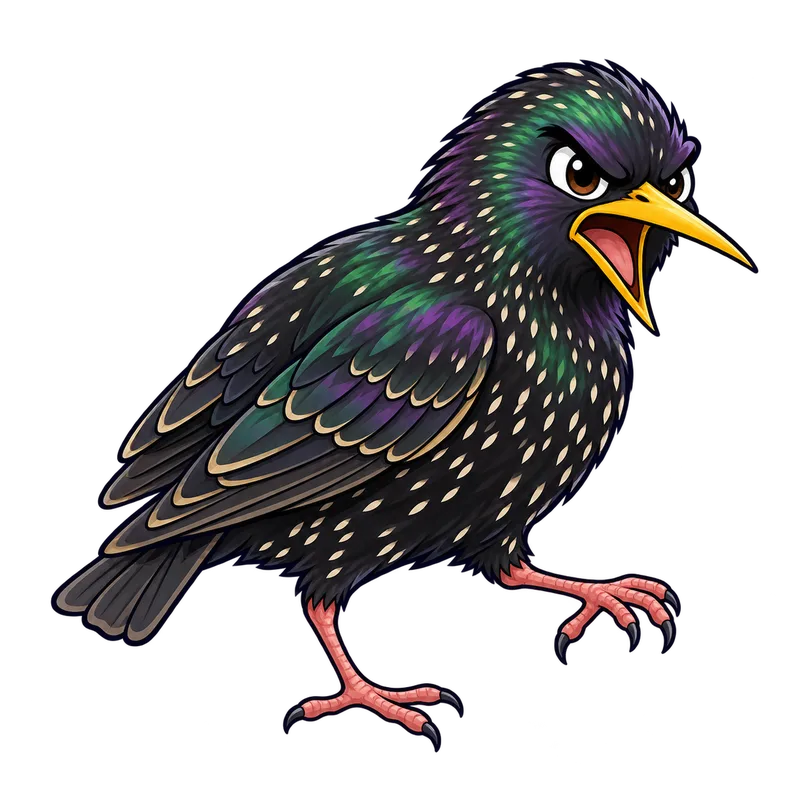
You keep European starlings away from bird feeders by combining physical changes and smart menu planning that target their body size and weak clinging abilities. Stop putting out soft foods like suet, and use wire mesh cages with openings measuring one and a half inches around your tube feeders.
What is actually going on
You look out the kitchen window on a quiet Tuesday morning, coffee cup in hand, ready to enjoy a peaceful few minutes watching the goldfinches at your backyard feeder. Instead, you find a chaotic, noisy cloud of dark, iridescent birds swarming the station, emptying every port in seconds and scattering hulls all over the grass. If this scene sounds familiar, you are dealing with European starlings. They travel in flocks and possess a voracious appetite for high-calorie foods, pushing smaller native songbirds away through sheer numbers and aggressive behavior.
Keeping starlings away from bird feeders requires an approach built on changing how your feeder is built and what you put inside it. Starlings are surprisingly adaptable, so a successful strategy targets their physical limitations, such as their body size and weak clinging abilities, while removing the soft foods they love. You have to move past the idea of relying on a single trick.
People often assume that putting out a plastic owl or hanging shiny tape will solve the problem for good. Unfortunately, starlings are quite smart and figure out within a few days that a motionless plastic decoy is just another lawn ornament. To get lasting results, you need a combination of physical exclusion and smart menu planning that makes your yard much less welcoming to a flock of bullies while still rolling out the red carpet for cardinals, chickadees, and finches.
How to tell for sure
European starlings are medium-sized birds, usually measuring about eight to nine inches long, with a short tail, pointed triangular wings in flight, and a long, straight bill. During the spring and summer breeding season, adult starlings show off glossy black plumage with vibrant purple and green sheens, complemented by a bright yellow bill. When winter rolls around, their appearance shifts dramatically, showing heavy white or buff speckles across the body and a dark brown or black bill. Juveniles are usually a uniform, dull grayish-brown before they get their adult feathers.
You usually want to double-check who is visiting your feeders before you start changing your setup, because native blackbirds like grackles, cowbirds, and red-winged blackbirds can look somewhat similar from a distance. If you are trying to tell them apart, binoculars help you inspect bill shape and wing profiles closely. Remember that starlings are an introduced, non-native species in North America and are not protected by federal migratory bird laws, whereas native blackbirds are protected. If you happen to live in the United Kingdom or Ireland, the situation flips entirely, as starlings are a native and strictly protected species there under local wildlife acts, meaning lethal control or active nest interference is illegal without specific government licensing.
What usually comes next
Once you confirm you have starlings raiding your yard, you have to decide how to upgrade your feeding station without giving up on feeding backyard birds altogether. The most practical first step is changing the menu. Starlings have soft, probing beaks designed for soft foods, insects, and soft grains, meaning they lack the heavy, muscular bill structure that native seed-cracking songbirds use to break open tough seed husks.
You can stop them in their tracks by removing high-reward items like suet, mealworms, cracked corn, bread crumbs, and sunflower meats, and replacing them with safflower seed, nyjer seed, or whole in-shell peanuts. Safflower is a bitter pill for starlings, but cardinals, chickadees, and grosbeaks love it. Beyond changing the seed, you can upgrade your hardware by installing wire mesh cages with openings measuring exactly one and a half inches around your existing tube feeders. This lets small clinging birds slip right through the bars while keeping the bulkier starlings outside. You can also swap out standard suet baskets for upside-down suet feeders, which force birds to feed from underneath. Woodpeckers and nuthatches hang upside down with ease, but starlings struggle to maintain an inverted grip.
When to get help
While managing backyard feeders is mostly a DIY affair, certain situations require stepping back and calling in a professional, a clinician, or an agency. For starters, uncleaned seed spillage beneath feeders does not just attract starlings, as it frequently draws in secondary wildlife like raccoons, skunks, and rodents. Raccoons often establish latrines near feeding areas, which creates serious public health risks due to roundworm parasites whose eggs survive standard household bleach and require boiling water or specialized heat treatment for proper decontamination.
If raccoons, skunks, or bats are drawn to your feeding stations and happen to come into close contact with humans or pets, do not handle the animals yourself. Contact your local public health authority, animal control agency, or urgent care immediately for rabies evaluation and guidance. Furthermore, when starlings transition from stealing bird seed to nesting inside your building soffits, attic vents, or wall cavities, feeder tactics will no longer solve the issue. You should hire a licensed wildlife control operator or pest control professional to perform structural exclusion, install heavy metal vent screening, and seal up entry points safely.