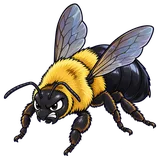
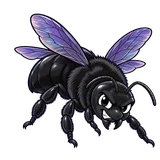
Bees
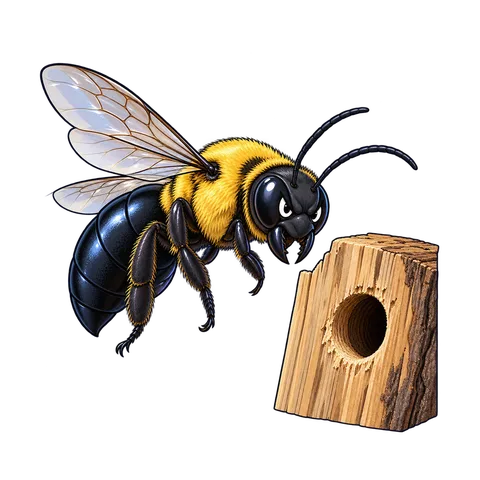
What puts these creatures into a single catalog group is their shared habit of boring directly into dry, seasoned structural lumber to carve out long nesting galleries, making them miners of seasoned timber rather than simple flower visitors. If you spot a heavy-bodied insect hovering near your porch or eaves in the spring, you can tell this group apart from fuzzy bumble bees by checking the top surface of the abdomen, which is completely smooth, shiny, and hairless instead of densely covered in hair. While honeybees and bumble bees sport fuzzy coats across their entire bodies, these wood-excavating insects keep a bare, polished rear end while they chew clean, round entry holes into exposed wooden trim.
People frequently confuse them with stinging wasps or wood-boring beetles, yet the clues in your yard make separation straightforward once you look closely at the damage and the insect. Wasps sport narrow, pinched waists and hunt other insects, whereas wood-boring beetles leave tiny shot-holes packed with fine powdery frass. By contrast, these creatures leave perfectly circular holes measuring up to half an inch wide alongside coarse piles of sawdust resembling pencil shavings. When a large, metallic blue or black insect buzzes aggressively near your face, remember that territorial males lack a stinger entirely, meaning their dramatic hovering is just an empty bluff while the females quietly tunnel into your deck railings, siding, or window frames.