
When should carpenter bee holes be repaired?
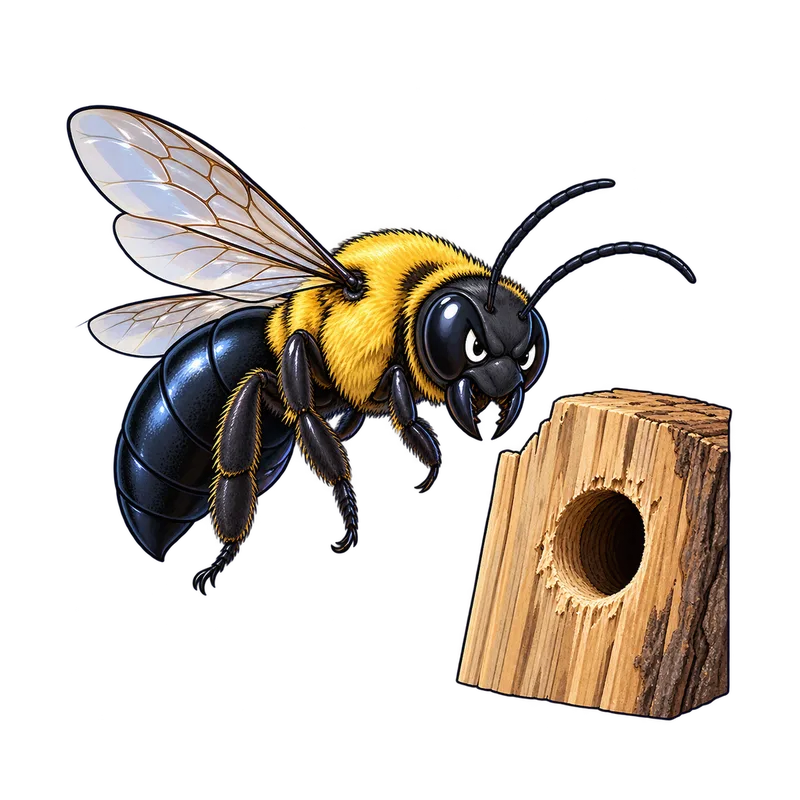
Carpenter bee holes should be repaired in autumn after treating the nests with insecticidal dust in spring or early summer and leaving the holes open for at least one to two days. Repairing them during this autumn window stops newly emerged adults from returning to overwinter in the old tunnels or reusing them when spring arrives.
What is actually going on
Picturing that quiet morning coffee on the back porch only to find a perfectly round hole bored into the edge of the patio roof is a familiar summer frustration. Below the fresh opening sits a neat little pile of coarse sawdust that looks like someone just finished a quick carpentry job. A large, metallic-looking insect is buzzing aggressively right around head height. Naturally, the first urge is to grab a tube of caulk or wood putty and plug that hole up immediately to lock the intruder out for good.
Do not do that just yet. Sealing an active carpenter bee hole right away is one of the most counterproductive moves to make. If you plug the entrance while adult bees or developing larvae are still trapped inside the gallery, those insects do not simply surrender. They use their powerful jaws to carve a brand new exit route straight through sound wood siding, trim, or even interior drywall.
Carpenter bee hole repair is a timed sequence that relies entirely on insect behavior and proper treatment. Those bees do not actually eat the wood they excavate. They bore clean, circular tunnels solely to build nurseries for their young, discarding the coarse shavings out the front door. Because young adults overwinter in existing tunnels and returning females love to reuse or lengthen old galleries year after year, fixing those holes requires breaking the life cycle rather than just blocking a doorway.
How to tell for sure
Before touching any tools or products, confirm what you are actually dealing with. A carpenter bee hole usually looks like someone took a power drill bit and made a clean entry right at a right angle to the wood surface, about an inch deep, before turning sharply to run parallel with the wood grain for several inches. Those entrance holes typically measure three-eighths to one-half of an inch in diameter.
You can usually tell these bees apart from bumble bees by looking at their backs. Carpenter bees usually have a shiny, hairless, metallic blue-black abdomen, whereas bumble bees are covered in dense yellow and black hair. If you see a bee hovering aggressively near your face and making a lot of noise, take a close look at its head. Males usually have a prominent white or yellow patch on the face. Those males act tough and buzz around to defend their territory, but they do not have a stinger and cannot sting you. Females do have stingers, but they usually only sting if you squeeze or directly molest them.
Pay attention to the debris below the hole as well. Carpenter bee work leaves behind coarse wood sawdust mixed with yellow pollen grains. That differs from carpenter ants, which leave clean, dry wood shavings without pollen, and termites, which tend to pack their tunnels with mud or tiny pellets. You also want to rule out wood-boring beetles, which leave much smaller exit holes measuring only one-sixteenth to one-eighth of an inch.
What usually comes next
When you are ready to tackle the damage, timing is everything. You typically want to start the work in spring or early summer when new activity appears, but you need a careful routine to avoid making the situation worse.
Begin by waiting until after dark when the female bees rest safely inside their galleries. Take a labeled insecticidal dust, like a borate or pyrethroid dust made for wood-boring bugs, and put it right into the entrance hole using a hand duster. Always follow the product label instructions to the letter.
Here is the vital step: leave that hole completely open for at least one to two days. Do not plug it yet. That mandatory waiting window lets active adults come and go, passing through the chemical dust and spreading it around the inside gallery surfaces to ensure complete control.
Once the treatment works its magic and late summer or autumn rolls around, that season's brood finishes growing and comes out. Autumn is usually the best season for permanent structural repairs. By sealing the holes in fall, you stop newly emerged adults from returning to overwinter in the old tunnels or reusing them when spring arrives again.
To finish the permanent fix, plug the tunnel tightly with a snug wooden dowel covered in exterior wood glue, or pack the opening firmly with heavy-duty exterior wood putty or a silicone sealant. Once the plug cures, prime and paint the surrounding timber. Good paint coats remove preferred nesting spots, since female carpenter bees generally avoid painted or finished wood. If you deal with vulnerable fascia boards or soffits, you can also think about swapping soft pine or fir for tough hardwoods like white oak to halt future boring.
When to get help
Sometimes a simple tube of wood putty and a dowel will not solve the issue. If carpenter bees go unchecked for multiple seasons, their tunnel networks can riddle roof rafters, porch headers, and load-bearing posts over stretches of several feet. When multi-year tunneling seriously weakens structural timbers, basic hole plugging is completely useless, and you must call a licensed building contractor or structural engineer to check the damage and replace or reinforce the compromised lumber.
You should also watch out for secondary damage from woodpeckers. Those birds often spot carpenter bee larvae inside the wood and rip open the outer beams along the grain, leaving destruction that far surpasses the original bee holes. Splintered wood like that cannot take a dowel, meaning the ruined section needs to be cut out and replaced completely.
If nest systems sit at hazardous heights on multi-story roof overhangs or high soffits, or if the job demands specialized long-reach dusting tools, hire a licensed pest control operator. And keep in mind that anyone who gets stung and shows signs of a severe allergic reaction, such as trouble breathing or swelling, must seek immediate medical attention instead of trying home remedies.