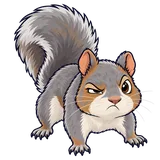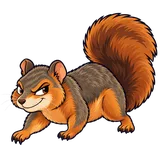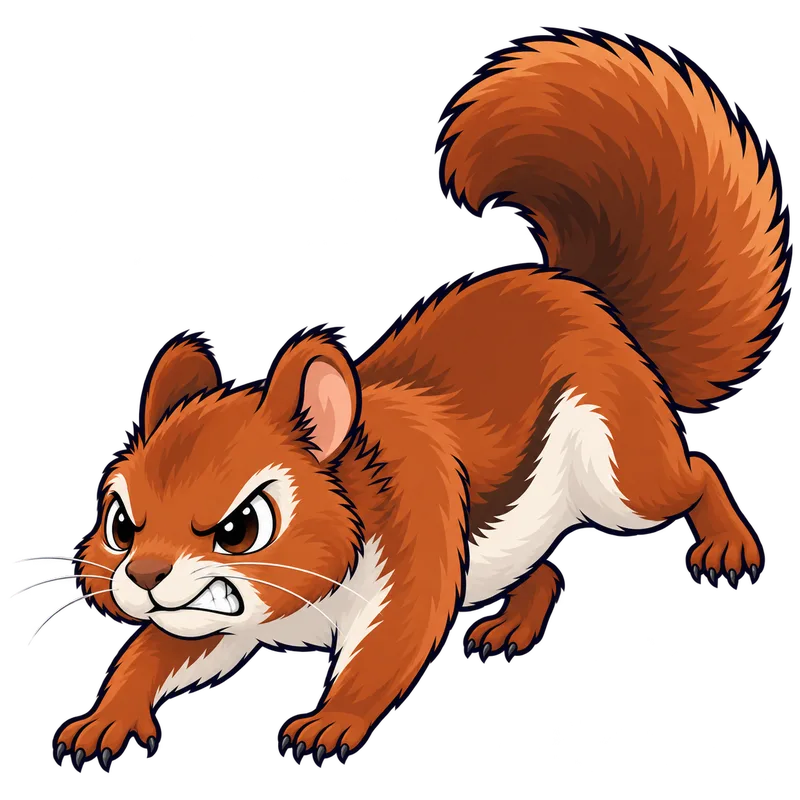
American red squirrel
Tamiasciurus hudsonicus
- Size
- Small tree-dweller
- Color
- Reddish-brown back with a lighter belly
- Habitat
- Coniferous forests, woodlands, and suburban yards
- Diet
- Omnivorous, seeds, nuts, and cones
- Life cycle
- Born hairless and blind, developing rapidly
The American red squirrel is a small, energetic tree-dweller that spends half its life letting you know it is displeased with your presence. When you spot one darting across a lawn or scrambling up a pine tree, you are looking at a creature built for agility rather than bulk. While exact body measurements vary widely enough that field guides often leave them blank, you can spot them easily by their general posture and behavior. Their pelage shifts from reddish-brown on the back to a lighter belly, though telling them apart from other small rodents usually comes down to tracks and habits rather than a ruler.
Identity
When snow or mud catches their movement, their footprints tell a clear story. The front feet leave a four-toed impression with distinct claw marks, while the hind feet leave five toes. They move in a characteristic bounding, two-by-two pattern where the hind feet land ahead of the front feet. This sets them apart from cottontail rabbits, which leave a five-toed front track and move in a side-by-side arrangement where the hind feet land in front of the front pair.
If you are trying to separate the American red squirrel from the eastern gray squirrel, size is your primary visual cue. Gray squirrels are noticeably larger and heavier, leaving correspondingly larger prints. Thirteen-lined ground squirrels and other ground-dwelling cousins are another point of confusion, but they spend their time excavating holes in open lawns and fields rather than scaling trees or investigating your roofline.
Habitat & behaviour
These animals are strictly diurnal, meaning you will only catch them scurrying about during daylight hours. They feel equally at home in dense coniferous forests, mixed woodlands, suburban parks, and residential yards where mature trees offer shelter and food. Their diet is reliably omnivorous and heavily focused on the bounty of the woods, ranging from seeds, nuts, and conifer cones to tree bark, garden produce, and the occasional raiding of backyard bird feeders.
Fall and winter bring a noticeable shift in their behavior. As natural food sources dwindle and temperatures drop, they actively search for overwintering den sites. This is the exact window when human structures become irresistible. An attic, roof void, soffit gap, or open chimney looks to a red squirrel like a dry, secure, predator-free hollow tree. Once they find a gap measuring one-quarter of an inch or larger, they will happily chew their way inside to establish a nest and store food caches.
Visual variations
Mammalian quadrupeds do not have nymphs, larvae, or winged forms, so you will not find any dramatic metamorphosis here. The young are born blind and hairless in hidden nests, developing rapidly into miniature versions of the adults. By the time juveniles emerge to explore the branches, they share the same general body plan as their parents.
Adult males and females look remarkably similar. They are monomorphic in appearance, meaning there are no showy sexual dimorphisms or distinct castes like you might find in social insects. Whether you are looking at a breeding female or an established territorial male, the physical profile remains the same: a compact, agile rodent body outfitted with sharp incisors for gnawing, plantigrade feet designed for gripping bark, and a bushy tail used for balance and communication.
Why it matters
Having these animals move into a house means dealing with relentless gnawing on wooden siding, fascia boards, roof shingles, and gables as they work to widen their entry points. Once inside an attic, they chew on electrical wiring and shred insulation for nesting material, turning routine property maintenance into an expensive headache. Beyond structural damage, their presence brings nuisance noises, potential parasite transfer, and accumulations of droppings that require careful handling with an N95 respirator and protective gear to avoid airborne dust risks. Any direct bite or scratch from a wild mammal requires an immediate evaluation by a healthcare clinician or public health authority.