Eastern gray squirrel
Sciurus carolinensis
- Size
- Medium-sized arboreal rodent
- Color
- Gray with brownish or whitish undertones
- Habitat
- Hardwood forests, woodlands, and urban areas
- Diet
- Tree nuts, seeds, fruits, and bark
- Life cycle
- Born in cavities or dreys to adult
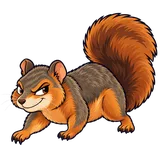
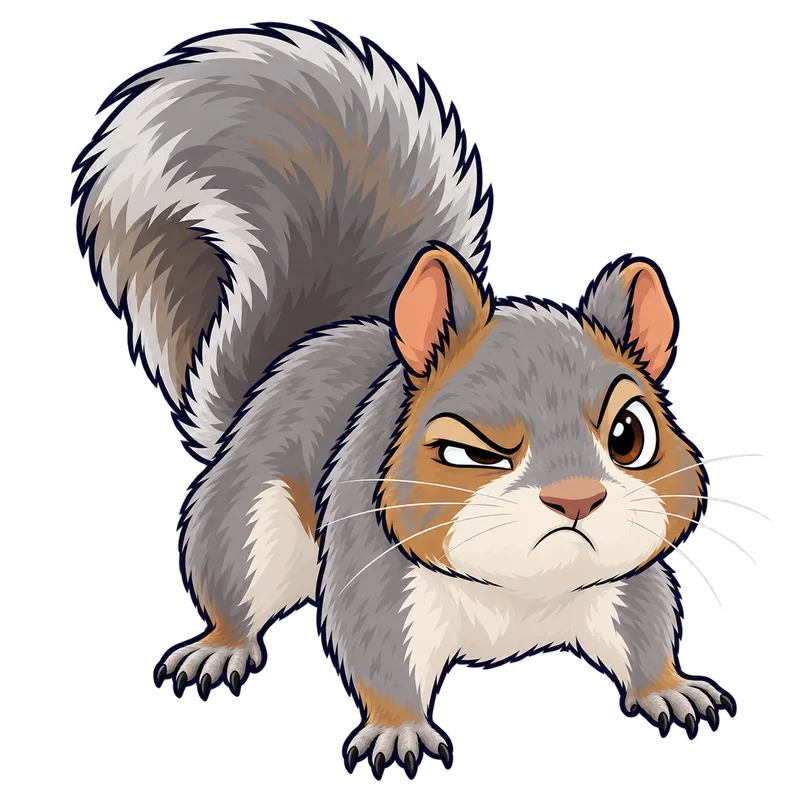
The Eastern gray squirrel is a medium-sized tree-dwelling rodent equipped with powerful hind legs for leaping and a prominent bushy tail used for balance. It features gray upper fur with variable brownish or whitish undertones. Field identification relies heavily on foot structure and track patterns, which help distinguish it from lookalikes. On soft ground or snow, the forefeet leave a four-toed print while the hind feet leave a five-toed print, with visible claw marks on all digits. Locomotion produces a paired two-by-two bounding pattern where the hind feet land side-by-side slightly ahead of or adjacent to the front feet. Droppings appear as small, tubular rodent scat.
Habitat & behaviour
Tree squirrels inhabit hardwood forests, mixed woodlands, suburban residential neighborhoods, and urban parks. They readily move into human structures such as attics, chimneys, garages, and sheds when natural cavities grow scarce. Diurnal by nature, meaning they are active during the day, these animals maintain predictable daily foraging routines between nest sites and food sources. Their diet includes tree nuts, seeds, fruits, garden produce, field corn, tree bark, and birdseed from backyard feeders. Uncollected garbage, open compost, and outdoor pet food draw them closer to homes. They construct two primary nest types: natural tree cavity nests in hollow trunks or abandoned woodpecker holes, and external leaf nests called dreys built from twigs, leaves, and bark in tree forks.
Visual variations
You cannot tell a male from a female by glancing at them from your kitchen window because both sexes share the exact same coat and build. They do not live in massive colonies with specialized worker classes either, preferring to get by alone or in small family groups. Their life goes from helpless, hairless babies tucked away in a safe tree hollow up to bold youngsters learning to forage, and finally to fully independent adults. Because a lot of woodland creatures share similar gray coats and sizes, you cannot trust a chewed board or a blurry photo to tell you what is running across your roof. You need a proper look or a clear set of tracks showing that four-toed front and five-toed hind pattern with the classic bounding gait to know for sure.
Why it matters
These animals tend to find their way indoors through chewed soffits, loose roof vents, unblocked chimneys, or gaps in your gable louvers. They are more than happy to widen an existing crack with their teeth just to squeeze inside. Once they settle into your attic or wall spaces, they can ruin your day by chewing on wooden beams, ripping up insulation, and gnawing electrical wires, which is a fast track to a house fire. You will usually hear them scrambling above your ceiling right around sunrise, and you can kiss your birdseed and garden tomatoes goodbye once they find them. They also have a habit of stripping the bark off shade and fruit trees, which can kill off branches or even girdle the trunk entirely.
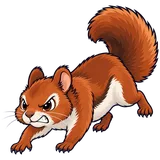
Figuring out you are dealing with a gray squirrel instead of another critter saves you from wasting time on the wrong fixes. Red squirrels, fox squirrels, and flying squirrels share parts of the country, though flying squirrels only come out after dark. Ground squirrels stay close to the dirt and dig complex tunnel systems rather than climbing trees or moving into your roof. Rabbits sometimes throw people off, but their footprints look different with the hind feet landing ahead of two staggered front feet, plus rabbits leave five toes on their front paws instead of four. House rats and roof rats leave similar paw print counts, but rat tracks usually show a tail drag in the dirt, their droppings are larger, and rats prefer running along the ground or burrowing in the dark.