
How do you get squirrels out of an attic?
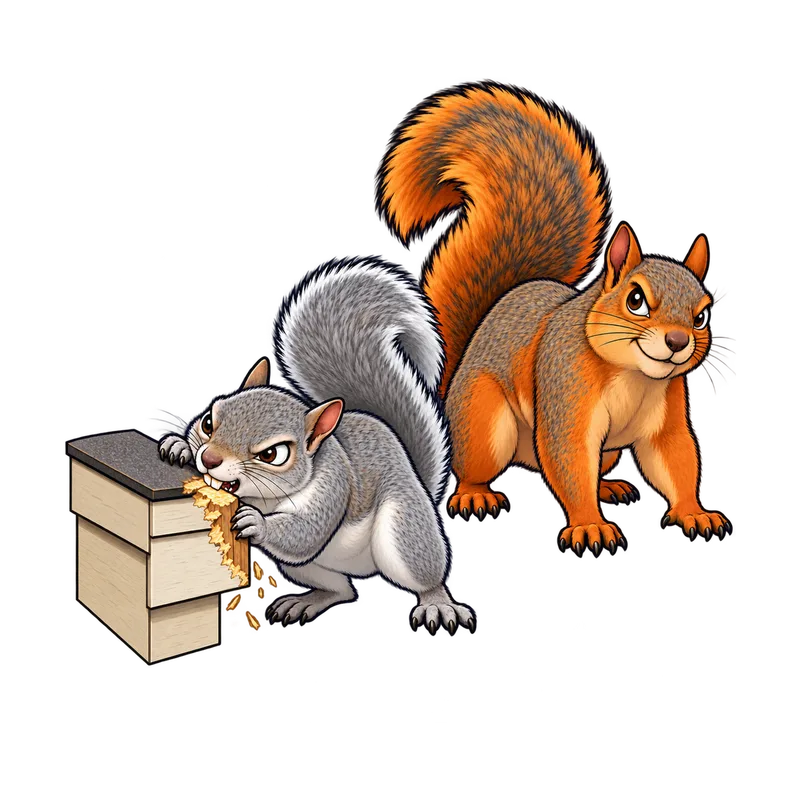
Getting squirrels out of an attic requires installing a one-way exclusion door over the main entry hole so the animals can leave to forage but cannot get back inside. You must never seal the holes while animals are still inside. Once you are certain the attic is empty, permanently seal every gap larger than a quarter of an inch.
What is actually going on
You are sitting quietly on the couch on a Tuesday morning, coffee in hand, when a sudden, heavy scratching noise directly above your head sounds like someone is dragging a bowling ball across the ceiling. That frantic scampering is usually not a rogue mouse or a ghost in the rafters. You likely have a squirrel that has decided your warm, dry attic beats a drafty tree hollow any day of the week.
Getting squirrels out of an attic requires an organized approach rather than a quick fix or a single trap. The professional standard follows a framework known as Integrated Wildlife Damage Management, which boils down to four logical steps: prevention, avoidance, monitoring, and suppression. You cannot simply seal up the house and hope for the best, because trapping an animal inside leads to bigger headaches.
Instead, you need to let the animal out, stop it from getting back in, and cut off the aerial highways it used to reach your roof in the first place. Relying on popular shortcuts, such as scattering mothballs across the insulation or plugging in ultrasonic noise boxes, rarely works. Those methods usually just perfume your living room while the squirrels sleep soundly right through the noise.
How to tell for sure
Before you start setting up traps or buying hardware, you have to confirm who is actually paying rent in your roof. Misidentifying your guest usually leads to wasted money and zero results. Head up to the attic during the middle of a bright, sunny day, turn off the lights, and look around. If you see bright spots of daylight streaming through the eaves, gable vents, or roofline joints, you have found the primary front door.
Next, check the clues left behind on the framing and insulation. Tree squirrels are strictly daytime creatures, so if you hear heavy thumping and scratching in the middle of the night, you are usually dealing with nocturnal raccoons or opossums instead. If you spot tracks on dusty beams, rodents typically leave four distinct toes on their front feet and five on their hind feet.
Droppings also tell a story, though you usually need to look closely. Squirrel droppings are small, tubular pellets, unlike the pointed little specks mice leave behind or the large, seed-filled messes raccoons deposit. If you cannot tell the difference, or if you suspect bats might be sharing the space, take a pause. Trying to guess your way through a mixed wildlife problem can land you in trouble with local regulations.
What usually comes next
Once you know squirrels are the culprits, your main practical decision is choosing how to evict them without trapping them inside. You need to install a one-way exclusion door over the main entry hole. Think of this device like a swinging pet door that only pushes outward. When the squirrel leaves in the morning to forage for food, it easily shoves the flap open, steps out onto the roof, and finds that the door snaps firmly shut behind it.
Do not be tempted to seal up every gap you see while the animals are still inside. If you block the holes prematurely, any squirrels trapped in the attic will die of starvation, leaving behind a terrible smell, or they will chew aggressively through your drywall to get into your living space. Let the one-way door do the work over a few days while you inspect the rest of the roofline.
While the door is doing its job, grab some heavy metal mesh and structural repair supplies to get ready for the final step. Once you are entirely certain the attic is empty, remove the exclusion door and permanently seal every single gap, vent, and joint larger than a quarter of an inch. Top off your chimneys with heavy-duty animal-proof caps, and trim back any tree branches that hang within 6 to 10 feet of your roof so the local population loses its private highway to your shingles.
When to get help
There are moments when a do-it-yourself attic eviction crosses the line into a situation that requires a licensed professional, a building contractor, or even a medical doctor. If you inspect the attic during spring or late summer and discover an active nest containing unweaned, flightless baby squirrels, stop immediately. Sealing the attic during the breeding season traps the mother outside and leaves helpless young to starve inside the wall voids, which creates an aggressive structural disaster when the mother tries to chew her way back in.
You also need to step back if protected species are involved. Finding bats roosting alongside squirrels brings strict seasonal legal restrictions that forbid blocking their exits during maternity periods. Similarly, if your attic has been taken over by raccoons, cleanup becomes a serious biological hazard. Raccoon roundworm eggs are microscopic, highly resistant to standard household disinfectants like bleach, and dangerous if inhaled or ingested during cleanup.
Never use a leaf blower or dry sweeping to clean up animal droppings in a confined space, as this aerosolizes dangerous dust, fungal spores, and parasite eggs. Always wear an N95 particle respirator, disposable gloves, and eye protection if you must enter the space. Finally, if you or anyone in your household suffers a bite, scratch, or direct contact from an attic animal, skip the traps and contact a public health authority or a clinician immediately for proper medical evaluation.