Common bed bug
Cimex lectularius
- Size
- 5 to 7 mm long unfed
- Color
- Light reddish-brown to mahogany
- Habitat
- Indoor structural harborages near human sleeping areas
- Diet
- Obligate blood-feeding ectoparasite
- Life cycle
- Egg, five nymphal instars, and adult
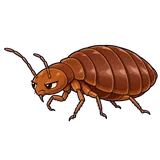
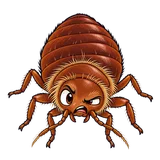
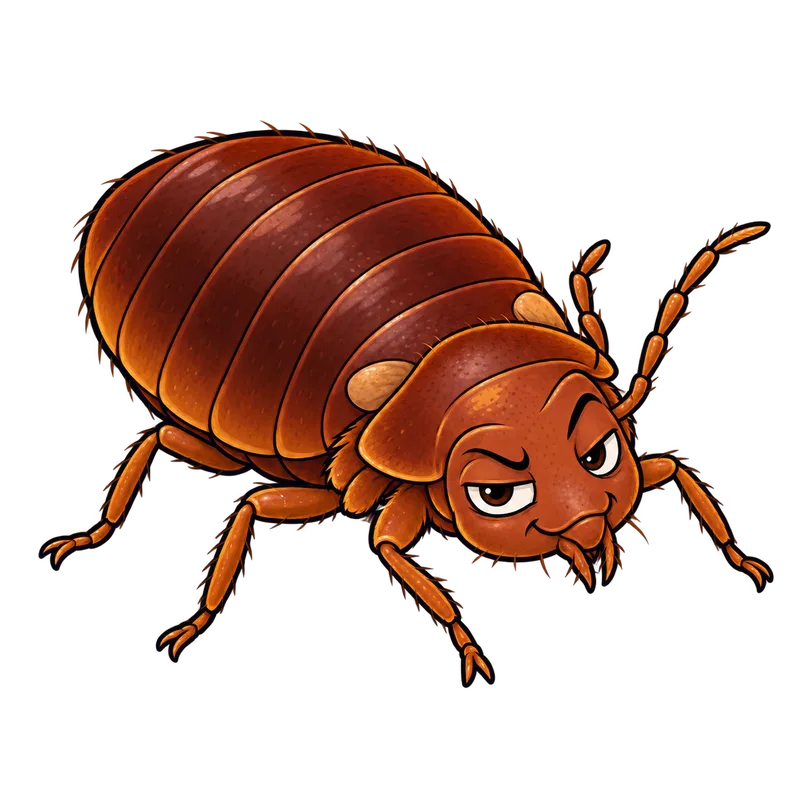
The common bed bug spends its life cycle waiting out of sight in the dim cracks of human habitations, emerging only to feed on sleeping hosts. Identifying one starts with recognizing its shape, which resembles an unpopped apple seed when unfed. Adults measure 5 to 7 mm in length, sporting a flat, oval, mahogany-brown body covered in short golden hairs. They are completely wingless, possessing only tiny vestigial wing pads where functional flight wings would otherwise grow. Because they cannot fly or jump, their only means of travel is crawling rapidly across porous surfaces or hitching rides in luggage and clothing.
Identity
Telling a true bed bug apart from its outdoor relatives requires looking closely at the shield-like plate behind the head, known as the pronotum. Under ten to fifty power magnification, the fringe hairs along the sides of this plate are distinctly shorter than the width of the bug's compound eye. Bat bugs, which look nearly identical to the untrained eye, possess fringe hairs that equal or exceed the width of the eye. Mistaking the two leads to wasted effort, because treating a bedroom for bed bugs while ignoring a bat colony in the attic leaves the root source untouched.
Other household insects frequently cause false alarms. German cockroach nymphs run even faster and possess long, multi-segmented antennae that bed bugs lack. Carpet beetle larvae appear elongated and fuzzy, feeding on natural fabrics rather than blood. Fleas are laterally flattened and jump instead of crawl. Kissing bugs are vastly larger, reaching up to 34 mm long, with a distinct cone-shaped head and striped body margins.
Habitat & behaviour
These insects thrive wherever humans rest for extended periods. Their behavior is driven by thigmotaxis, a biological preference for tight spaces where their top and bottom surfaces touch surrounding walls at the same time. This instinct steers them into the seams of mattresses, the interior joints of box springs, the wooden slats of bed frames, and behind wall-mounted headboards. In heavier infestations, they expand outward into secondary harborages beyond the eight foot zone around a bed, settling behind baseboards, inside electrical outlet boxes, under carpet tack strips, and within the folds of upholstered recliners.
Activity centers around the respiratory rhythms of sleeping hosts. Drawn by exhaled carbon dioxide and body heat, bed bugs leave their daytime hiding spots primarily during the dark hours of the night. The feeding process itself is swift and painless. The insect inserts a slender, three-segmented beak into the skin and injects saliva containing an anesthetic and an anticoagulant. After feeding for 3 to 10 minutes, the bug detaches and scurries back to its harborage before the host wakes up.
Dispersal happens when populations crowd their hiding spots or when mated females seek to escape repeated harassment. Chemical sprays and total-release foggers also trigger active dispersal, scattering the insects through wall voids and into adjacent rooms. Long-distance movement relies entirely on human transport, as luggage, backpacks, and second-hand furniture carry the insects across town or across oceans.
Visual variations
Growth happens through incomplete metamorphosis, meaning the insect progresses through distinct stages without entering a cocoon or pupal stage. There are no social castes like workers or queens, as every active nymph and adult feeds exclusively on blood.
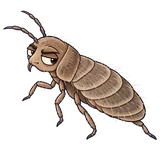
Eggs are pear-shaped and pearl-white, measuring about 1 mm long. Females cement them individually into dark crevices using a sticky secretion. From these eggs emerge translucent, straw-colored first-instar nymphs measuring just 1.5 mm, roughly the size of a poppy seed. As the nymph grows through five successive instars, reaching 4.5 mm at the final nymphal stage, it must consume at least one blood meal to shed its skin and advance. Unfed nymphs are nearly invisible against light-colored sheets, but after feeding, the dark red blood shows clearly through their transparent abdominal walls.
Adults display subtle differences between sexes when viewed from the underside or rear. Females possess a broad, smoothly rounded abdominal tip, with an internal structure on the right side of the fourth abdominal segment designed to receive sperm. Males feature a narrower, noticeably pointed and asymmetrical abdominal tip ending in a curved copulatory organ used during mating. Unfed adults show a flat, mahogany-brown profile, while fully engorged individuals swell up to 9 mm long, taking on an elongated, deep red, cigar-like contour.
Why it matters
An established population means the living space serves as a regular feeding ground, causing property owners significant stress and expense. While public health authorities classify these pests as nuisances, scientific research confirms they do not transmit disease-causing pathogens to humans. The physical toll comes from the bites, which trigger localized immune responses ranging from small itchy welts to absent reactions in roughly 20 to 30 percent of people. Scratching these lesions can break the skin and introduce secondary bacterial infections.
Dermatological reactions alone cannot confirm the culprit. Because skin responses vary widely from person to person, inspecting physicians cannot diagnose a bed bug infestation from a photograph of a bite or rash. Definitive proof requires finding a physical specimen, a translucent shed skin, or dark ink-like fecal spots that smear red when moistened.
Eradication demands rigorous, methodical steps. Aerosol bug bombs fail because they do not penetrate deep harborages and only serve to scatter the bugs further. Professional treatment relies on integrated methods, including heat treatments sustained between 118 degrees Fahrenheit and 122 degrees Fahrenheit for up to 90 minutes, targeted vacuums, and residual applications that require follow-up visits to catch newly hatched nymphs. Whenever ambiguous specimens turn up near attics or upper levels, consulting an entomologist or a licensed pest management professional ensures the correct identity before treatment begins.