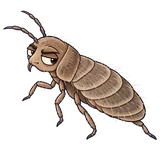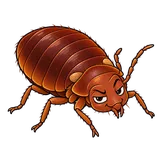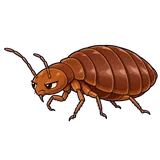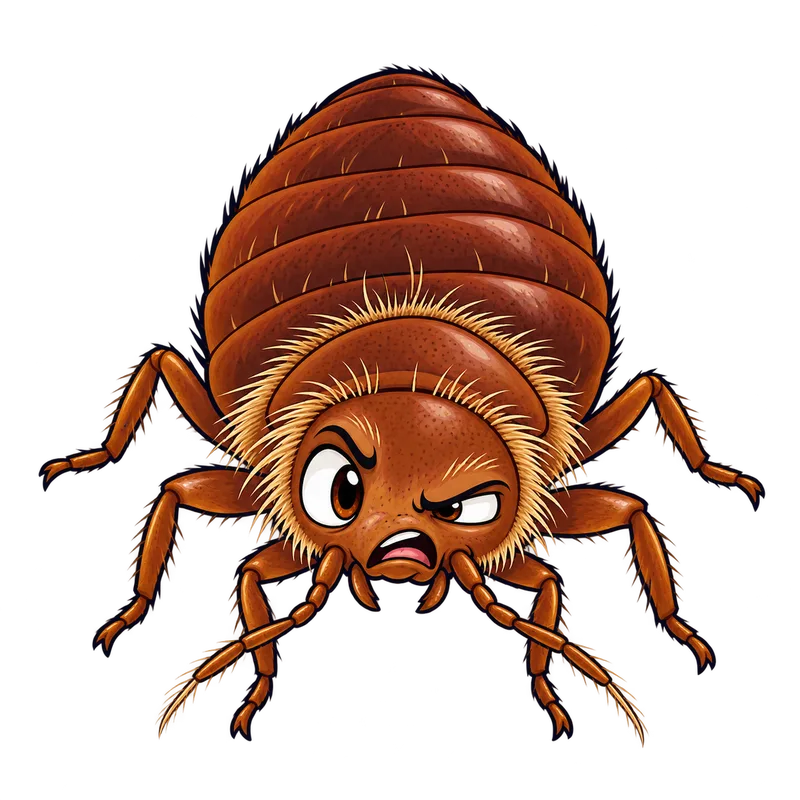
Eastern bat bug
Cimex adjunctus
- Size
- 5 to 7 mm unfed, up to 9 mm fed
- Color
- Pale brown, gray-brown, reddish-brown, dark mahogany
- Habitat
- Attics, wall voids, chimneys, upper structural spaces
- Diet
- Obligate blood-feeding parasites of bats
- Life cycle
- Incomplete metamorphosis through five nymphal instars
You might find yourself staring at a tiny, flat, oval bug crawling across your bedroom ceiling and immediately think the worst. Before you throw out your mattress, take a closer look at where you found it and how it is built. The eastern bat bug, scientifically known as Cimex adjunctus, is a specialist parasite that lives alongside bats, and it looks remarkably like a standard bed bug until you bring out optical tools.
Identity
To tell it apart with absolute certainty, you need twenty to fifty times magnification using a high-power hand lens or a digital microscope. Under that magnification, look at the lateral fringe hairs along the edge of the pronotum, which is the shield-like segment directly behind the head. On this species, those individual fringe hairs are as long as or longer than the maximum width of the compound eye. The front edge of that same shield is slightly concave, rather than deeply notched like a common bed bug. The insect is also hairier overall across its entire body, sporting short golden setae on its abdominal segments. Its four-segmented antennae feature a terminal fourth segment that is noticeably shorter than the third.
Habitat & behaviour
These bugs are strictly tied to where bats roost. In a home, that usually means attics, unused chimneys, spaces under roof shingles, and dark wall voids directly beneath the roofline. They do not fly or jump. They rely entirely on crawling or hitching a ride on their mammalian hosts, including big brown bats and various Myotis species.
Their entire existence revolves around the life cycle and movements of bat colonies. When bats leave the building for the winter, migrate, die, or get professionally excluded from the structure, the bugs find themselves suddenly abandoned. Deprived of their primary host, surviving bugs will leave the attic or chimney within one to four weeks. They crawl downward through ceiling gaps, light fixtures, and wall outlets, ending up in upper-floor rooms. This is why you usually spot them marching across a ceiling or high on an upper wall rather than nestled deep in box springs. They have an impressive survival capacity and can routinely go seven to eight months without a meal, stretching past a year under cool, humid conditions.
Visual variations
Adults measure about 5 to 7 mm when unfed and have a somewhat translucent, pale brown or reddish-brown color that looks almost gray. Once they take a blood meal, they swell up to 9 mm and turn a deep, dark mahogany or vibrant red. Males and females share this basic look, though females possess a broader, rounded abdominal tip, while males have a more pointed, slightly asymmetric tip. They do not have castes, and neither sex ever develops functional wings. Instead, they carry reduced wing pads with a broad attachment base across the thorax.
The immature stages, known as nymphs, go through five distinct growth steps. The first instar starts out translucent and tiny at 1.5 mm, roughly the size of a poppy seed, with bright red eyes that pop against its pale body. As they grow through subsequent instars up to 4.5 mm, they look like miniature adults without wing pads. Every single nymphal stage requires at least one complete blood meal to molt into the next size, and eggs are glued firmly into rough surfaces near host roosts.
Why it matters
Discovering these bugs in your living quarters is a reliable biological indicator that you have an active or recent bat roost tucked away in your upper structural voids. While they will readily bite humans when their primary bat hosts are absent, they cannot survive long-term or reproduce on human blood alone. Without bats in the structure, an infestation will eventually die out on its own.
They are not known to transmit disease-causing pathogens to humans, and while wild bats carry rabies, the bugs themselves do not vector the virus. However, misidentifying them as bed bugs can lead to expensive mistakes, such as treating bedroom furniture while ignoring the attic roost. Because bats are protected by wildlife laws, you cannot legally harm or poison them. Any bat exclusion work must be handled by a licensed professional, and that exclusion must happen before or alongside any insecticide treatment in the structural voids, otherwise starving bugs will flood into your living spaces in search of a meal.