Tropical bed bug
Cimex hemipterus
- Size
- 4 to 6 mm
- Color
- Reddish-brown to mahogany
- Habitat
- Indoor built environments near sleeping areas
- Diet
- Obligate blood-feeder
- Life cycle
- Egg to adult in 37 days to 8 weeks
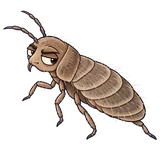
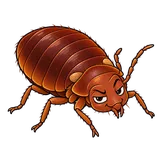
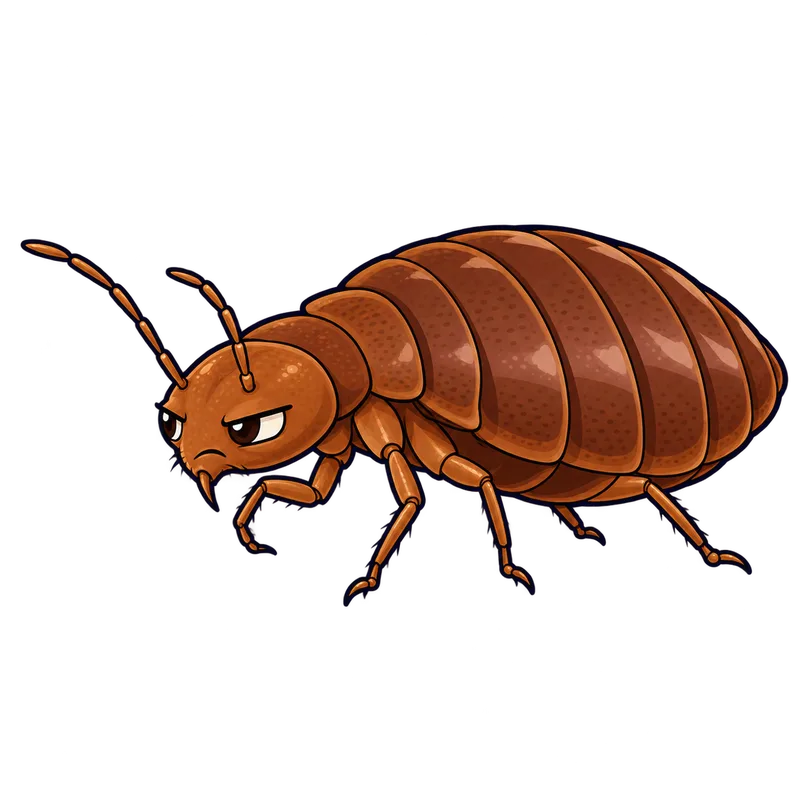
The tropical bed bug is a close relative of the common bed bug that prefers warmer climates, going by the formal scientific name Cimex hemipterus. You cannot spot the differences between these species with the naked eye or a quick photo on your phone, because telling them apart requires pulling out a microscope with 20x to 50x magnification. Under that lens, an entomologist looks at the front margin of the pronotum, which is the shield-like segment right behind the head. In this species, that front edge is noticeably less concave than the deeply flared shield of the common bed bug. You also have to check the fringe hairs on the side of the thorax, making sure they are shorter than the width of the compound eye, which rules out look-alikes like bat bugs. Adults measure 4 to 6 mm long when unfed, presenting a flat, oval body with a reddish-brown or mahogany color that swells up to 9 mm and turns a dark, bruised crimson after a heavy blood meal. They lack functional wings entirely, sporting only short, vestigial wing pads where true wings would normally grow.
Habitat & behaviour
If you are dealing with these creatures, you will find them tucked away in dark, narrow harborages within 10 to 15 feet of where people sleep or rest. They are strictly nocturnal and rely on heat and carbon dioxide to track down hosts, spending daylight hours hidden inside mattress seams, box spring folds, bed frame joints, electrical outlets, and baseboard channels. They do not fly or jump, preferring to crawl rapidly across surfaces or hitch a ride in luggage, backpacks, and pre-owned furniture. While humans are their primary and preferred target, they can also feed on poultry, cats, dogs, and rodents if human hosts are absent. In multi-unit housing, they travel along utility chases and shared walls to find new rooms. You usually spot their activity through dark fecal speckling that smears like ink when wet, translucent shed skins left behind by growing nymphs, rusty blood stains on bed sheets from crushed bugs, and clusters of tiny pearl-white eggs glued into tight crevices.
Visual variations
Development happens through incomplete metamorphosis, meaning the insect skips the pupal stage entirely and moves straight from an egg through 5 nymphal stages into an adult. The eggs are pear-shaped, pearl-white, and measure about 1 mm, often glued firmly into small clusters in hidden crevices. When they hatch, the first-stage nymphs are tiny, translucent, and about 1.5 mm long, looking much like stray poppy seeds. As they push through the remaining 4 stages and grow up to 4.5 mm, their appearance changes drastically depending on how recently they ate. Unfed nymphs look straw-colored or light tan, but a fresh blood meal turns their abdomen a bright, unmistakable red that shines right through their thin skin. Adult females feature a broader, symmetrically rounded abdominal tip, while males show a narrower, pointed tip that ends in a small, hook-like organ bent toward the left side. Neither sex breaks down into specialized worker castes, meaning every single nymph and adult of both sexes feeds exclusively on blood to survive.
Why it matters
Finding these bugs in your bedroom is deeply stressful, but public health agencies and medical entomology authorities confirm that they do not transmit disease-causing pathogens to humans. Their bites still cause localized itching, redness, and raised skin lesions, and excessive scratching can easily break the skin and lead to secondary bacterial infections. Because skin reactions vary wildly from person to person, and 20% to 30% of people show no visible reaction at all, you can never diagnose an infestation from a bite mark or a skin rash alone. If you suspect an issue, you need to find a physical bug, a cast skin, or a dark fecal spot. Dealing with an active infestation takes much more than a store-bought fogger, which usually just pushes the insects deeper into wall voids instead of killing them. Complete eradication typically requires a thorough approach combining heat treatments, high-heat laundering, mattress encasements, intercept traps, and targeted applications from a licensed pest control professional. If you or someone in your household experiences severe bite reactions, a widespread rash, or signs of a secondary skin infection, contact a clinician, urgent care facility, or poison control center immediately.