
What do bed bugs look like on sheets?
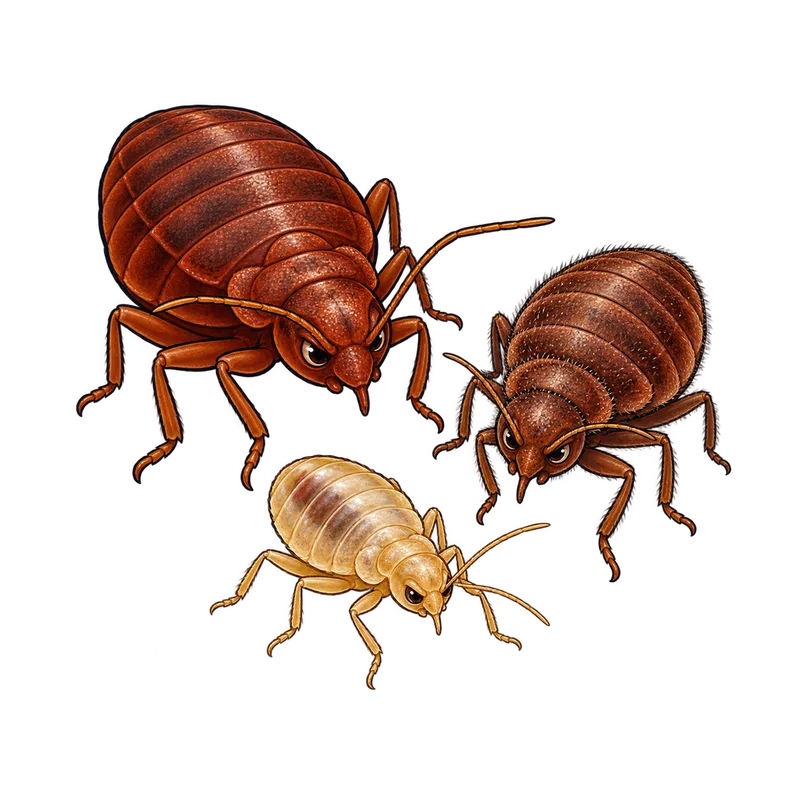
On sheets, bed bugs typically appear as flat, oval insects measuring about 5 to 7 mm long that range from light brown to deep reddish brown. You may also spot tiny dark fecal spots that smear when wet, translucent newborn nymphs, papery amber shed skins, or small pearl-white eggs glued to the fabric.
What is actually going on
You pull back the duvet on a quiet Tuesday morning, squinting against the sunlight, and notice a tiny dark speck right where your pillow meets the sheet. Before your heart completely sinks into your stomach, it helps to know what you are actually looking at. Bed bugs do not materialize out of thin air, and they rarely leave a tidy calling card, but they do leave distinct physical traces across your bedding that you can spot with the naked eye if you know what to look for.
On your sheets, a bed bug infestation usually announces itself through a mix of the live insects and the physical evidence they leave behind while feeding, digesting, and growing. An unfed adult bed bug is oval, flat, wingless, and light brown to rusty red, measuring about 5 to 7 mm long, which is roughly the size of an apple seed. Once that same bug feeds on a sleeping host, its body swells, elongates into a cigar shape, and darkens to a deep reddish brown, ending up about the size of a cooked grain of rice.
You might also spot tiny nymphs, which are the immature versions of the bug. Newly hatched nymphs measure about 1.5 mm, sitting around the size of a single poppy seed, and start out nearly translucent and pale yellow. As they grow and shed their skins through 5 distinct stages, those shed husks look like paper-thin, amber-colored ghost shells tucked into sheet folds or mattress seams.
Besides the bugs themselves, your sheets often catch their waste. Bed bugs excrete digested blood as tiny dark spots that look remarkably like someone tapped the fabric with a fine-tip black marker. If you dab one of those mysterious black marks with a damp cloth or a wet cotton swab, it dissolves and smears into a rusty reddish brown because of the digested blood inside it. You might also find tiny pearl-white eggs measuring about 1 mm, glued securely to the fabric weave, or small rusty blood smears left behind when a feeding bug gets accidentally squashed in the middle of the night.
When you find these signs on your sheets, you are looking at the aftermath of a hidden nighttime feeding. Bed bugs use a long, beak-like mouth part to pierce the skin of a sleeping person, taking a meal that usually lasts between 3 and 10 minutes. Since the bite injects a mild numbing agent, you generally sleep right through the whole thing without noticing a thing.
Once they finish feeding, the bugs crawl back to their tight hiding spots near the bed, which is when they tend to drop their waste. That liquid digested blood hits the loose threads of your sheets and soaks right in, leaving permanent dark marks that map out where the insects have been traveling. At the same time, the growing nymphs keep shedding their outer shells, leaving those clear, papery husks behind wherever the bugs like to hang out together.
How to tell for sure
People often assume that waking up with itchy welts means their sheets are crawling with bed bugs, but skin reactions are notoriously unreliable for confirmation. Between 20% and 30% of people bitten by bed bugs show zero skin reaction at all, meaning you could have a thriving population and not a single itchy bump. Conversely, a dozen different things from laundry detergent allergies to stray fleas can cause angry red welts that look identical to bug bites.
Positive identification usually requires finding physical proof right around your sleeping zone, typically concentrated within an 8-foot radius of the bed. You want to take a bright flashlight and carefully probe the sheet hems, pillowcase corners, mattress piping, and headboard crevices. The naked eye is usually enough to spot adult bugs, large nymphs, clusters of fecal spots, and egg groups, though a basic 10x magnification hand lens helps if you are trying to examine tiny first-stage nymphs or individual eggs.
Keep in mind that fabric color and pattern change how easily you spot these clues. On crisp white or light-colored sheets, dark fecal spots and rust-colored blood smears stand out immediately against the background. On dark red, black, or heavily patterned sheets, live bugs and droppings are heavily camouflaged. If your bedding is dark, you usually have to inspect the underlying white mattress fabric or wipe the seams with a white wet cloth to catch the telltale smear.
What usually comes next
Once you spot definite physical evidence on your sheets, your first sensible step is to contain and treat the bedding instead of panicking about the entire house. Strip the sheets, pillowcases, and blankets off the mattress carefully, drop them straight into a sealed plastic bag so you do not scatter bugs down the hall, and take them directly to the washing machine.
Washing and drying your bedding on the highest heat setting you have is one of the most reliable ways to handle them without chemicals. Exposing bed bugs and their eggs to temperatures between 120 degrees Fahrenheit and 122 degrees Fahrenheit for at least 30 minutes will kill every single life stage. When the laundry is done, do not put those clean sheets right back on an untreated mattress, because any bugs hiding in the frame or box spring will just march back up for another meal.
When to get help
There are times when home laundering and flashlight checks simply will not cut it. If you live in an apartment building, a condo, or any multi-family housing, bed bugs rarely stay in just one unit, meaning sheets showing signs of bugs usually call for a coordinated building-wide check. You should also bring in a licensed pest management professional if the bugs have gotten deep into wall gaps, baseboards, electrical outlets, or heavy furniture that you cannot treat on your own.
On the health side, constant scratching can break open the skin and lead to secondary bacterial infections, while a heavy infestation can cause real anxiety and sleeplessness. Anyone dealing with infected skin marks, severe allergic reactions, or overwhelming stress should reach out to a healthcare clinician, an urgent care service, or a local poison control center right away.